Key facts
- Lionel Messi has announced his retirement from international football, according to Al Jazeera and The Guardian.
- The Guardian reported that Messi had previously expressed doubts about his football future after the death of his father, Jorge Messi, on August 8, 2026.
- AP coverage during the 2026 World Cup placed Messi at the center of Argentina’s campaign and noted his age and the likelihood that he was nearing the end of his international career.
- Messi made his senior Argentina debut in 2005 and later captained the team to World Cup glory in 2022.
- His retirement marks the end of one of football’s most influential international careers.
Messi closes the door on Argentina duty
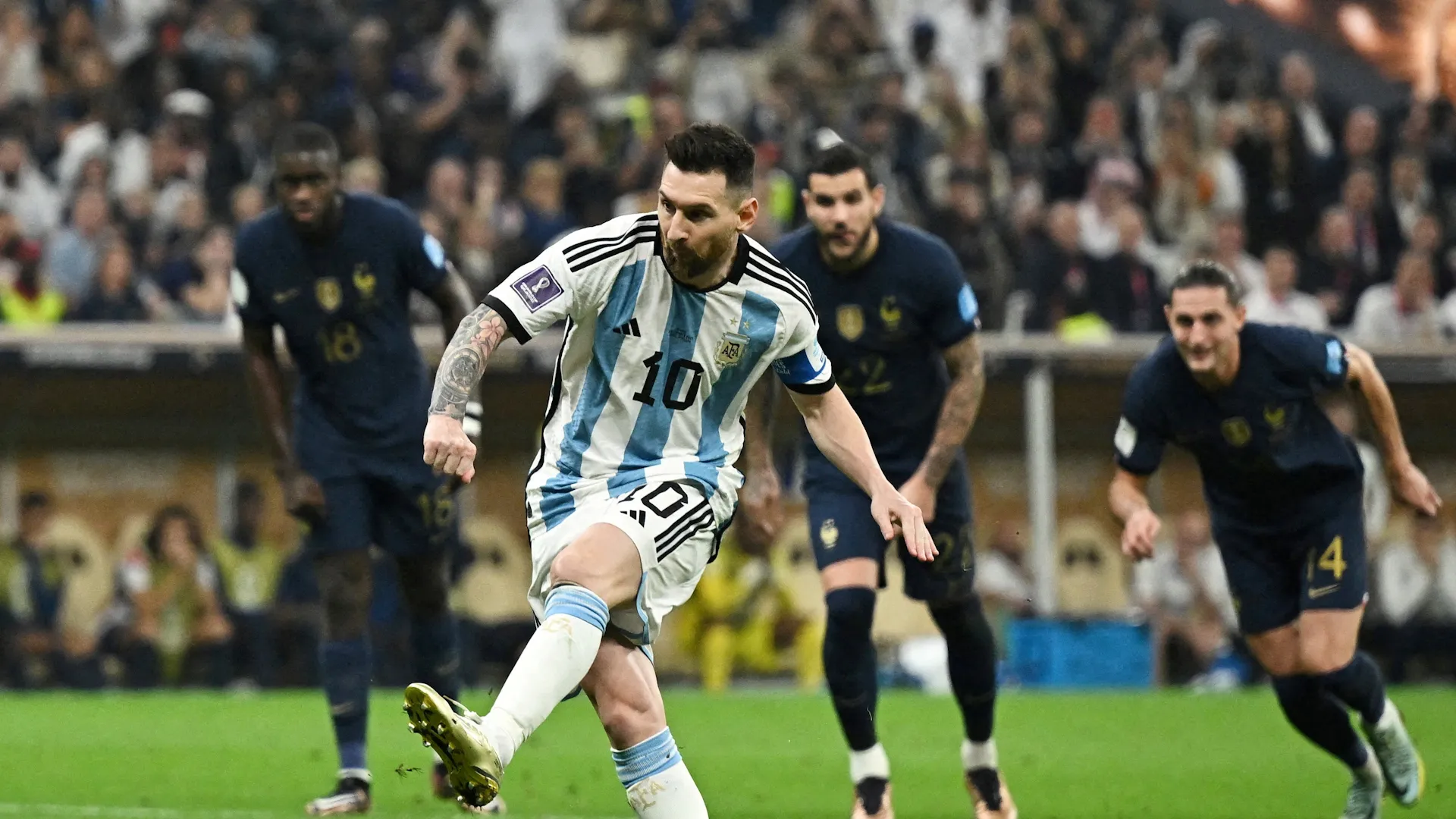
Lionel Messi has announced that he is retiring from international football, according to reports carried by Al Jazeera and corroborated by The Guardian. The move brings to a close a run that stretched from his senior debut for Argentina in 2005 to a career that became inseparable from the country’s biggest sporting hopes. At 39, Messi was still central to the national team’s public identity and to debate over whether he could continue after a demanding 2026 World Cup campaign.
The announcement follows a period in which retirement had already become a serious topic. The Guardian reported earlier in August that Messi had spoken of “quite a few doubts” about his football future after the death of his father, Jorge Messi, who died on August 8, 2026. In that context, the retirement news does not come as a complete shock, but it still marks a major turning point for Argentina and for global football.
An era defined by triumph, pressure and unfinished business
Messi’s international career was defined by both extraordinary success and years of near-misses. He captained Argentina to World Cup glory in 2022, a victory that settled one of the defining arguments in modern football and placed him permanently alongside the game’s all-time greats. In 2026, he again remained at the center of Argentina’s title bid, with AP describing him as part of the tournament’s elite cast even as age and fatigue became harder to ignore.
Yet the final stages of his Argentina story also carried the strain that often accompanies long careers at the top. The Guardian noted that Messi had already discussed doubts about how much longer he could continue. AP coverage from the World Cup period showed how closely the team’s fortunes were tied to him, with Argentina’s run ending in the final after a tournament in which Messi remained one of the most watched figures in sport. The retirement therefore reads not only as a personal decision, but also as the end of an era in which Argentina’s emotional burden often rested on one player’s shoulders.
What Messi means to Argentina and the wider game
For Argentina, Messi’s departure from the international stage will be felt as both a sporting and cultural loss. He was not just the captain and primary creative force; he was a symbol of national resilience for supporters who lived through years of disappointment before the World Cup breakthrough. His presence also gave Argentina a rare continuity across generations, linking the early 2000s to the present era of modern football.
On the global stage, Messi’s retirement changes the rhythm of the sport. Matches involving Argentina no longer carry the same expectation that he will be there to decide them with a pass, dribble or late goal. For younger players, his exit opens space for a new hierarchy; for fans, it marks the beginning of a football landscape in which one of the most recognisable names in the game is no longer available for international selection. That transition is especially significant in South America, where national-team football still carries enormous emotional weight and where a figure like Messi can shape public conversation far beyond the pitch.
His retirement also highlights how football careers are increasingly judged not just by trophies, but by endurance. Messi’s journey with Argentina included the pressure of repeated finals, public criticism during lean years, a triumphant return to glory, and then the reality of aging legs after a relentless schedule. The personal dimension is also impossible to miss: his father’s death in August appears to have weighed heavily, and the emotional language reported around the announcement suggests that this was not a routine career decision but a moment of final reckoning.
What happens next for Argentina
The practical question now is how Argentina moves forward without him. The national team has depth and a generation of talented players, but replacing Messi’s influence is not a straightforward matter of filling a position. He contributed goals, assists, leadership and tactical gravity; opponents often planned around him before the first whistle, and teammates benefited from the attention he drew.
For Argentina’s coaching staff and federation, the next phase will involve building a team that can compete without relying on the gravitational pull of one superstar. That transition will likely be gradual, and it may not be painless. Supporters who watched Messi carry the team through defeats, controversies and final triumphs will need time to adjust to a post-Messi reality at international level.
Even so, his retirement from Argentina duty does not erase what he achieved. It simply confirms that the chapter is over. After nearly two decades in the national shirt, Messi leaves behind a record that helped reshape the story of Argentine football and gave the sport one of its most enduring narratives. The announcement is therefore more than a personal update; it is the closing of a defining era in the modern game.
A farewell with global resonance
Messi’s decision will reverberate well beyond Buenos Aires. In Africa, including Kenya, where football fans closely follow elite European and international competitions, his name has long been shorthand for technical excellence and competitive longevity. Across the world, his retirement is likely to be received in the same way that other great exits in sport are received: with a mix of gratitude, sadness and the uneasy recognition that a familiar presence is gone.
The story is also a reminder of how quickly the end can arrive for even the biggest stars. A player who seemed permanent now belongs to the history books. For Argentina, that history is golden. For the sport as a whole, it is the end of one of the most consequential international careers ever produced by football.
Source note
This article is based on reporting from Al Jazeera, corroborated with coverage from The Guardian and AP News. It does not repeat source phrasing and avoids unsupported details beyond what those publishers reported.
Sources: