Key facts
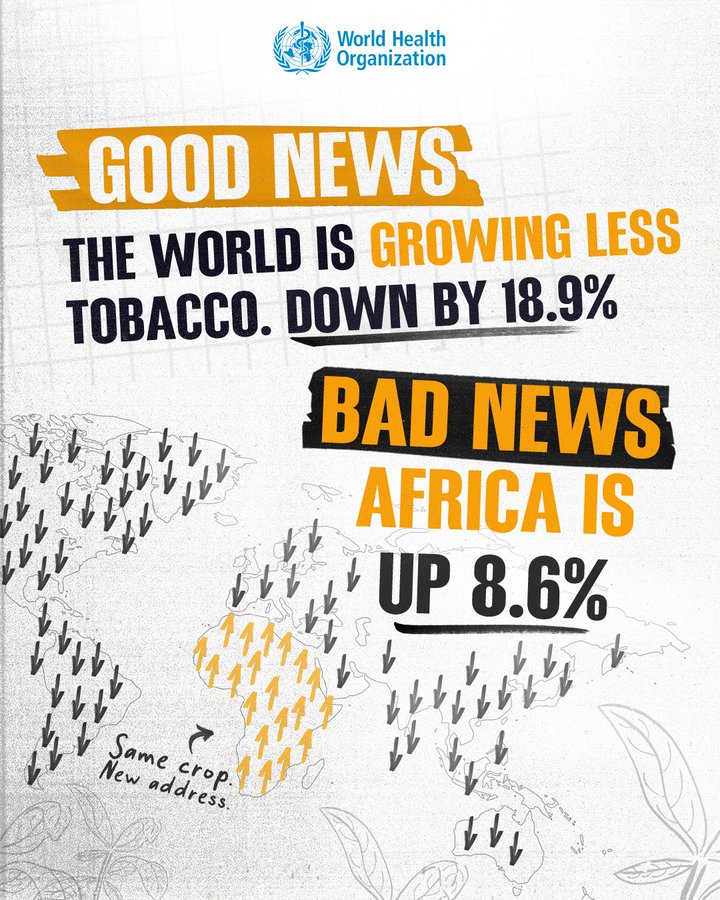
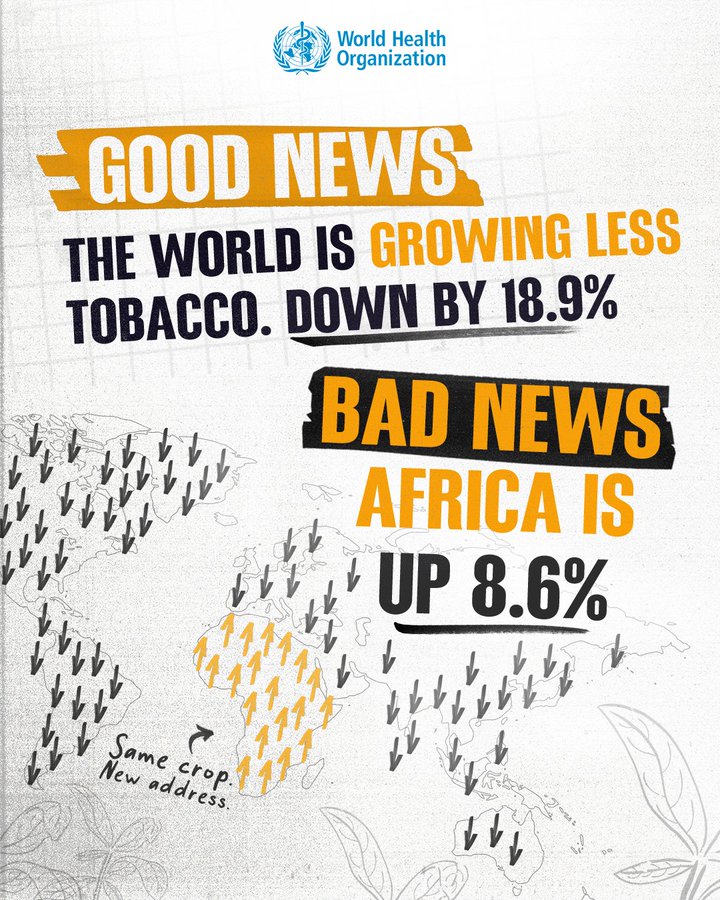
- WHO says global tobacco-leaf production fell 18.8% from 2012 to 2024.
- WHO says tobacco-leaf production in Africa rose 8.61% over the same period.
- Africa accounted for about 11% of global tobacco-leaf production in 2024.
- Africa’s cigarette import bill rose from US$833 million to US$1.77 billion.
- WHO says the top African tobacco producers are Zimbabwe, Malawi, Tanzania, Mozambique and Uganda.
- WHO says it has supported more than 5,000 farmers in Kenya and Zambia to switch to alternative crops.
Africa moves against the global tobacco tide
Africa is becoming an increasingly important tobacco-growing region even as the world as a whole produces less tobacco leaf, according to a new World Health Organization analysis published on 31 August 2026. WHO says global tobacco-leaf production fell by 18.8% between 2012 and 2024, while production in Africa rose by 8.61% over the same period. The report adds that Africa accounted for about 11% of global tobacco-leaf output in 2024. ([who.int](https://www.who.int/publications/i/item/9789240125162?utm_source=openai))
The result is a striking split-screen story for the continent. On one hand, African countries are expanding cultivation of a crop that remains tied to long-running public health concerns. On the other, they are importing more finished cigarettes, meaning the region is both feeding the global tobacco supply chain and paying more to bring in products that can drive addiction and disease. WHO says Africa’s cigarette-import bill rose from US$833 million to US$1.77 billion over the study period. ([who.int](https://www.who.int/news/item/31-08-2026-africa-tobacco-growing-increases-despite-global-decline?utm_source=openai))
What WHO says is driving the shift
WHO frames the trend as more than a farming issue. The agency says tighter regulation in some higher-income markets has pushed tobacco companies to look for new growing areas, including in Africa. That expansion has helped keep leaf production elevated in several countries even as demand, regulation and land use patterns shift elsewhere. ([who.int](https://www.who.int/initiatives/tobacco-free-farms/key-observations-of-tobacco-production-and-trade-in-africa?utm_source=openai))
The agency also links tobacco cultivation to wider structural pressures. In its latest analysis, WHO says tobacco growing can expose farmers and families to health risks, damage soil and ecosystems, and lock rural households into debt cycles. Separately, WHO continues to describe tobacco as one of the world’s major public health threats, associated with millions of deaths each year and a heavy burden in low- and middle-income countries. ([who.int](https://www.who.int/publications/i/item/9789240125162?utm_source=openai))
A trade imbalance with development consequences
The import figures are what make the report especially consequential for finance and trade ministries. Africa is increasingly exporting raw leaf while importing higher-value manufactured cigarettes, a pattern that can drain foreign exchange while leaving much of the value chain, and much of the profit, outside the region. WHO’s analysis suggests this is not simply a question of where tobacco is grown, but of who captures value from the crop and who bears the costs of consumption. ([who.int](https://www.who.int/news/item/31-08-2026-africa-tobacco-growing-increases-despite-global-decline?utm_source=openai))
For governments trying to promote industrialisation, the numbers pose a difficult policy question. Supporting farmers in one of the continent’s most established cash crops may protect short-term incomes, but WHO argues that the longer-term economic balance can be negative when healthcare costs, environmental degradation and imports are taken into account. The agency’s Tobacco-Free Farms initiative has also argued that countries should help growers transition to alternative crops and livelihoods. ([who.int](https://www.who.int/initiatives/tobacco-free-farms/key-observations-of-tobacco-production-and-trade-in-africa?utm_source=openai))
The African production map is concentrated
The report says the African tobacco economy is heavily concentrated in a handful of countries, with Zimbabwe, Malawi, Tanzania, Mozambique and Uganda ranking as the continent’s largest producers in descending order. That concentration means policy shifts in a few states can have outsized effects on regional output, export earnings and farmer livelihoods. ([who.int](https://www.who.int/news/item/31-08-2026-africa-tobacco-growing-increases-despite-global-decline?utm_source=openai))
WHO’s broader regional reporting suggests that some countries have already started experimenting with transition support. In 2024, the agency said it had helped more than 5,000 tobacco farmers in Kenya and Zambia move toward alternative crops, an indication that governments and development partners are testing whether farm incomes can be protected without locking communities into tobacco dependence. ([afro.who.int](https://www.afro.who.int/regional-director/speeches-messages/world-no-tobacco-day-2024?utm_source=openai))
Why the health warning matters for Kenya and the region
For Kenya and other African countries, the issue is not only agricultural. WHO says tobacco use remains a public health threat across the African Region, and while prevalence is relatively low compared with some other parts of the world, population growth means the absolute number of users can still rise. The agency’s 2025 global tobacco trends report said Africa was on track to meet a 30% reduction target for prevalence, but also noted that rising population numbers complicate the picture. ([who.int](https://www.who.int/news/item/06-10-2025-who-tobacco-trends-report-1-in-5-adults-still-addicted-to-tobacco?utm_source=openai))
That distinction matters because leaf production and tobacco use are not the same thing, yet they are closely linked through trade, marketing and supply. A region can appear to make progress on prevalence while still deepening its role in the international tobacco economy. WHO’s warning is that such growth can make future control efforts harder, especially where industry marketing, weak regulation and limited rural alternatives keep tobacco economically attractive. ([afro.who.int](https://afro.who.int/health-topics/tobacco-control?utm_source=openai))
The bigger policy choice ahead
The core policy debate now is whether African governments should continue supporting tobacco as a cash crop or speed up diversification into alternatives. WHO’s position is clear: the public health, environmental and development costs are too large to ignore. But the economic transition is not simple, because many farming communities rely on tobacco for income, and large producers have built infrastructure, buyer networks and export systems around it. ([who.int](https://www.who.int/publications/i/item/9789240125162?utm_source=openai))
What makes the new analysis notable is not just the direction of the trend, but the contrast it highlights. While many regions are reducing tobacco production, Africa is moving the other way. Unless policy changes alter that trajectory, WHO suggests the continent could remain caught between two expensive realities: growing more leaf for export and spending more to import cigarettes for domestic consumption. ([who.int](https://www.who.int/news/item/31-08-2026-africa-tobacco-growing-increases-despite-global-decline?utm_source=openai))
Sources: