Key facts
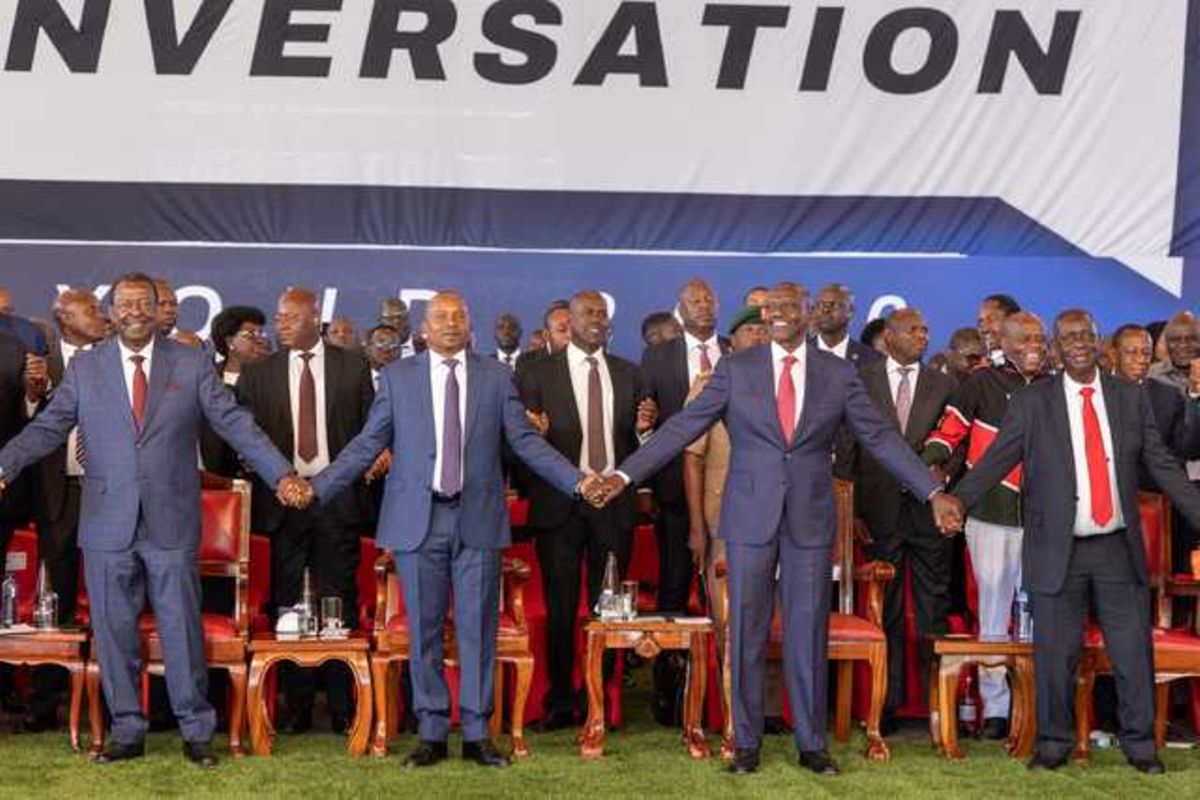
- President William Ruto launched a national conversation on a new long-term development plan beyond Vision 2030 on August 12, according to The EastAfrican and the Kenyan presidency.
- The government says the new blueprint could help move Kenya toward first-world status by 2060.
- Kenya’s State Department for Economic Planning says the meeting is meant to close the gaps left by Vision 2030 and guide the country’s next 30 years.
- The presidency says some Vision 2030 goals, including upper-middle-income status by 2030, have not been achieved.
- Deputy President Kithure Kindiki has publicly backed the idea that Kenya can attain first-world status within a generation.
A new national conversation with a long horizon
Kenya has entered a new phase in its long-running debate over national development planning. President William Ruto has backed a fresh blueprint designed to succeed Vision 2030, arguing that Kenya needs a longer and more disciplined roadmap if it is to move toward first-world status by 2060. The push was formally presented through a national conversation on Kenya’s future beyond Vision 2030, and the State Department for Economic Planning says the goal is to identify the gaps in the current plan and shape a new long-term framework for the next 30 years. ([theeastafrican.co.ke](https://www.theeastafrican.co.ke/tea/business-tech/kenya-in-blueprint-talks-amid-poll-season-scepticism-5558516?utm_source=openai))
The emerging plan is being framed not simply as a technical policy review but as a political statement about the country’s ambitions. In public remarks, the president has described the moment as one in which Kenya must choose work, production and exports as the basis of economic transformation. Government communications have also linked the new direction to infrastructure, energy, irrigation-led agriculture and skills development, all presented as the pillars of a more durable growth model. ([president.go.ke](https://www.president.go.ke/special-national-address-ruto-rallies-kenyans-to-chart-new-vision-beyond-2030/?utm_source=openai))
Why the idea is attracting attention now
The timing matters. Kenya is moving toward its next election cycle, and that has sharpened the political reading of almost every major government initiative. The blueprint debate therefore lands in a climate of suspicion among critics who see ambitious long-term plans as vulnerable to campaign rhetoric, shifting alliances and the pressure to deliver visible short-term gains. The EastAfrican reported that the talks are unfolding amid poll-season scepticism, which reflects a wider question in Kenyan politics: can a 30-year plan survive the churn of successive governments? ([theeastafrican.co.ke](https://www.theeastafrican.co.ke/tea/business-tech/kenya-in-blueprint-talks-amid-poll-season-scepticism-5558516?utm_source=openai))
There is also an important policy backdrop. Vision 2030, Kenya’s flagship development framework, has long been the reference point for national aspirations, but even government sources now acknowledge that some of its central goals have not been met. The president’s own office has said upper-middle-income status by 2030 remains unattained. That admission matters because it gives the new proposal both its rationale and its main vulnerability: if the previous blueprint struggled to meet expectations, why should citizens trust a new one without a stronger record of implementation? ([president.go.ke](https://www.president.go.ke/special-national-address-ruto-rallies-kenyans-to-chart-new-vision-beyond-2030/?utm_source=openai))
What the government says the new blueprint must do
The case for the new plan is built around continuity with a more ambitious time frame. Officials say Vision 2060, or an equivalent post-2030 roadmap, is intended to bridge the gap between current performance and a more advanced economy. The planning ministry says the national conversation is meant to close the “2030 gaps” and define where Kenya should be in the next 30 years. That language suggests the government sees the exercise as both corrective and forward-looking: fixing what Vision 2030 did not achieve while setting a more realistic pathway to prosperity. ([planning.go.ke](https://www.planning.go.ke/conversation-vision-2060-and-post-2030?utm_source=openai))
The president has tried to anchor that argument in examples from Asia, pointing to countries such as South Korea, China, Vietnam and Bangladesh as evidence that successive waves of industrial policy and reform can transform an economy over time. In official statements, the government says Kenya has restored macroeconomic stability and is now positioned to pursue a more deliberate model of production and exports. The message is clear: the blueprint is being sold not as a slogan but as a state-building project tied to investment, infrastructure and human capital. ([president.go.ke](https://www.president.go.ke/special-national-address-ruto-rallies-kenyans-to-chart-new-vision-beyond-2030/?utm_source=openai))
Supporters see a generational reset
Proponents of the new vision argue that Kenya needs to think in longer cycles than one election or one budget year. That argument has appeared in allied commentary and in remarks from senior officials who insist that the country can reach first-world status within a generation if it stays focused on industrialisation, technology and strategic partnerships. Deputy President Kithure Kindiki has also publicly backed the idea that Kenya can attain first-world status within a generation, reinforcing the sense that this is now a broader government narrative rather than a one-off presidential talking point. ([citizen.digital](https://www.citizen.digital/news/kindiki-kenya-can-attain-first-world-status-within-a-generation-n375730?utm_source=openai))
There is political value in that message. By setting a destination as far away as 2060, the government is trying to frame economic reform as a national inheritance rather than a partisan project. That can be useful in mobilising business confidence and public imagination, especially if the blueprint is tied to measurable targets. It also allows the administration to argue that some reforms may be painful now but necessary for future gains. Still, the longer the horizon, the more trust the public must place in institutions that have often been accused of inconsistency. This is an inference based on the political context and the government’s own emphasis on continuity and implementation. ([theeastafrican.co.ke](https://www.theeastafrican.co.ke/tea/business-tech/kenya-in-blueprint-talks-amid-poll-season-scepticism-5558516?utm_source=openai))
The sceptics’ case is rooted in past experience
Critics of grand development visions in Kenya usually begin with delivery. Vision 2030 was launched with a promise to transform Kenya into an upper-middle-income economy, but the country’s record has fallen short of the most optimistic expectations. That history is why the new blueprint is already being received through a political lens. Skeptics worry that a fresh long-term document could become another high-level aspiration unless it is matched by tougher governance, tighter accountability and a clear financing model. ([president.go.ke](https://www.president.go.ke/special-national-address-ruto-rallies-kenyans-to-chart-new-vision-beyond-2030/?utm_source=openai))
The criticism is not only about economics. It is also about political continuity. In Kenya, development plans can outlive the governments that launch them, and that makes them vulnerable to changes in priorities, coalition politics and fiscal pressure. A plan that runs to 2060 will span multiple presidents, parliamentary terms and probably several constitutional or electoral turning points. That reality gives the current debate an unavoidable edge: success will depend less on the elegance of the blueprint than on whether institutions can keep it alive when political incentives change. This is analysis drawn from the structure of the proposed time frame and the country’s history of missed development goals. ([theeastafrican.co.ke](https://www.theeastafrican.co.ke/tea/business-tech/kenya-in-blueprint-talks-amid-poll-season-scepticism-5558516?utm_source=openai))
Economics, identity and the meaning of ‘first-world’
The phrase “first-world status” is politically powerful but economically vague, and that ambiguity is part of why the debate has become so charged. For supporters, it signals a break from stagnation and a refusal to settle for low-growth politics. For critics, it risks becoming a shorthand that sounds aspirational without necessarily clarifying what success will look like in practical terms: higher incomes, better jobs, stronger public services, lower debt stress and more predictable governance. ([theeastafrican.co.ke](https://www.theeastafrican.co.ke/tea/business-tech/kenya-in-blueprint-talks-amid-poll-season-scepticism-5558516?utm_source=openai))
There is also a cultural dimension. When Kenyan leaders talk about becoming a first-world economy, they are not just discussing GDP statistics. They are speaking to national pride, inequality, youth expectations and the desire to be seen globally as more than a frontier market. That helps explain why the blueprint has drawn attention beyond Nairobi: it touches on a familiar question across Africa, namely whether long-term planning can finally turn demographic promise into broad-based prosperity. The government’s own framing, including references to industrialisation and skills, shows it understands that the argument is as much about identity as about economics. ([president.go.ke](https://www.president.go.ke/special-national-address-ruto-rallies-kenyans-to-chart-new-vision-beyond-2030/?utm_source=openai))
What to watch next
The immediate test is whether the consultation process produces a credible and transparent draft that can survive beyond the current political moment. If the plan is to matter, it will need specific priorities, costed targets, measurable milestones and a mechanism for public accountability. Without those, the proposal risks being remembered as another ambitious announcement that struggled to move from ceremony to delivery. That risk is heightened by the fact that the government is already operating under scrutiny over its broader economic performance and its promises of transformation. ([theeastafrican.co.ke](https://www.theeastafrican.co.ke/tea/business-tech/kenya-in-blueprint-talks-amid-poll-season-scepticism-5558516?utm_source=openai))
Still, the idea should not be dismissed simply because previous plans underdelivered. Kenya does need a serious conversation about productivity, industrial policy, public finance, youth employment and the institutional discipline required for long-range development. The strongest version of the current blueprint debate is not whether Kenya can become a first-world economy by 2060 in a slogan-driven sense, but whether it can build the institutions, trust and policy consistency that make long-term gains possible. That is the real story now: not just the promise of 2060, but the credibility of the path to get there. ([theeastafrican.co.ke](https://www.theeastafrican.co.ke/tea/business-tech/kenya-in-blueprint-talks-amid-poll-season-scepticism-5558516?utm_source=openai))
Sources: