Key facts
- Local reporting says springs in Nyamesocho, Masaba South, and Ikenye in Gesusu Ward are drying up during a prolonged dry spell.
- An assistant chief in the area says fights have already broken out at some springs as residents compete for water.
- Earlier reporting from The Standard has documented dwindling water sources in Kisii County and warned that many rivers, springs and marshlands are under pressure.
- Residents and local leaders have repeatedly raised concern about eucalyptus trees planted near water sources, saying they may worsen water decline.
- Farmers in the area say falling pasture and water availability are reducing milk output and raising household costs.
Dry springs deepen daily hardship in Kisii
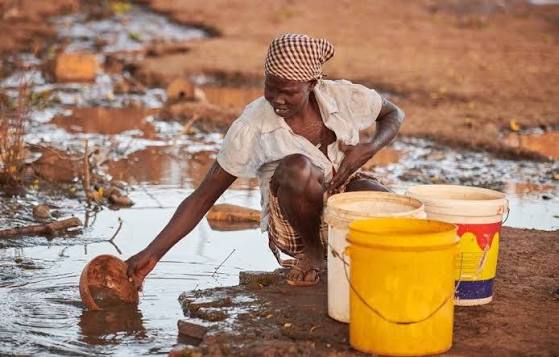
Families in parts of Kisii County are facing a worsening water crisis as a prolonged dry spell reduces the flow at springs that have long served as the main source of household water. Local reporting from Nyamesocho in Masaba South and nearby Ikenye in Gesusu Ward describes women and girls spending long hours in queues, with some taps already dry and the remaining water sources under intense pressure. The result is not only inconvenience but a daily struggle for a basic necessity that many residents used to take for granted.
The immediate consequence is longer waiting times and sharper competition for access. Residents interviewed in the field say the search for water has become more tense as supplies shrink, and an assistant chief in the area said there have already been fights at some springs as people scramble to draw water. That kind of tension is consistent with earlier reporting from Kisii County, where dry-season shortages have repeatedly forced residents to rely on springs, shallow wells or purchased water when local sources fail.
A long-running environmental problem, not a single bad season
The current shortage fits a broader pattern in Kisii and neighbouring parts of western Kenya, where springs and rivers have been under strain for years. Standard Media has reported that water sources in Kisii are dwindling, with county officials and residents warning that many rivers, springs and marshlands are on the verge of drying up because of pressure from human activity and weak conservation of catchment areas. The same outlet has also documented earlier cases in which springs that once supplied thousands of people dried up, pushing households toward costly alternatives such as boreholes and vendor-delivered water.
One recurring concern raised by residents and local leaders is the planting of eucalyptus, or blue gum, trees close to water sources. Environmental groups and Kenyan media have long associated these trees with reduced stream flow and drying springs when planted in riparian or catchment areas. Reporting from Kisii and other counties has repeatedly described disputes over eucalyptus near rivers and springs, with local leaders arguing that such planting can worsen water scarcity by drawing heavily on underground moisture. That concern remains an allegation and a local explanation, but it has been raised often enough to shape public debate over water protection in the region.
Households absorb the cost in cash, time and food
The water shortage is also imposing direct financial costs. In the latest local report, an elderly resident said she has had to pay a labourer hundreds of shillings to fetch water for her from a spring that is itself drying up. For older people, and for households without a nearby reliable source, the burden is both physical and economic. Buying water from vendors or hiring help to collect it can quickly become expensive in low-income rural communities, especially when the shortage lasts for weeks or months.
The crisis is also affecting livelihoods beyond the household. Farmers in the area say pasture is becoming scarce and cows are producing less milk because they have too little water and feed. That matters in Kisii, where milk sales are an important source of cash for school fees, food and other essentials. Traders and shopkeepers, according to the local reporting, are also feeling the pinch as milk supplies fall and retail prices rise. In this way, a problem that begins at the spring spreads through the local economy: less water means weaker livestock health, lower output, higher consumer prices and more stress on families already coping with a high cost of living.
Uncertain rains leave farmers in limbo
The shortage is arriving at a difficult time for farmers who are deciding whether to plant early or wait for rain. Residents quoted in the report say they are unsure when to put seeds in the ground because planting too soon could mean losing everything if the rains fail, while waiting too long could cause them to miss the season altogether. That dilemma is especially serious in a county where maize, beans, vegetables and livestock are central to rural livelihoods.
The concern is not only about this season’s crop. When rainfall becomes unreliable and local water points are already under pressure, the risks multiply: seeds may fail to germinate, household gardens may dry out, animals may lose condition and income may fall just as food prices remain elevated. This is why the issue is being experienced as more than a temporary inconvenience. It is threatening the basic planning cycle of rural life, from planting and watering to livestock care and market sales.
Why the situation matters beyond Kisii
Kisii’s experience reflects a wider climate and water-management challenge across parts of Kenya. Earlier reporting has shown that communities in the region repeatedly turn to springs and rivers when formal piped supplies are limited, making the protection of catchment areas critical. Where those sources decline, people often face a choice between longer walks, higher costs or conflict over the remaining water. The problem is especially acute for women and girls, who commonly bear the burden of water collection and may face added security risks when queues stretch into the evening.
The broader lesson is that water scarcity is not just an environmental story. It touches health, education, livelihoods and local peace. In Kisii, the immediate signs are visible at the spring: empty jerrycans, long queues and rising tempers. But the underlying stakes are larger. If dry conditions persist and local water sources continue to shrink, households may be pushed further into crisis, and the pressure on already limited supplies could intensify into more frequent conflict over who gets water, when and how much.
What local authorities and residents are saying
Local officials and residents quoted in the reporting are urging stronger protection of springs and their surroundings. The assistant chief in Nyamesocho says the area has already seen conflict at some water points and argues that the remaining sources need better protection from encroachment and poor land use. Residents, meanwhile, are calling for practical relief as well as longer-term conservation measures so that the little water left is not lost through neglect or dispute.
Taken together, the reports point to a crisis shaped by drought, environmental pressure and weak resilience. Kisii is not facing a single isolated dry spell; it is contending with a pattern of water stress that has been documented over many years. As the rains remain uncertain, families around Nyamesocho, Gesusu and other parts of the county are left to manage a shrinking supply of water that is essential not only for drinking but for farming, livestock and everyday dignity.
Sources: