Key facts
- SHA says 32.3 million Kenyans were registered as of August 18, 2026, nearly twice NHIF’s peak enrolment of 16.9 million. ([businesstoday.co.ke](https://businesstoday.co.ke/sha-coverage-doubles-nhif-peak/?utm_source=openai))
- SHA says accessible facilities rose to 10,713 from 8,667 under NHIF. ([businesstoday.co.ke](https://businesstoday.co.ke/sha-coverage-doubles-nhif-peak/?utm_source=openai))
- SHA says it financed 501,839 surgeries in its first two years, versus 227,741 in a comparable NHIF period. ([businesstoday.co.ke](https://businesstoday.co.ke/sha-coverage-doubles-nhif-peak/?utm_source=openai))
- The Ministry of Health has said SHA paid KES 147.37 billion in claims by June 2026. ([health.go.ke](https://health.go.ke/index.php/counties-urged-fast-track-uhc-reforms-sha-records-major-gains?utm_source=openai))
- The Ministry of Health has acknowledged ongoing claims-payment and legacy-debt challenges, including efforts to settle verified NHIF claims. ([standardmedia.co.ke](https://www.standardmedia.co.ke/amp/business/health-science/article/2001551654/duale-gives-sha-two-weeks-to-clear-sh4-billion-nhif-legacy-claims?utm_source=openai))
SHA’s enrolment milestone marks a sharp rise in coverage
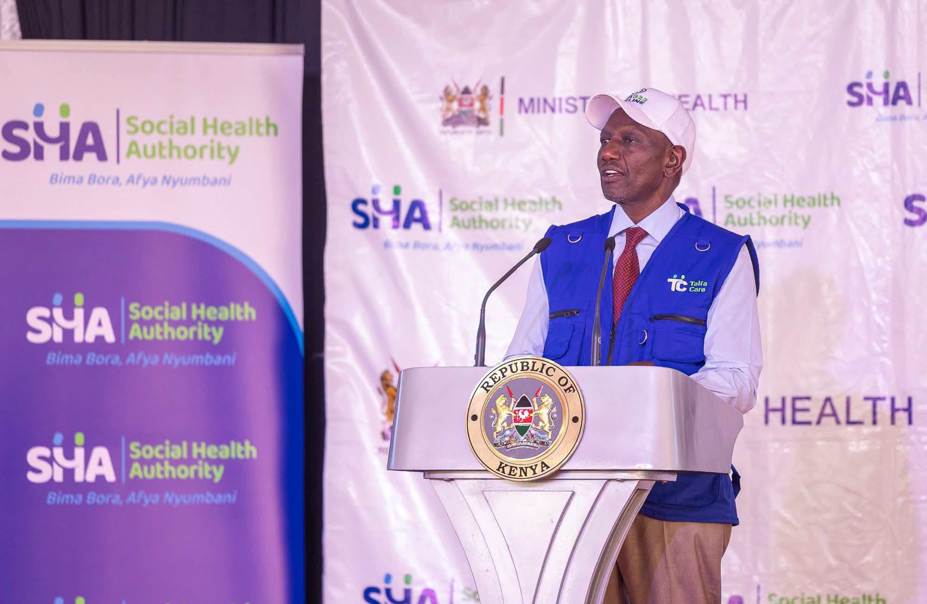
Kenya’s Social Health Authority has reported that 32.3 million people were registered with the scheme as of August 18, 2026, a figure the agency says is nearly double NHIF’s highest-ever enrolment of 16.9 million. The milestone was disclosed by SHA chief executive Mercy Mwangangi at the National Health Summit and reiterated in reporting by Business Today Kenya and the Ministry of Health. ([businesstoday.co.ke](https://businesstoday.co.ke/sha-coverage-doubles-nhif-peak/?utm_source=openai))
If accurate, the numbers would represent one of the most significant shifts in Kenya’s health-financing landscape in years. The government has been trying to replace NHIF with a broader universal health coverage framework that is meant to improve access, reduce out-of-pocket spending and widen the range of services available to members. The ministry has described the reforms as part of a larger UHC package built around new laws and a more integrated financing model. ([health.go.ke](https://health.go.ke/index.php/counties-urged-fast-track-uhc-reforms-sha-records-major-gains?utm_source=openai))
More facilities and more procedures are being paid for
Officials say SHA’s footprint is also larger than NHIF’s in terms of providers. The authority says the number of accessible facilities has risen to 10,713 from 8,667 under NHIF, with the current network split between government, private and faith-based providers. In the government’s telling, that broader network is intended to make it easier for members to use cover close to where they live. ([businesstoday.co.ke](https://businesstoday.co.ke/sha-coverage-doubles-nhif-peak/?utm_source=openai))
The system is also being presented as more expansive in what it finances. SHA says it has supported 501,839 surgeries in its first two years, compared with 227,741 in a comparable two-year NHIF period. The authority has also reported stronger coverage in renal care, cancer care and ICU treatment, with the last category notable because the agency says NHIF did not fund ICU services at all. These claims are central to the government’s argument that the new model is not just enrolling more people, but also paying for more types of care. ([businesstoday.co.ke](https://businesstoday.co.ke/sha-coverage-doubles-nhif-peak/?utm_source=openai))
The government says the reform is changing access to maternity and primary care
Another area where the government says the numbers have improved is maternity care. SHA says it has paid for deliveries involving 1.3 million mothers and spent Sh17 billion on those services. It also says 9.3 million Kenyans have benefited from primary healthcare under the new arrangement, which it describes as an increase of about 27 percent compared with the NHIF era. Those figures are meant to support the claim that Kenya is shifting away from a narrow insurance model toward one that covers preventive, routine and specialised care. ([businesstoday.co.ke](https://businesstoday.co.ke/sha-coverage-doubles-nhif-peak/?utm_source=openai))
That said, the government’s own figures should be read carefully. They show activity and uptake, but they do not by themselves prove that all enrolled Kenyans are consistently receiving timely care or that coverage is financially secure in the long term. Enrolment is a key indicator, but it is only one part of universal coverage; claims processing, provider confidence and patient experience matter just as much. That is an inference based on the reporting and the continuing disputes around the rollout. ([businesstoday.co.ke](https://businesstoday.co.ke/sha-coverage-doubles-nhif-peak/?utm_source=openai))
Technical and payment problems are still clouding the transition
Despite the headline gains, the SHA transition remains politically and operationally sensitive. Business Today Kenya reported that system downtime, delays in claims processing and cases in which patients are still asked to pay out of pocket continue to raise questions over whether the new model has made healthcare easier for ordinary Kenyans. The Ministry of Health has also acknowledged the claims challenge, saying in April that SHA had reached a 74 percent settlement rate and that payments were expected within 90 days across all levels of care. ([businesstoday.co.ke](https://businesstoday.co.ke/sha-coverage-doubles-nhif-peak/?utm_source=openai))
The claims backlog is not only a technical issue; it is also a trust issue. A health-financing system depends on providers being confident they will be paid and on patients believing their cover will work when they need it. Standard Media recently reported that Health Cabinet Secretary Aden Duale had ordered SHA to clear Sh4 billion in legacy NHIF claims, while the ministry has separately said it is still paying verified debts left over from the old fund. Those debts show that the switch from NHIF to SHA did not erase the financial obligations that accumulated under the previous system. ([standardmedia.co.ke](https://www.standardmedia.co.ke/amp/business/health-science/article/2001551654/duale-gives-sha-two-weeks-to-clear-sh4-billion-nhif-legacy-claims?utm_source=openai))
Fraud concerns and provider enforcement remain part of the story
The government has also linked reform to tougher enforcement. In the same reporting cycle, authorities said several private hospitals had been shut over alleged fraudulent practices, including falsifying patient data, submitting duplicate claims and billing both patients and SHA for the same service. Those allegations have not been adjudicated in the article itself, but they illustrate why the ministry has framed the reform as not only a coverage expansion exercise but also an anti-fraud effort. ([businesstoday.co.ke](https://businesstoday.co.ke/sha-coverage-doubles-nhif-peak/?utm_source=openai))
This matters because Kenya’s universal coverage push is being judged on both reach and integrity. A larger enrolment base is politically useful, but a system that cannot stop abuse risks becoming expensive without becoming dependable. That tension is especially important in a country where many households still pay directly for care when insurance fails to settle fast enough or when a facility is not yet fully integrated into the scheme. ([businesstoday.co.ke](https://businesstoday.co.ke/sha-coverage-doubles-nhif-peak/?utm_source=openai))
What the latest figures suggest about Kenya’s UHC trajectory
Taken together, the latest official figures suggest that SHA has broadened Kenya’s insurance footprint far beyond the ceiling reached under NHIF. The rise to 32.3 million registrations, the expansion in contracted facilities and the heavier volume of surgeries and specialised treatments all point in the same direction: the state is claiming real progress toward a more inclusive health-financing system. ([businesstoday.co.ke](https://businesstoday.co.ke/sha-coverage-doubles-nhif-peak/?utm_source=openai))
But the balance of evidence also shows that Kenya is still mid-transition. The system is expanding faster than the public can fully judge its reliability, and the government’s own admissions on claims settlement, outstanding NHIF liabilities and fraud enforcement show that the reform is incomplete. For Kenyan readers, the key question is no longer simply whether SHA can enroll more people than NHIF ever did; it is whether the new model can convert that scale into smoother access, faster payment and better care at the point of need. ([businesstoday.co.ke](https://businesstoday.co.ke/sha-coverage-doubles-nhif-peak/?utm_source=openai))
Sources: