Key facts
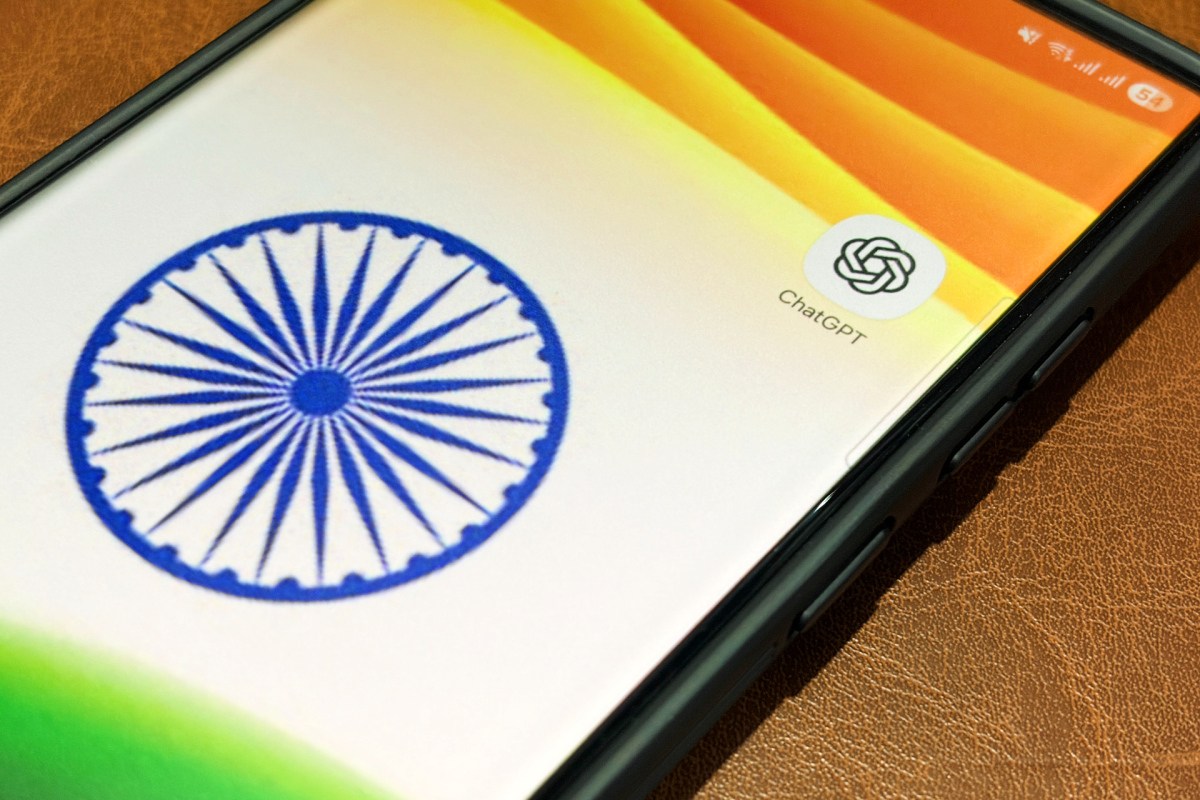
- OpenAI has started showing ads to eligible ChatGPT Free and Go users in India.
- Paid plans including Plus, Pro, Business, Enterprise and Education remain ad-free.
- OpenAI says ads are clearly labeled, separated from responses and do not influence answers.
- The company says advertisers cannot access chats, memory or personal details.
- OpenAI has partnered with agencies including WPP and Omnicom and plans a self-serve ad manager beginning September 4, 2026.
OpenAI widens its ad experiment to India
OpenAI has started rolling out advertisements inside ChatGPT for users in India on the Free and Go plans, according to company statements and reporting from multiple outlets. The change marks one of the clearest signs yet that the company is moving beyond subscriptions alone as it seeks a broader revenue mix for its consumer AI products. TechCrunch reported that OpenAI said it would begin showing ads in India after previously indicating in its terms that users might see sponsored placements while using the assistant. The Indian Express also reported that the rollout applies to users above 18 on the Free and Go tiers, while paid plans such as Plus, Pro, Business, Enterprise and Education will remain ad-free. ([techcrunch.com](https://techcrunch.com/2026/08/27/openai-to-start-showing-ads-on-chatgpts-free-and-go-tiers-in-india/))
India is a strategically important market for OpenAI because the company has repeatedly described it as one of its largest and fastest-growing user bases. TechCrunch cited OpenAI saying it had more than 100 million weekly active ChatGPT users in India earlier this year, a scale that makes the country a valuable test bed for any new monetization strategy. The company has also used India for product expansion before, including the launch of the lower-priced ChatGPT Go plan. ([techcrunch.com](https://techcrunch.com/2026/08/27/openai-to-start-showing-ads-on-chatgpts-free-and-go-tiers-in-india/))
What the rollout means for users
OpenAI’s help center says ads may appear for users on the Free and Go plans, and that accounts identified as belonging to people under 18 will not see them. The company says the ads are shown below responses, are clearly labeled as sponsored, and are separated from the model’s answer. It also says ads do not change how ChatGPT responds and are run on systems separate from the chat model. ([help.openai.com](https://help.openai.com/en/articles/20001047))
The company’s public guidance also says advertisers cannot access users’ chats, memory, or personal details. Instead, they receive only aggregated performance data such as views and clicks. OpenAI says ad selection can take into account the current conversation, the advertiser’s landing page and other relevance signals, while users can turn off personalization where available. That structure suggests OpenAI is trying to balance monetization with an effort to limit the privacy backlash that often follows ad-supported consumer products. ([help.openai.com](https://help.openai.com/en/articles/20001047))
The rollout is also designed to be selective rather than universal. OpenAI says ads are not shown in paid products such as Plus, Pro, Business, Enterprise and Edu, and that ads are not initially available in the European Economic Area or Switzerland for personalized use. The company has also said ads will not appear alongside sensitive or regulated topics such as mental health and politics, which is a notable policy choice given how often people turn to ChatGPT for advice on personal and civic matters. ([indianexpress.com](https://indianexpress.com/article/technology/artificial-intelligence/chatgpt-ads-india-how-they-work-openai-privacy-10851345/lite/))
A new revenue lane for OpenAI
The move fits a wider pattern in OpenAI’s business strategy. TechCrunch reported that the company began showing ads to U.S. users in February and later expanded the program into Europe. OpenAI’s advertising documentation and help pages describe the company’s ad test as a way to support broader access to ChatGPT and continued investment in the product. In other words, ads are being presented not as a replacement for subscriptions, but as another way to pay for the heavy infrastructure required to keep a large-scale AI assistant running. ([techcrunch.com](https://techcrunch.com/2026/08/27/openai-to-start-showing-ads-on-chatgpts-free-and-go-tiers-in-india/))
OpenAI is also building the business side of the product more aggressively. The Indian Express reported that the company has partnered with agencies WPP and Omnicom and plans to open a self-serve ChatGPT Ads Manager beginning September 4, 2026, with minimum daily budgets starting at ₹725. TechCrunch likewise said OpenAI plans to launch an ad manager next month and start with ads for 50 brands. That combination of agency partnerships and self-service tools suggests the company is trying to move quickly from a limited pilot to a more scalable commercial platform. ([techcrunch.com](https://techcrunch.com/2026/08/27/openai-to-start-showing-ads-on-chatgpts-free-and-go-tiers-in-india/))
The timing matters. OpenAI is widely seen as under pressure to keep expanding revenue as it spends heavily on model development, compute and global distribution. TechCrunch reported that the company is working to strengthen revenue sources ahead of a possible public listing, while the same report cited outside reporting that OpenAI’s quarterly revenue had continued to grow. Even without assuming an immediate IPO, the ad rollout shows OpenAI is pursuing the same playbook that helped finance many mainstream internet platforms: offer wide access for free or at a low price, then monetize attention and usage in a controlled way. ([techcrunch.com](https://techcrunch.com/2026/08/27/openai-to-start-showing-ads-on-chatgpts-free-and-go-tiers-in-india/))
Why India is central to the strategy
India is a logical place for OpenAI to test ads because it combines huge user volume with sensitivity to price. OpenAI previously introduced ChatGPT Go in India at a relatively low monthly price, and TechCrunch reported the company even ran a promotion that made the tier free for a year for eligible users. That history indicates OpenAI has been willing to adapt pricing and distribution in India to accelerate adoption, even if near-term monetization is modest. Ads are the next step in that sequence. ([techcrunch.com](https://techcrunch.com/2026/08/27/openai-to-start-showing-ads-on-chatgpts-free-and-go-tiers-in-india/))
The choice of India also reflects a broader reality in consumer AI: many users want premium features but will not pay premium prices. By limiting ads to Free and Go, OpenAI is effectively turning its lowest-price and no-price tiers into the monetization frontier, while preserving the ad-free appeal of its paid plans. If the model works, it could become a template for other markets with large mobile-first audiences and strong price sensitivity. If it generates user pushback, OpenAI still has the option of adjusting frequency, placement or eligibility before widening the rollout further. ([help.openai.com](https://help.openai.com/en/articles/20001047))
For now, the company appears focused on making the ad experience feel light-touch. Its policies say ads must be clearly distinguishable from the product, cannot imitate ChatGPT’s interface and may be removed if they risk confusing users. That emphasis on separation is important because any blurring between answer and sponsorship would raise immediate trust issues for an assistant built around conversational guidance. OpenAI’s challenge is to prove that an ad-supported ChatGPT can still feel like a dependable tool rather than a conventional feed filled with interruptions. ([openai.com](https://openai.com/policies/ad-policies/))
The bigger picture
OpenAI’s India rollout is more than a local product update. It is a test of whether a leading AI platform can introduce advertising without undermining the very qualities that made it popular: speed, usefulness, trust and a sense that the assistant is working for the user, not the advertiser. The company says ads will stay out of paid plans and away from sensitive topics, and it is promising privacy protections and user controls. Those safeguards will be watched closely, because they will shape whether advertisers, regulators and users view ChatGPT Ads as a normal evolution of digital media or as a warning sign for the future of AI interfaces. ([indianexpress.com](https://indianexpress.com/article/technology/artificial-intelligence/chatgpt-ads-india-how-they-work-openai-privacy-10851345/lite/))
The first phase will likely be judged on simple questions: Do users tolerate the placements? Do brands see enough engagement to keep spending? And does the introduction of ads change how people trust the answers they receive? OpenAI clearly believes the answer can be yes to all three. India will now provide an early, high-stakes test of that bet. ([techcrunch.com](https://techcrunch.com/2026/08/27/openai-to-start-showing-ads-on-chatgpts-free-and-go-tiers-in-india/))
Note on verification
This article is based on corroboration from at least two independent publisher domains, including TechCrunch and The Indian Express, plus primary OpenAI documentation and policy pages. The story has been written as an original report from the provided news lead without copying source phrasing. ([techcrunch.com](https://techcrunch.com/2026/08/27/openai-to-start-showing-ads-on-chatgpts-free-and-go-tiers-in-india/))
Sources: