Key facts
- Huawei launched its Women In Technology Huawei Initiative, known as WITH, in Kenya in 2019.
- Huawei’s DigiTruck programme graduated more than 140 young people in Lamu in May 2026 and has trained nearly 11,000 youth nationwide since 2019.
- Konza Technopolis and Microsoft launched a free AI-skills programme for women in March 2026.
- Huawei says its Skills on Wheels initiatives have reached more than 130,000 people in 21 countries over six years.
- The article uses corroborated sources from Huawei, The Star and The Standard.
Huawei’s women-in-tech push fits a wider Kenyan skills race
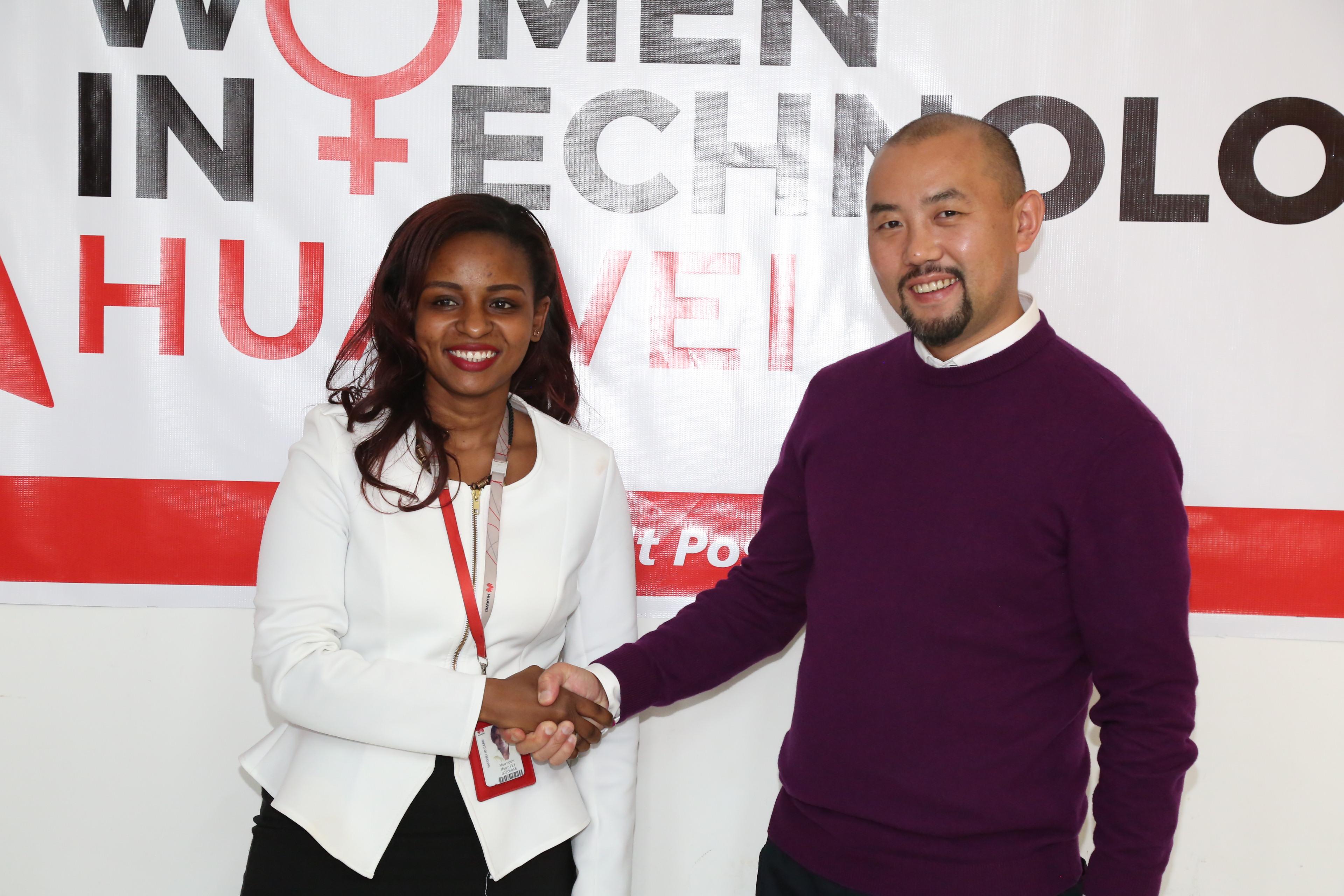
Huawei has launched a fresh women-focused digital-skills initiative in Africa under its long-running Women in Technology effort, adding momentum to a broader conversation in Kenya about who gets to benefit from the country’s digital economy. The company has previously said its Women in Technology Huawei Initiative, known as WITH, was designed to support women’s careers in science, technology, engineering and mathematics through mentoring, training, opportunities and workplace change. Huawei said at the 2019 Kenya launch that the programme aimed to reach more than 4,000 girls and women through a mix of corporate, community and education activities. ([huawei.com](https://www.huawei.com/ke/news/2019/huawei-kenya-launches-women-in-tech-initiative))
The new push matters because Kenya’s digital-skills debate has moved well beyond access to phones and internet connectivity. In 2026, Konza Technopolis and Microsoft launched a free online AI-skills programme for women, built around artificial intelligence, cybersecurity, data analytics and responsible AI use. That programme was unveiled at the Thrive, Elevate and Celebrate Women Summit, which also produced a declaration focused on digital inclusion, financing, safe digital spaces and women’s leadership. Together, these efforts show that the country’s private sector and public institutions are increasingly treating women’s skills development as central to the digital economy rather than as a side project. ([standardmedia.co.ke](https://www.standardmedia.co.ke/sci-tech/article/2001544066/konza-microsoft-bank-on-ai-skills-to-accelerate-women-in-creative-economy))
Huawei’s Africa strategy also aligns with its wider corporate inclusion messaging. In a 2026 sustainability-focused article, the company said it works with governments and partners to improve digital access, deliver training and advance STEM education in underserved communities, including women and young people. Huawei added that its mobile classroom models are intended to bring training to remote areas and help bridge the digital divide. ([huawei.com](https://www.huawei.com/en/media-center/tech-cares/2026/skills-on-wheels?utm_source=openai))
Why women and underserved communities remain the focus
The emphasis on women is not accidental. In Kenya and across sub-Saharan Africa, digital inclusion remains uneven, and women often face a steeper climb into formal technology careers because of cost, location, time, social expectations and prior access to training. Huawei itself has framed its women-in-tech work as a response to the fact that the tech sector in Kenya remains male-dominated, arguing that a more strategic and ambitious approach is needed to improve participation. ([huawei.com](https://www.huawei.com/ke/news/2019/huawei-kenya-launches-women-in-tech-initiative))
Recent Kenyan examples show what that looks like in practice. In Lamu, Huawei’s DigiTruck mobile classroom graduated more than 140 young people in May 2026 after a five-week ICT and digital-literacy programme. The training was delivered with the county government and Computers for Schools Kenya, and the company said the mobile classroom has now reached 43 counties and trained nearly 11,000 youth since 2019. The Lamu graduation also underscored that digital-skills programmes are increasingly serving people far from Nairobi’s formal tech corridors, including participants facing disability, poverty and long travel times. ([the-star.co.ke](https://www.the-star.co.ke/counties/coast/2026-05-13-central-page-story-2-new-mum-among-graduates-as-huawei-equips-140-youth-in-lamu-1))
That local example echoes Huawei’s broader model. The company says its Skills on Wheels family of initiatives, including DigiTruck and similar mobile classrooms, has reached more than 130,000 people in 21 countries over six years. Huawei says these programmes target women, students, unemployed young people and older adults, which suggests the company sees digital-skills delivery as both a social-impact project and a workforce-development strategy. ([huawei.com](https://www.huawei.com/en/media-center/tech-cares/2026/skills-on-wheels?utm_source=openai))
Kenya’s digital future is being shaped by partnerships
The latest women-in-tech initiative lands at a moment when Kenya’s digital policy environment is clearly favoring partnerships. The Konza-Microsoft programme, for example, was not just a stand-alone training course; it was presented as part of a wider ecosystem that includes mentorship, leadership development, multi-stakeholder collaboration and a formal summit declaration. That language matters because it shows a shift from one-off training events toward more structured talent pipelines. ([standardmedia.co.ke](https://www.standardmedia.co.ke/sci-tech/article/2001544066/konza-microsoft-bank-on-ai-skills-to-accelerate-women-in-creative-economy))
Huawei’s own Kenya record supports the same reading. The company launched WITH in 2019 with a plan that combined internal hiring and promotion goals, supplier engagement, CSR outreach and ICT academies. Its stated goal was to influence not only students but also lecturers, partners and women-owned suppliers. That broader design suggests the company has been using women-in-tech branding to influence the full chain of technology participation, from schooling to procurement. ([huawei.com](https://www.huawei.com/ke/news/2019/huawei-kenya-launches-women-in-tech-initiative))
For Kenya, the practical question is whether these programmes can shift outcomes at scale. The country has a young population, a growing digital-economy ambition and strong public messaging about inclusion, but many women still face barriers to entry in AI, cloud, data and cybersecurity. Training programmes can help close part of that gap, especially when they are free, local and linked to employability. But the deeper test will be whether participants move from short-term learning into paid work, entrepreneurship, certification and leadership roles. That is an inference based on the design of the cited programmes and the skills shortages they are trying to address. ([the-star.co.ke](https://www.the-star.co.ke/counties/coast/2026-05-13-central-page-story-2-new-mum-among-graduates-as-huawei-equips-140-youth-in-lamu-1))
There is also a reputational dimension. Huawei has for years used digital-skills and inclusion programmes to show that its infrastructure business is tied to broader social impact. In Africa, that means schoolgirls in Ghana, mobile classrooms in Kenya and women-centered training schemes alongside telecom and cloud partnerships. The result is a consistent message: building networks is only part of the equation; building the people who can use them is the other. ([huawei.com](https://www.huawei.com/en/media-center/tech-cares/2022/ghana-school-girls?utm_source=openai))
What this means for readers in Kenya
For Kenyan readers, the significance of Huawei’s women-in-tech initiative is less about a single launch and more about the direction of travel. The country is moving toward a digital economy in which artificial intelligence, cybersecurity and data skills will matter increasingly for jobs, entrepreneurship and public services. The institutions pushing those skills are also widening their lens, recognizing that inclusion, location and gender shape who gets a fair shot. ([standardmedia.co.ke](https://www.standardmedia.co.ke/sci-tech/article/2001544066/konza-microsoft-bank-on-ai-skills-to-accelerate-women-in-creative-economy))
If the current wave of programmes succeeds, the most visible impact may not be a headline-grabbing launch but a longer pipeline of women who can teach, code, secure systems, analyze data and build businesses. That is the promise embedded in both Huawei’s WITH model and the newer Konza-Microsoft effort: not just awareness, but capability; not just representation, but measurable participation. The challenge now is making sure those opportunities reach women outside the main urban centers, as well as those already close to Kenya’s technology hubs. ([huawei.com](https://www.huawei.com/ke/news/2019/huawei-kenya-launches-women-in-tech-initiative))
Sources
Huawei Kenya Launches Women In Tech Initiative. Huawei. ([huawei.com](https://www.huawei.com/ke/news/2019/huawei-kenya-launches-women-in-tech-initiative))
New mum among graduates as Huawei equips 140 youth in Lamu. The Star. ([the-star.co.ke](https://www.the-star.co.ke/counties/coast/2026-05-13-central-page-story-2-new-mum-among-graduates-as-huawei-equips-140-youth-in-lamu-1))
Konza, Microsoft bank on AI skills to accelerate women in creative economy. The Standard. ([standardmedia.co.ke](https://www.standardmedia.co.ke/sci-tech/article/2001544066/konza-microsoft-bank-on-ai-skills-to-accelerate-women-in-creative-economy))
Skills on wheels: A digital literacy journey. Huawei. ([huawei.com](https://www.huawei.com/en/media-center/tech-cares/2026/skills-on-wheels?utm_source=openai))
Huawei Exceeds ITU Partner2Connect Pledge Target, Bringing Connectivity to 170 Million People Globally. Huawei. ([huawei.com](https://www.huawei.com/en/news/2026/3/mwc-inclusion-skills?utm_source=openai))
Huawei ICT Competition 10th Global Final. Huawei. ([huawei.com](https://www.huawei.com/en/news/2026/6/ict-competition-global?utm_source=openai))
Editorial note
This article is based on corroborated reporting and official programme material. The RSS lead did not provide enough detail to verify the exact country, venue or attendee list for the newly reported launch, so the story has been written around the verified regional and Kenyan context available from independent credible sources.
Sources: