Kenya’s government is urging counties, farmers, and urban planners to move from climate information to early action after meteorologists projected above-average rainfall across most of the country during the October-December 2026 short-rain...
What you need to know
Kenya’s government is urging counties, farmers, and urban planners to move from climate information to early action after meteorologists projected above-average rainfall across most of the country during the October-December 2026 short-rain...
Table of contents [Show]
Key facts
- Kenya’s climate officials said the October-December 2026 short-rains season is expected to bring above-average rainfall over most of the country.
- State Department for Environment and Climate Change Principal Secretary Festus Ng’eno urged early action so forecasts are translated into practical interventions.
- Kenya Meteorological Service Authority director Edward Muriuki said El Niño does not automatically mean heavy rainfall everywhere and that other climate drivers must still be monitored.
- The forecast also points to warmer-than-average temperatures in the coastal region and some eastern and northeastern counties.
- Officials said rainfall will begin in western Kenya and start in the second and third weeks of October in other parts of the country.
- The outlook highlights the need for county-level flood preparedness, drainage maintenance, and sector-specific planning for farmers, pastoralists, fishers, and urban residents.
Government raises the alarm over preparedness
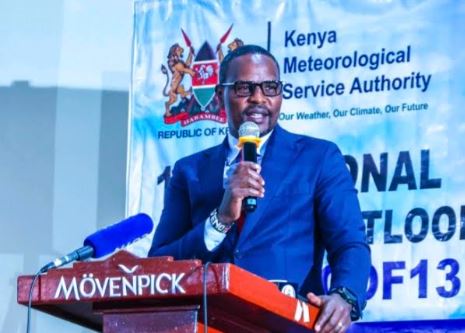
Kenya’s environment and climate officials are telling public agencies, businesses, and households to prepare earlier for the October-December 2026 short-rains season after meteorologists projected enhanced rainfall across much of the country. The warning came during the close of the 13th National Climate Outlook Forum in Nairobi, where senior officials argued that seasonal forecasts should be used as a trigger for practical action, not merely as background information. The message reflects a broader shift in Kenya’s climate planning toward anticipation, response coordination, and risk reduction before weather-related losses begin.
Principal Secretary for Environment and Climate Change Festus Ng’eno said the country needed stronger collaboration so that climate information is translated into interventions that protect lives, livelihoods, and the wider economy. That emphasis matters because Kenya’s short rains are a critical agricultural and water season, but they can also intensify flooding, damage infrastructure, and disrupt transport and public health services when rainfall is excessive or poorly distributed. Kenya’s meteorological service and state climate officials also framed the forecast in terms of opportunity, saying that good rains can support crop production, pasture regeneration, and water recharge if communities and institutions are ready to benefit from them.
What the forecast says
The meteorological outlook for the October-December 2026 season points to above-average rainfall over most of Kenya, with the largest share of the country expected to receive wetter-than-normal conditions. The forecast also points to warmer-than-average temperatures, especially along the coast and in some eastern and northeastern counties. In climate terms, that combination can be difficult to manage: more rain may improve farm output and water availability, but it can also heighten the risk of flash floods, waterborne disease, landslides in vulnerable highland areas, and damage to roads, bridges, drainage systems, and homes. Kenya’s own meteorological materials note that the short-rains season is influenced by the El Niño-Southern Oscillation and the Indian Ocean Dipole, both of which can affect how rain is distributed across the country. ([kenyanews.go.ke](https://www.kenyanews.go.ke/ps-ngeno-calls-for-preparedness-early-action-ahead-of-el-nino/?utm_source=openai))
The official seasonal outlook published through the Kenya Meteorological Department’s channels says rainfall is expected to continue in western Kenya and begin in the rest of the country in the second and third weeks of October, with prolonged wet spells and occasional isolated storms likely in several places. It also identifies areas where rainfall distribution may be poorer than elsewhere, including parts of Turkana and Samburu counties, even within an overall wetter national pattern. That is an important reminder that a national forecast does not remove local variation: some places may face flood impacts while others remain exposed to pasture stress or uneven moisture availability. ([kenyanews.go.ke](https://www.kenyanews.go.ke/ps-ngeno-calls-for-preparedness-early-action-ahead-of-el-nino/?utm_source=openai))
Why El Niño matters, but does not tell the whole story
Officials were careful to say that El Niño does not automatically mean heavy rain everywhere. That distinction is important, because public debate often treats El Niño as a simple synonym for extreme rainfall, when in practice the outcome depends on multiple interacting atmospheric and oceanic conditions. Kenya Meteorological Service Authority director Edward Muriuki said forecasts must remain understandable and actionable, but also warned that other drivers still need to be monitored before and during the season. In other words, El Niño can raise the odds of wet conditions in East Africa, but it does not guarantee the same result in every county or during every week of the season. ([kenyanews.go.ke](https://www.kenyanews.go.ke/ps-ngeno-calls-for-preparedness-early-action-ahead-of-el-nino/?utm_source=openai))
That nuance is especially relevant in Kenya, where the timing and intensity of short rains vary sharply by region. An average or above-average season can still produce damaging dry breaks, while a wet season can also arrive late or end early in some locations. The government’s emphasis on acting before impacts occur is therefore less about one forecast headline and more about building a system that can respond to uncertainty. Kenya’s climate officials are effectively arguing that resilience should be based on probabilities and local risk maps, not on waiting for floodwater to reach streets before a response begins. ([kenyanews.go.ke](https://www.kenyanews.go.ke/ps-ngeno-calls-for-preparedness-early-action-ahead-of-el-nino/?utm_source=openai))
Sectors being told to prepare
The guidance emerging from the forum is targeted at multiple sectors. Farmers are being urged to use seasonal and monthly updates for planting, crop management, and harvest planning. That matters because an accurate seasonal average is not enough on its own; farmers also need information on onset dates, dry spells, storm risk, and local distribution patterns. For pastoralists, officials say the key issue is how to manage water points, pasture, and livestock movements if rainfall is patchy or delayed in some grazing areas. Fishing communities are also being advised to pay close attention to weather and lake-condition updates, since storms and changing wind patterns can create hazards on water bodies. ([kenyanews.go.ke](https://www.kenyanews.go.ke/ps-ngeno-calls-for-preparedness-early-action-ahead-of-el-nino/?utm_source=openai))
Urban and peri-urban counties are being singled out for flood readiness. Kenya’s officials say drainage maintenance, flood mapping, and contingency planning should begin before the heaviest rains arrive. That is particularly relevant for the Nairobi metropolitan area and other rapidly growing towns where impervious surfaces, clogged drains, and informal settlement exposure can turn heavy rainfall into a public safety emergency within hours. The preparedness message also extends to county governments, which are expected to coordinate with national agencies on alerts, emergency response, and local mitigation measures. ([kenyanews.go.ke](https://www.kenyanews.go.ke/ps-ngeno-calls-for-preparedness-early-action-ahead-of-el-nino/?utm_source=openai))
Lessons from earlier climate shocks
The push for early action is also shaped by Kenya’s recent experience with extreme weather. In previous El Niño and flood episodes, response costs rose sharply once roads were cut off, crops were lost, and households had already been displaced. Officials in Nairobi are now arguing that the cheaper and more effective option is to invest in readiness before those impacts occur. That logic is not unique to Kenya, but it is particularly urgent in a country where agriculture, water access, transport, and urban settlement patterns are closely tied to seasonal rainfall behavior. ([kenyanews.go.ke](https://www.kenyanews.go.ke/ps-ngeno-calls-for-preparedness-early-action-ahead-of-el-nino/?utm_source=openai))
The government’s own climate reporting also helps explain the timing of the warning. Kenya’s climate outlook materials for 2026 note that El Niño probabilities were expected to rise through mid-2026 and remain elevated into the boreal summer and fall, even while forecasts remained uncertain at long lead times. That means the current emphasis on preparedness is being issued well before the peak of the short-rains season, giving counties and sector agencies time to inspect drainage, pre-position supplies, improve communications, and test emergency plans. In disaster risk management terms, this is the window when intervention is most likely to pay off. ([meteo.go.ke](https://meteo.go.ke/documents/3009/State_of_the_Climate_Report_2025.pdf?utm_source=openai))
Economic opportunity, but only if the country is ready
The Kenyan government is also trying to frame the forecast as an opportunity rather than a threat alone. Better rainfall can support food production, reduce water stress, and improve pasture recovery after drier spells. If irrigation systems, extension services, and market logistics are functioning well, a wetter season can boost incomes and stabilize supplies. But the same season can reverse those gains if poor drainage, delayed advisories, weak road maintenance, or inadequate emergency response allow localized flooding to disrupt production and transport. The central policy question is therefore not whether rain will fall, but whether the country can turn seasonal information into sector-specific action fast enough to reduce harm and capture benefits. ([kenyanews.go.ke](https://www.kenyanews.go.ke/ps-ngeno-calls-for-preparedness-early-action-ahead-of-el-nino/?utm_source=openai))
For Kenya’s counties, that means the next few months will be a test of coordination. Schools, health facilities, water providers, roads departments, agricultural officers, and disaster-management teams may all need to work from the same climate picture. The National Climate Outlook Forum is designed to help create that shared understanding, but the real measure of success will be on the ground: fewer avoidable losses, quicker warnings, and better use of a season that could bring both abundance and danger.
Sources: