A recent feature on Kenyan women in aquaculture and supporting reporting from Kenyan and international outlets point to the same trend: more women are entering farming as a business, using small plots, training networks and climate-smart me...
What you need to know
A recent feature on Kenyan women in aquaculture and supporting reporting from Kenyan and international outlets point to the same trend: more women are entering farming as a business, using small plots, training networks and climate-smart me...
Table of contents [Show]
Key facts
- Fish Farmer published the lead feature on August 28, 2026, about Kenyan women in aquaculture. ([fishfarmermagazine.com](https://www.fishfarmermagazine.com/features/kenya-sisters-are-doing-it-for-themselves))
- The Star reported in May 2026 that young women in Murang’a formed a farming group and used improvised container gardening to build income and food security. ([the-star.co.ke](https://www.the-star.co.ke/counties/central/2026-05-06-muranga-young-women-turn-to-farming-for-self-reliance))
- UNICEF Kenya reported in July 2025 on a young agripreneur in Kirinyaga who trained more than 130 farmers, mostly women, on climate-smart techniques. ([unicef.org](https://www.unicef.org/kenya/stories/planting-roots-resilience-graces-journey-young-agripreneur-kenya))
- Women remain a major part of Kenya’s agricultural labor force but often face barriers to land, capital and market access. ([the-star.co.ke](https://www.the-star.co.ke/counties/central/2026-05-06-muranga-young-women-turn-to-farming-for-self-reliance))
- The reports show agriculture being reframed as a career, business and community leadership path for women and young people. ([the-star.co.ke](https://www.the-star.co.ke/counties/central/2026-05-06-muranga-young-women-turn-to-farming-for-self-reliance))
A shift in who gets to farm
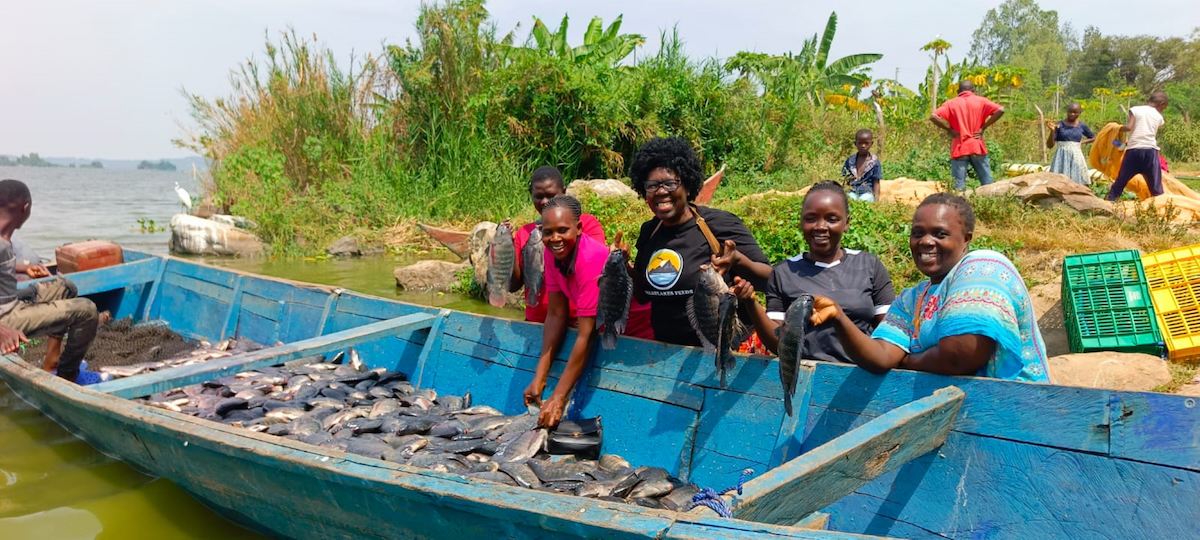
Across Kenya, women are increasingly using agriculture not simply as a survival strategy, but as a route to independence, leadership and business ownership. That broader shift is the backdrop to a new feature in Fish Farmer magazine, which profiles Kenyan women working in aquaculture and describes how they are entering a sector long seen as male-dominated. The piece presents women in fish farming as entrepreneurs rather than beneficiaries, emphasizing that they are participating in every part of the value chain, from feed production to cage farming and hatcheries. The feature was published on August 28, 2026. ([fishfarmermagazine.com](https://www.fishfarmermagazine.com/features/kenya-sisters-are-doing-it-for-themselves))
The same direction of change appears in reporting from Kenya. In Murang’a county, The Star documented a women’s farming group that began as a practical training circle and grew into a source of income and food security for its members. The article shows younger women rejecting the assumption that farming is old-fashioned or only for people without alternatives, instead framing agriculture as an active career choice. ([the-star.co.ke](https://www.the-star.co.ke/counties/central/2026-05-06-muranga-young-women-turn-to-farming-for-self-reliance))
From small plots to serious enterprise
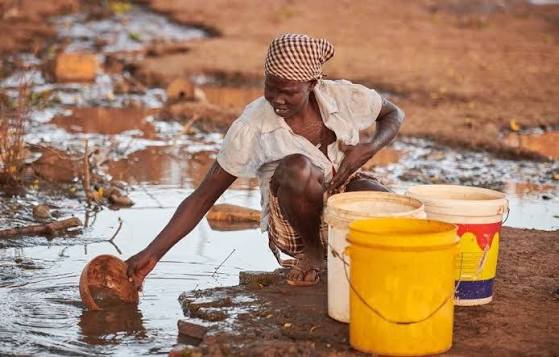
What makes these stories notable is not just that women are farming, but how they are doing it. In Murang’a, the group members used sacks, containers and even discarded shoes to build small kitchen gardens on limited land. That kind of improvisation matters because land access remains a major barrier for many Kenyan women, especially younger women who do not inherit property or have collateral for loans. The Star’s reporting underlines that women still form a large share of agricultural labor while men often retain control over land and market access. ([the-star.co.ke](https://www.the-star.co.ke/counties/central/2026-05-06-muranga-young-women-turn-to-farming-for-self-reliance))
The Fish Farmer feature points to a similar logic in aquaculture: women are not waiting for ideal conditions before joining the sector. Instead, they are finding entry points, building businesses and organizing training around the realities they face. The article’s central theme is that women can succeed in aquaculture at multiple stages, which broadens the definition of agricultural participation beyond field work alone. ([fishfarmermagazine.com](https://www.fishfarmermagazine.com/features/kenya-sisters-are-doing-it-for-themselves))
This is also consistent with a UNICEF Kenya story from 2025 about a young agripreneur in Kirinyaga County. In that profile, the farmer trained more than 130 other farmers, mostly women, on climate-smart practices and mentored students through demonstration plots. The story shows that women-led agriculture is increasingly tied to peer education, youth outreach and community-level knowledge transfer, not just crop production. ([unicef.org](https://www.unicef.org/kenya/stories/planting-roots-resilience-graces-journey-young-agripreneur-kenya))
The significance of these developments goes beyond individual success stories. Kenya’s agricultural sector still relies heavily on smallholder production, and women remain central to that labor force. But persistence alone does not equal power. The reporting from The Star and UNICEF illustrates a familiar pattern: women do much of the work, yet access to land, capital, technology and decision-making has often lagged behind their contribution. The women in Murang’a are trying to close that gap through training and demonstration farming, while the young agripreneur profiled by UNICEF is building knowledge-sharing systems that help others adopt better methods and market themselves more effectively. ([the-star.co.ke](https://www.the-star.co.ke/counties/central/2026-05-06-muranga-young-women-turn-to-farming-for-self-reliance))
That matters in a country where climate pressure, youth unemployment and high input costs are reshaping agricultural livelihoods. If farming is to stay relevant to younger Kenyans, it will need to look more like business, innovation and problem-solving than subsistence alone. The reporting suggests women are already moving in that direction by combining small-scale production with training, collective action and new market ideas. ([the-star.co.ke](https://www.the-star.co.ke/counties/central/2026-05-06-muranga-young-women-turn-to-farming-for-self-reliance))
The aquaculture angle is important as well. Fish farming has often been promoted as a growth area because it can generate protein, income and employment, but access to the sector has not been equal. By highlighting women active in feed, cages and hatcheries, the Fish Farmer feature indicates that the entry points are widening. In practical terms, that can mean more local supply chains, more diversified incomes and more ownership for women who historically have been pushed toward the lowest-paid parts of farm work. ([fishfarmermagazine.com](https://www.fishfarmermagazine.com/features/kenya-sisters-are-doing-it-for-themselves))
The power of training and visibility
A common thread in all three reports is the role of visibility. When women can see other women farming successfully, whether in vegetables, rice, fish or climate-smart agribusiness, the sector becomes easier to imagine as a career. That is part of the message in Murang’a, where the group’s home-based demo farm became a training hub, and in UNICEF’s profile, where a farmer used demonstration plots to teach both students and growers. These are not isolated acts of mentorship; they are mechanisms for changing expectations. ([the-star.co.ke](https://www.the-star.co.ke/counties/central/2026-05-06-muranga-young-women-turn-to-farming-for-self-reliance))
Visibility also challenges a deeper cultural script. In Kenya, agriculture has too often been treated as a fallback option, especially for young people. The stories cited here push back against that idea. They present farming as skilled work, one that can support family livelihoods, food security and business growth. Just as importantly, they show that women do not need permission to build influence in agriculture. They are already doing so by organizing, teaching, adapting and selling. ([the-star.co.ke](https://www.the-star.co.ke/counties/central/2026-05-06-muranga-young-women-turn-to-farming-for-self-reliance))
Taken together, the reporting suggests that Kenya’s agricultural future will be shaped not only by weather, markets and policy, but also by who gets to participate on fair terms. If women continue to gain access to training, finance and market channels, the sector could become more resilient and more inclusive. The stories in Fish Farmer, The Star and UNICEF do not claim that those barriers have disappeared. They do, however, show that women farmers are finding practical ways around them, and in the process they are changing what agricultural success looks like in Kenya. ([fishfarmermagazine.com](https://www.fishfarmermagazine.com/features/kenya-sisters-are-doing-it-for-themselves))
Source trail and context
This article was developed from the RSS lead supplied by the user and corroborated with independent reporting from Fish Farmer, The Star and UNICEF Kenya. The lead’s theme is consistent with recent Kenyan coverage showing women advancing in agriculture through small-scale innovation, training networks and enterprise-building. ([fishfarmermagazine.com](https://www.fishfarmermagazine.com/features/kenya-sisters-are-doing-it-for-themselves))
Editorial note
The original Fish Farmer feature is partially paywalled, so this article relies on the accessible headline, byline, image caption and surrounding page context, alongside independent corroboration from Kenyan and international sources. No unsupported quotations or unverified numerical claims were added beyond what could be confirmed in the available reporting. ([fishfarmermagazine.com](https://www.fishfarmermagazine.com/features/kenya-sisters-are-doing-it-for-themselves))
Sources: