Key facts
- World Bank transport analysis says 37% of locally produced food in Africa is lost or wasted because of inadequate storage and related bottlenecks.
- The same World Bank report says African food supply chains are about four times longer than Europe’s and can account for up to 45% of the price of some basic commodities.
- UNEP’s Food Waste Index Report 2024 says Africa still has uneven food-waste data coverage, making better measurement essential.
- FAO says reducing food loss and waste improves food security, nutrition, resource efficiency and environmental outcomes.
- World Bank research on sub-Saharan Africa shows loss estimates vary by crop and measurement method, so country-specific diagnostics are essential.
The real crisis is not only how much Africa grows, but how much it keeps
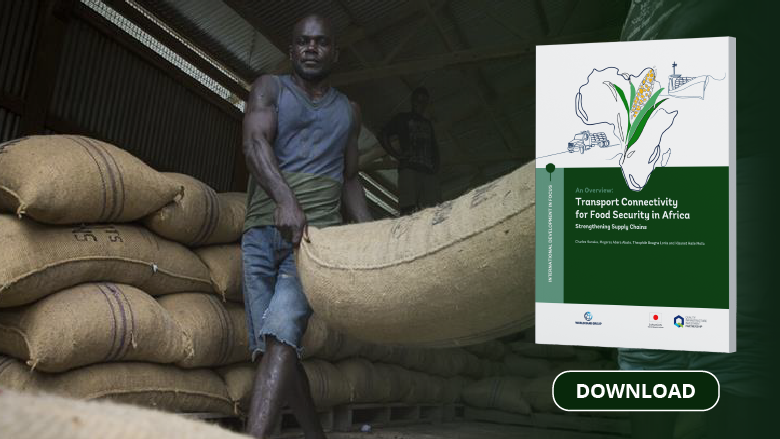
Africa’s food challenge is often described as a production problem: too little output, too little investment, too much reliance on imports. But the more urgent weakness in many food systems is what happens after harvest. Food moves through farm gates, aggregation points, roads, border posts, warehouses and markets before it reaches a plate. At every step, value can leak away through spoilage, bruising, moisture, delays, pests and rough handling. Recent World Bank work on transport connectivity says the continent’s food supply chains are failing to move staple foods reliably, and estimates that 37% of locally produced food is lost or wasted because of inadequate storage and related bottlenecks. That diagnosis matters because it shifts the policy focus from simply growing more food to preserving what already exists. ([worldbank.org](https://www.worldbank.org/en/topic/transport/publication/improving-transport-connectivity-for-food-security-in-africa?utm_source=openai))
For Kenya and many other African countries, the implications are immediate. Losses do not only reduce the amount of food available in cities and towns; they also cut farm incomes, raise consumer prices and weaken incentives for farmers to invest in better production. The World Bank’s broader Africa work has long argued that post-harvest losses depress returns for growers while wasting land, water and energy that were used to produce food that never gets eaten. Even where the exact loss rate varies by crop, country and method of measurement, the pattern is consistent: inadequate storage and handling remain central causes. ([documents1.worldbank.org](https://documents1.worldbank.org/curated/en/288911601302842762/pdf/Rwanda-Food-Smart-Country-Diagnostic.pdf?utm_source=openai))
Where the losses happen matters as much as the amount lost
One reason food-loss policy has remained muddled is that estimates differ depending on what is measured and how. The World Bank’s Africa myths and facts research notes that older estimates for sub-Saharan Africa have sometimes suggested very large losses, while household survey data can produce lower figures for specific crops such as maize. That is not a contradiction so much as a warning: the loss gap cannot be closed with vague continental averages alone. Policymakers need to know whether the main leak is on the farm, in village storage, during transport, at wholesale markets or in the home. ([worldbank.org](https://www.worldbank.org/en/programs/africa-myths-and-facts/publication/is-post-harvest-loss-significant-in-sub-saharan-africa?utm_source=openai))
That distinction is especially important because interventions differ by stage. If the problem is on-farm drying, farmers may need tarpaulins, hermetic bags or better pest control. If the break point is at transport, then roads, truck scheduling, cold chains and border efficiency matter more. If losses are concentrated in informal markets, then shaded stalls, cleaner handling and quicker turnover become key. The World Bank’s 2025 transport report says Africa’s food supply chains are about four times longer than Europe’s and can account for up to 45% of the price of some basic commodities, which helps explain why efficient logistics are not a luxury but part of food security itself. ([worldbank.org](https://www.worldbank.org/en/topic/transport/publication/improving-transport-connectivity-for-food-security-in-africa?utm_source=openai))
Transport is a food policy issue, not just an infrastructure issue
The new World Bank transport analysis is significant because it treats food insecurity as a logistics problem as well as an agricultural one. According to the report, poorly functioning ports, border crossings, road corridors and storage systems add time and cost to the movement of food, creating avoidable spoilage and making it harder for surplus-producing regions to serve deficit areas. The Bank says targeted investment in 50 transport hubs — ports, border crossings and road segments — could reduce waste and improve food access. That is a systems approach: fix the routes food travels, and the food system becomes more resilient. ([worldbank.org](https://www.worldbank.org/en/news/press-release/2025/05/20/crucial-african-transport-hubs-food-security-efforts?utm_source=openai))
This view fits a wider evidence base. FAO has repeatedly argued that reducing food loss and waste improves food security, nutrition and resource efficiency, while also lowering the environmental burden of food systems. UNEP’s Food Waste Index Report 2024 adds another dimension: countries need better measurement because without reliable data, they cannot track progress or target interventions effectively. In Africa, UNEP notes that data coverage is still uneven, which means some countries may be undercounting the problem simply because they do not measure it well. ([fao.org](https://www.fao.org/newsroom/detail/tackling-food-loss-and-waste-from-the-farm-to-the-table-and-beyond/?utm_source=openai))
For Africa, that measurement gap is not academic. If governments do not know where food is leaking, they risk spending scarce public money on projects that are visible but weakly connected to the main loss points. A road may help, but only if it connects meaningful production zones to storage and markets. A warehouse may help, but only if it is affordable, accessible and managed in ways farmers trust. A digital marketplace may help, but only if produce can remain fresh long enough to benefit from it. The point is not that one fix will solve the whole problem. It is that each fix must be chosen based on where losses actually occur. That is why location-specific diagnostics are essential. ([worldbank.org](https://www.worldbank.org/en/programs/africa-myths-and-facts/publication/is-post-harvest-loss-significant-in-sub-saharan-africa?utm_source=openai))
Smallholders bear a large share of the pain
In many African food systems, smallholders sit closest to the loss problem and are least able to absorb it. They often harvest into weak storage, sell into thin markets and face high transport costs that reduce their bargaining power. When prices fall after harvest, farmers may be forced to sell quickly, even if storage would have allowed them to earn more later. When prices rise later in the season, consumers pay more because the earlier supply was not preserved. This seasonal swing is one reason loss reduction can benefit both sides of the market. ([worldbank.org](https://www.worldbank.org/en/programs/africa-myths-and-facts?utm_source=openai))
The social consequences are broader than income alone. Food loss means more pressure on households already coping with climate shocks, inflation and conflict. It also means governments must compensate with imports or emergency aid when domestic supplies could have been better conserved. That is one reason the issue belongs in national food-security strategies, not just in agricultural extension manuals. The broader World Bank and FAO framing is that cutting loss is one of the cheapest ways to create food availability, because it preserves food that has already been grown, irrigated, harvested and transported. ([documents1.worldbank.org](https://documents1.worldbank.org/curated/en/288911601302842762/pdf/Rwanda-Food-Smart-Country-Diagnostic.pdf?utm_source=openai))
What a practical African response should look like
A credible strategy for closing Africa’s food-loss gap would start with measurement. Governments should map loss points by crop and corridor, using household surveys, market studies, transport audits and warehouse data. That should be followed by investment in drying, storage and cold-chain infrastructure where those are the binding constraints. It should also include transport reforms that reduce delays at ports and borders, because time is often the enemy of fresh produce. The World Bank’s latest Africa transport materials explicitly link such improvements with reduced waste and better food security. ([worldbank.org](https://www.worldbank.org/en/topic/transport/publication/improving-transport-connectivity-for-food-security-in-africa?utm_source=openai))
Second, the response must be local rather than generic. A maize value chain in western Kenya does not lose food in the same way as horticulture exports from central Kenya or cassava flows in coastal East Africa. Solutions should therefore be matched to commodity, climate and market structure. Third, finance needs to reach the middle of the chain, not only farms and supermarkets. Warehouses, packhouses, aggregation centres, feeder roads and market facilities are often the missing links that turn harvests into food available year-round. FAO’s Africa policy work and the latest joint financing analysis both underline that agrifood transformation requires targeted resources, not broad slogans. ([fao.org](https://www.fao.org/africa/news-stories/news-detail/fao-reports-scaled-up-results-and-sets-priorities-to-accelerate-agrifood-systems-transformation-in-africa/en?utm_source=openai))
Finally, the public conversation should stop treating food loss as a secondary issue. In a region where hundreds of millions of people face food insecurity, wasting a large share of what is already produced is not inefficiency alone; it is a development failure. The opportunity is clear. Reducing losses can improve farmer earnings, stabilize prices, lower emissions and strengthen resilience without waiting for dramatic yield breakthroughs. Africa does need more food production. But it also needs a far more disciplined effort to keep that food from disappearing after harvest. That is the gap policymakers should close first. ([worldbank.org](https://www.worldbank.org/en/news/feature/2025/05/20/the-road-to-food-security-how-targeted-transport-investments-can-reduce-waste-and-food-prices?utm_source=openai))
By the numbers
The World Bank says 37% of locally produced food in Africa is lost or wasted because of weak storage and logistics, while its Africa transport work says supply chains are about four times longer than Europe’s and can account for up to 45% of the price of some staples. UNEP’s 2024 food-waste work also shows that African data coverage remains uneven, which makes better measurement a priority alongside investment. ([worldbank.org](https://www.worldbank.org/en/topic/transport/publication/improving-transport-connectivity-for-food-security-in-africa?utm_source=openai))
Sources: