DCI in Nairobi, Kenya, conducted a meticulously planned raid at Travellers House in the Ngara area, resulting in the arrest of seven individuals suspected of operating a counterfeit US dollar syndicate. This operation, executed by officers from the Central Police Station, uncovered a sophisticated scheme involving the production and intended distribution of fake US currency, marking a significant blow to organized crime in the region. The raid not only exposed the intricacies of counterfeit currency networks but also highlighted the Kenyan authorities' ongoing efforts to combat financial crimes that threaten the nation’s economic stability.
The raid was initiated following actionable intelligence received by the National Police Service (NPS), which pinpointed suspicious activities at a premises in Ngara, a bustling area in Nairobi known for its commercial vibrancy. Acting swiftly, DCI officers stormed Travellers House, a location that had been under surveillance due to reports of illicit financial activities. The operation was a testament to the effectiveness of intelligence-led policing, with the DCI leveraging tip-offs to target criminal networks with precision.
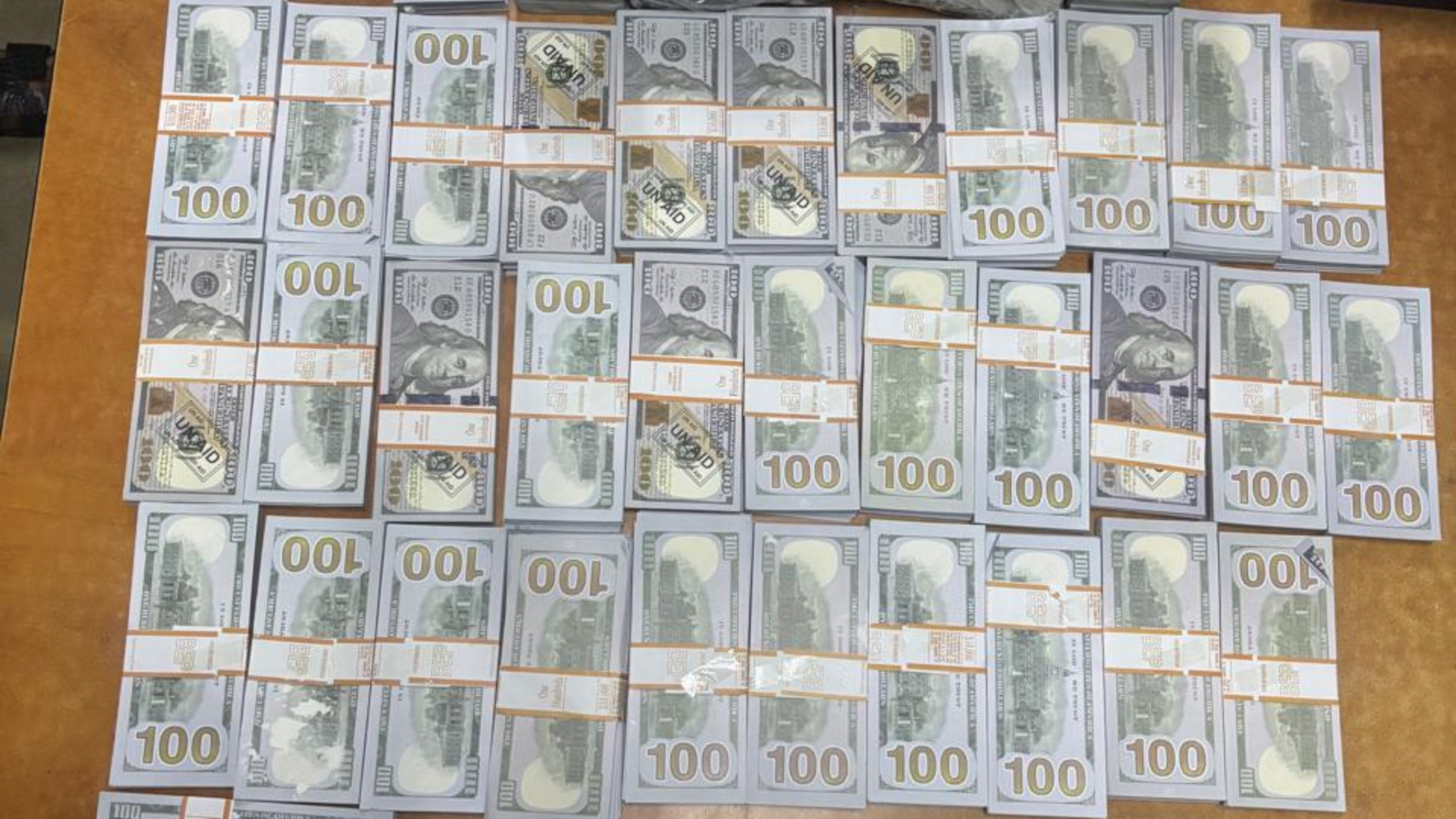
Upon entering the premises, officers discovered thirty-six bundles of counterfeit US dollar notes, meticulously crafted to resemble genuine currency. In addition to the fake notes, the team seized two plastic mockups designed to mimic US dollar bills and black paper sheets cut into the shape of banknotes, believed to be used in the production process. These materials suggest a high level of sophistication in the counterfeiting operation, as the suspects employed techniques to replicate the appearance of legitimate currency, likely intended to deceive unsuspecting victims in financial transactions.
The DCI’s statement on the matter, shared via a post on X, emphasized the operation’s success: “Acting on intelligence, National Police Service officers based at the Central Police Station have apprehended seven individuals suspected of making counterfeit US dollars.” The agency further noted that the seized items were part of a broader effort to dismantle counterfeit currency networks that undermine Kenya’s financial system.
The seven individuals arrested during the raid included a mix of nationalities, reflecting the transnational nature of counterfeit currency operations. Among the suspects were Manyara Aroon Nicas, a Tanzanian national, and Abbott Antony, a Congolese national, alongside four Kenyans: Mongele Wambura, James Ngugi, Justus Alubokho Opulu, and Mary Mumbi. A seventh suspect, whose identity was not disclosed in some reports, was also taken into custody. This diverse group suggests that the syndicate may have been part of a larger, cross-border network, a common feature of organized crime in East Africa.
The suspects were apprehended at Travellers House, where they were allegedly preparing to distribute the counterfeit currency into the market. According to the DCI, the fake dollars were intended to be circulated widely, potentially causing significant economic harm by eroding public trust in financial transactions. The suspects are currently in custody, undergoing processing, and are expected to face charges in court, with potential penalties of up to 12 years in prison if convicted.
The Ngara raid is part of a broader crackdown on counterfeit currency syndicates in Kenya, a country that has seen a rise in such crimes in recent years. Counterfeiting poses a severe threat to economic stability, as fake currency can destabilize markets, inflate prices, and erode confidence in financial systems. In Kenya, where cash transactions remain prevalent, the circulation of counterfeit money can have far-reaching consequences, particularly for small businesses and individuals who may unknowingly accept fake notes.
The DCI has intensified its efforts to combat this issue, with the Ngara operation being one of several high-profile raids in 2025. Just weeks prior, another operation in Mombasa resulted in the seizure of a significant haul of counterfeit foreign currency and cannabis, underscoring the link between counterfeiting and other forms of organized crime, such as drug trafficking and money laundering. In that instance, Anti-Narcotics officers intercepted a Nissan matatu on the Nairobi-Mombasa road, uncovering three bags containing rolls of cannabis and five million Tanzanian shillings.
The prevalence of counterfeit currency operations in Kenya is not a new phenomenon. In January 2024, for example, DCI officers arrested three individuals along Nyerere Road in Nairobi’s Kilimani area, recovering $1.2 million in fake US dollars concealed in a safe. The suspects, identified as Rafael Ojiambo, Samuel Ayako, and Wilfred Gitonga, were part of a “wash wash” gang, a term used locally to describe groups that engage in elaborate scams to pass off counterfeit money as legitimate. These incidents highlight the persistent challenge of combating financial crimes in urban centers like Nairobi, where criminal networks exploit the city’s economic activity to operate undetected.
The materials seized during the Ngara raid provide insight into the sophisticated methods used by counterfeiters. The discovery of black paper sheets cut into the shape of banknotes and plastic mockups suggests the use of a technique known as “black money scams.” In such schemes, fraudsters coat paper with a chemical solution that mimics the appearance of genuine currency when treated, often convincing victims to pay for the “cleaning” process to reveal the “hidden” money. This tactic is commonly used to dupe individuals into parting with real money in exchange for worthless paper.
The thirty-six bundles of counterfeit US dollars found in Ngara were likely intended for circulation in local and international markets, where they could be used to purchase goods, services, or even laundered through legitimate businesses. The presence of such a large quantity of fake currency indicates that the syndicate was well-organized, possibly with connections to suppliers of counterfeiting materials and distribution networks beyond Kenya’s borders.
The DCI’s findings align with global trends in counterfeiting, where criminal groups increasingly use advanced printing technologies and materials to produce convincing fakes. While the US dollar remains a prime target due to its global acceptance, counterfeiters in Kenya have also been known to target local currencies and other foreign denominations, such as the Tanzanian shilling, as evidenced in the Mombasa raid.
The Ngara raid underscores the interconnected nature of counterfeit currency operations with other forms of organized crime. The DCI has repeatedly warned that counterfeiting is often linked to money laundering, drug trafficking, and even terrorism financing. The agency’s statement following the raid emphasized this connection: “Counterfeits are always followed by other organized criminal activities like money laundering and drug trafficking.”
Kenya’s position as a regional economic hub makes it an attractive target for transnational criminal networks. The country’s proximity to conflict zones and its role as a gateway to East Africa facilitate the movement of illicit goods and money across borders. The involvement of foreign nationals, such as the Tanzanian and Congolese suspects in the Ngara raid, highlights the need for regional cooperation to dismantle these syndicates. The DCI has vowed to pursue cross-border networks relentlessly, stating that it will “annihilate” groups involved in producing and circulating counterfeit currency.
The economic impact of counterfeiting extends beyond immediate financial losses. When fake currency enters circulation, it can disrupt monetary policy, increase inflation, and undermine public trust in financial institutions. Small businesses, which often lack the resources to verify the authenticity of cash, are particularly vulnerable. The DCI has urged the public to remain vigilant and report suspicious financial activities through its toll-free number (0800 722 203) or WhatsApp (0709 570 000), emphasizing the role of community cooperation in combating crime.
Despite the success of the Ngara raid, the fight against counterfeiting in Kenya faces several challenges. Criminal networks are highly adaptable, often relocating their operations to avoid detection. The use of advanced technology, such as high-quality printers and chemical treatments, makes it increasingly difficult to distinguish fake currency from genuine notes. Moreover, the transnational nature of these syndicates requires coordination between Kenyan authorities and international law enforcement agencies, a process that can be hampered by bureaucratic delays and differing legal frameworks.
The DCI’s proactive approach, including its use of intelligence-led operations and public engagement, is a step in the right direction. However, sustained efforts are needed to address the root causes of counterfeiting, such as poverty and unemployment, which drive individuals to participate in criminal activities. Strengthening financial regulations, enhancing training for law enforcement, and investing in anti-counterfeiting technologies, such as advanced currency verification systems, could further bolster Kenya’s defenses against financial crimes.
Public awareness campaigns are also critical. Many victims of counterfeit scams are unaware of the telltale signs of fake currency, such as irregularities in watermarks, security threads, or microtext. By educating businesses and individuals on how to identify counterfeit notes, authorities can reduce the circulation of fake money and minimize economic damage.
The arrest of seven suspects in the Ngara raid on August 11, 2025, represents a significant victory in Kenya’s ongoing battle against counterfeit currency syndicates. The operation, which uncovered a substantial haul of fake US dollars and counterfeiting materials, demonstrates the effectiveness of intelligence-driven policing and the DCI’s commitment to disrupting organized crime. However, the transnational nature of these networks and their links to other illicit activities underscore the need for continued vigilance and regional cooperation.
As Kenya strengthens its efforts to combat financial crimes, the Ngara raid serves as a reminder of the complex challenges posed by counterfeiting. By combining law enforcement action with public awareness and technological innovation, the country can protect its economy and maintain public trust in its financial systems. The DCI’s call to action—urging citizens to report suspicious activities—highlights the collective responsibility required to safeguard Kenya’s future from the scourge of counterfeit currency.