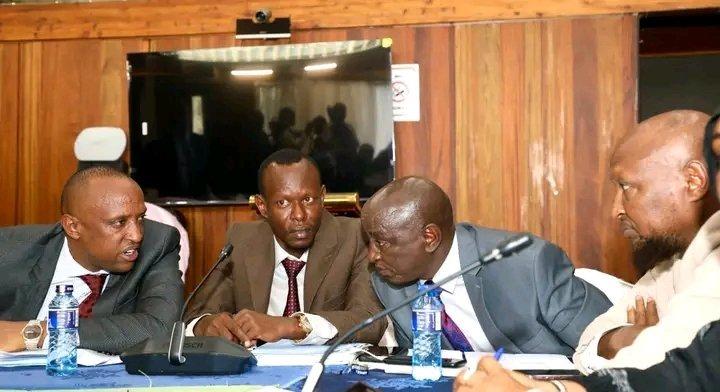
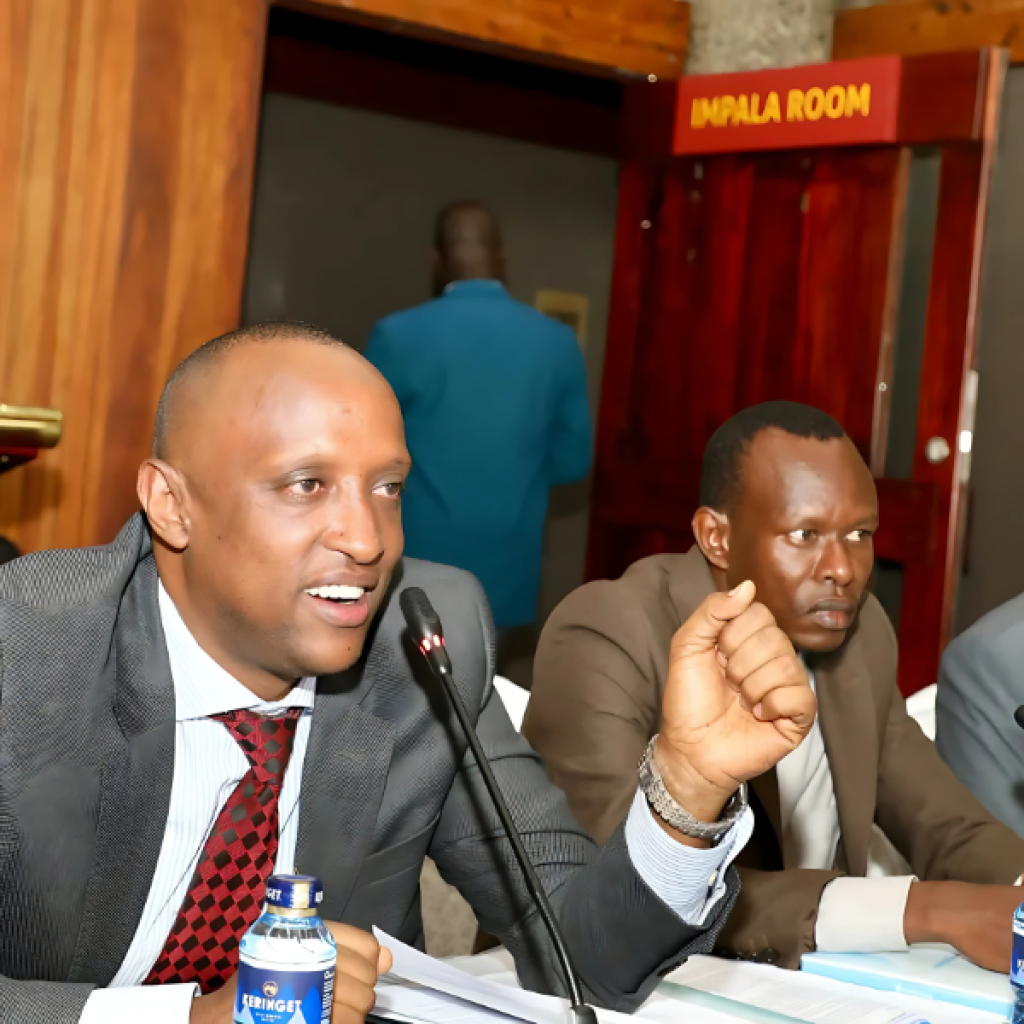
The Senate of Kenya convened a special sitting in Nairobi’s Senate Chamber to begin deliberations on the impeachment of Isiolo Governor Abdi Hassan Guyo, following a contentious vote by the Isiolo County Assembly on June 26 that saw 16 out of 18 Members of the County Assembly (MCAs) support his ouster. The session, which commenced at 10:00 a.m., was marked by intense debate and legal controversy, as a High Court ruling in Meru had declared the County Assembly’s impeachment process null and void just days earlier. Despite this, the Senate proceeded with the hearing, highlighting the complex interplay of legal, political, and constitutional dynamics in one of Kenya’s most high-profile gubernatorial disputes.
The impeachment motion, tabled by Sericho MCA Abubakar Godana on June 10, accused Governor Guyo of gross misconduct, abuse of office, and violations of the Kenyan Constitution and other laws. Among the charges, the governor was faulted for failing to deliver the annual state of the county address for three consecutive years, as mandated by Section 30(2)(k) of the County Governments Act. Additionally, he was accused of bloating the county’s executive structure by appointing 36 advisors and 31 chief officers, despite Isiolo’s limited budget as one of the lowest recipients of national revenue allocations. “The governor has mismanaged our resources and sidelined the County Assembly,” Godana said during a public participation forum on June 18. “Isiolo deserves leadership that respects the law and delivers for its people.”
The Senate’s decision to proceed with the hearing came after Senate Speaker Amason Kingi issued a Gazette Notice on June 27, following formal notification from Isiolo County Assembly Speaker Mohamed Roba. “The Senate will deliberate the impeachment of Isiolo Governor Abdi Ibrahim Hassan,” Kingi announced, emphasizing that the session would focus solely on the impeachment charges and the Division of Revenue Bill, 2025. However, the process was complicated by a High Court ruling on June 27 by Justice Heston Nyaga, who upheld a conservatory order barring the County Assembly from advancing the impeachment. “Any acts in defiance of this court order are null and void,” Nyaga ruled, prompting questions about the Senate’s authority to proceed.
Governor Guyo, who has denied the allegations, maintained that he was not formally invited to respond to the charges before the County Assembly. “I am shocked. They never invited me to explain anything,” he said in a statement on X. “We have a court order that has not been vacated, and I trust the judiciary to protect due process.” His legal team, led by Eric Theuri and Elias Mutuma, filed a contempt of court application against Speaker Roba and County Assembly Clerk Salad Boru, arguing that the impeachment vote violated the court’s directive. The legal battle has added a layer of uncertainty, with Guyo’s lawyers asserting that the Senate’s proceedings risk undermining judicial authority.
The impeachment process has been fraught with chaos, both political and physical. On June 26, the day of the County Assembly’s vote, the Isiolo County Assembly premises became a battleground, with rival groups clashing and police deploying teargas to disperse crowds. “The scenes were chaotic,” said a journalist who witnessed the events but requested anonymity due to safety concerns. “Protesters tried to block MCAs from entering, and stones were thrown as police fired shots in the air.” The Assembly’s Hansard equipment was reportedly vandalized, preventing live streaming of the proceedings, which Speaker Roba attributed to sabotage by those opposed to the impeachment.
The charges against Governor Guyo also include financial mismanagement and failure to meet revenue targets, as flagged by Auditor General Nancy Gathungu in her report for the year ending June 2024. The report highlighted the irregular appointment of advisors and chief officers, which violated Articles 201(d) and 201(e) of the Constitution, emphasizing prudent use of public resources. “Isiolo’s executive structure is unsustainable,” said Homa Bay Senator Moses Kajwang’, who chairs the Senate Public Accounts Committee. “The governor’s actions have raised serious questions about accountability.” During a recent grilling by Kajwang’s committee, Guyo denied appointing 36 advisors, but the Auditor General’s findings contradicted his claims.
The political turmoil in Isiolo has also led to internal strife within the County Assembly. Clerk Salad Boru was sent on compulsory leave by Speaker Roba, who accused him of canceling a public participation forum linked to the impeachment. Boru, however, secured a court order reinstating him, and in a surprising move, gazetted Abdulahi Jaldesa Banticha as a new Speaker on June 26, creating a dual leadership crisis. “There are now two Speakers and two Clerks,” said local businessman Mwenda Thuranira, who has been vocal about the county’s leadership failures. “This confusion reflects the mess in Isiolo’s governance.” Roba dismissed Jaldesa’s appointment as illegitimate, further deepening the county’s political divide.
Public sentiment in Isiolo remains polarized. During the public participation forums held across the county’s 10 wards on June 18, opinions were split, with some residents supporting Guyo’s ouster and others decrying the process as politically motivated. “The governor has failed to deliver clean water and healthcare,” said Halima Abdi, a resident of Sericho Ward. “We need change.” Conversely, others argued that the impeachment was driven by tribal and political rivalries. “This is a witch-hunt,” said Ahmed Noor, a supporter of Guyo. “The MCAs are settling scores, not serving Isiolo.” The polarized views reflect the broader tensions that have fueled unrest in the county, including protests and vandalism following the impeachment vote.
The Senate’s special sitting has drawn national attention, with comparisons to past high-profile impeachments of governors like Mike Sonko and Ferdinand Waititu. If the Senate upholds any of the charges, Guyo will be removed from office immediately, paving the way for his deputy to assume the role pending a by-election. If the charges are dismissed, the County Assembly must wait three months before tabling another impeachment motion. “The Senate’s decision will shape Isiolo’s future,” said political analyst Jane Wambui. “This is a test of whether our institutions can balance legal and political considerations.”
The proceedings have also sparked debate about the role of the judiciary in county governance. The High Court’s intervention has been praised by Guyo’s supporters as a defense of due process but criticized by others as a delay tactic. “The courts should not shield poor leadership,” said Thuranira, echoing sentiments shared on X, where posts called for accountability. “Devolution was meant to bring services closer to the people, but in Isiolo, we’re still waiting for clean water and roads.” The hashtag #IsioloImpeachment has trended, with users debating the merits of the charges and the Senate’s decision to proceed despite the court order.
Human rights groups and civil society organizations have called for calm and urged the Senate to respect judicial rulings. “The rule of law must guide this process,” said Ann Wanjiru, director of the Kenya Human Rights Network. “Both the Senate and the County Assembly must uphold constitutional principles.” The Law Society of Kenya has also weighed in, warning that disregarding court orders risks eroding public trust in governance institutions. “The Senate must tread carefully,” said LSK President Faith Odhiambo. “This is not just about one governor; it’s about the integrity of our democratic processes.”
As the Senate deliberates, the situation in Isiolo remains tense, with reports of MCAs going into hiding due to threats from rival groups. The impeachment has also drawn attention to broader issues of governance in Kenya’s devolved units, where conflicts between governors and county assemblies have become commonplace. “Isiolo is a microcosm of the challenges facing devolution,” said Wambui. “Without accountability and transparency, the promise of devolution remains unfulfilled.” The Senate’s plenary hearings, scheduled to continue on July 8 and 9, will provide Guyo an opportunity to defend himself or appoint legal representation, a chance he claims he was denied by the County Assembly.
For now, Isiolo’s residents await the Senate’s verdict, which could either end Guyo’s tenure or grant him a reprieve. “We just want leaders who deliver,” said Abdi, speaking outside the County Assembly. “This drama is exhausting, but we hope justice prevails.” As the Senate navigates the legal and political complexities, the outcome of Guyo’s impeachment will likely resonate beyond Isiolo, shaping the discourse on accountability and governance in Kenya’s devolved system.