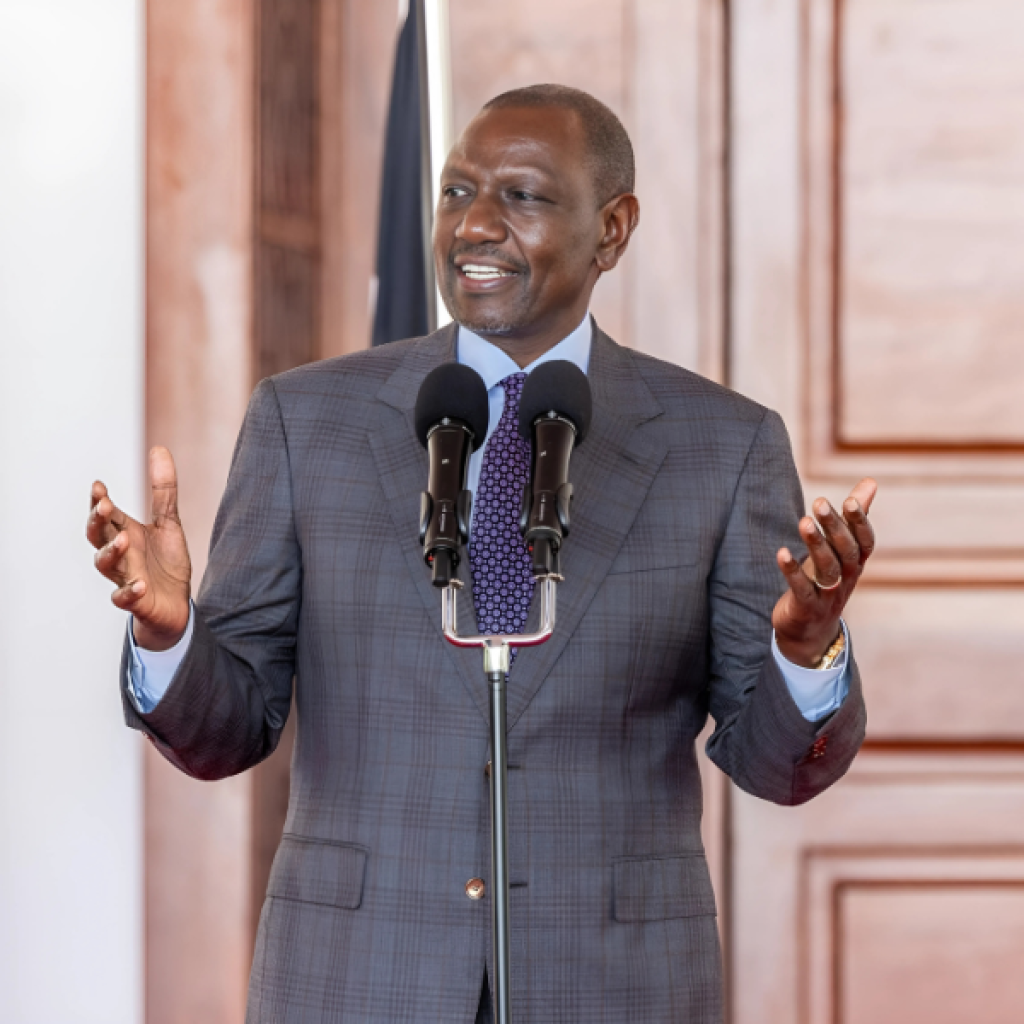
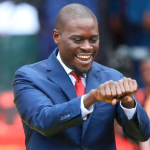
President William Ruto ignited a firestorm of controversy with a bold declaration that he would ensure the imprisonment of opposition leaders Rigathi Gachagua, Fred Matiang’i, and Kalonzo Musyoka for their alleged roles in planning and sponsoring the Gen Z protests that have swept across Kenya. Speaking at a public event in Nakuru, Ruto accused the trio of orchestrating the youth-led demonstrations that have disrupted major cities, including Nairobi, Mombasa, and Kisumu, since June 2024. The protests, initially sparked by opposition to the Finance Bill 2024, have evolved into a broader movement demanding Ruto’s resignation and systemic reforms. “I will not allow chaos to prevail,” Ruto declared to a supportive crowd. “Gachagua, Matiang’i, and Kalonzo are behind these protests, funding and planning to destabilize our government. They will face the full force of the law.”
The President’s remarks come amid a volatile political climate, with the 2027 general elections casting a long shadow over Kenya’s political landscape. The Gen Z protests, characterized by their decentralized nature and heavy use of social media platforms like X and TikTok, have posed a significant challenge to Ruto’s administration, which has struggled to contain the unrest. The demonstrations, which saw a violent peak on June 25, 2024, when protesters stormed Kenya’s Parliament, have resulted in at least 16 deaths and over 400 injuries, according to human rights groups. Ruto’s accusation against the opposition leaders marks a significant escalation, framing the protests as a politically motivated conspiracy rather than a grassroots movement. “These are not innocent youths expressing grievances,” Ruto said. “This is a calculated attempt to undermine our democracy, and we have evidence.”
The named opposition leaders swiftly rejected Ruto’s allegations, accusing him of using the threat of jail as a tactic to silence dissent. Former Deputy President Rigathi Gachagua, speaking at a press conference in Nairobi, dismissed the claims as baseless propaganda. “Kenyans are not fools,” Gachagua said. “The President is trying to shift blame from his government’s failures. The Gen Z protests are about jobs, taxes, and broken promises, not about me or anyone else funding them.” Gachagua, who was impeached in October 2024 and has since emerged as a vocal critic of Ruto, accused the administration of orchestrating a smear campaign to discredit the opposition ahead of 2027. “This is a desperate move by a regime losing legitimacy,” he added, referencing the public’s growing disillusionment with Ruto’s leadership.
Fred Matiang’i, the former Interior Cabinet Secretary who recently returned to Kenya to pursue his presidential ambitions, also denied any involvement in the protests. Addressing supporters in Kisii, Matiang’i described Ruto’s accusations as a distraction from pressing economic issues. “The youth are on the streets because this government has failed them,” he said. “I’ve been out of the country, focusing on my work, not protests. To say I’m sponsoring chaos is absurd.” Matiang’i, backed by former President Uhuru Kenyatta’s Jubilee Party, emphasized his commitment to a peaceful campaign for 2027, urging the government to address the protesters’ demands rather than targeting opposition figures. “Kenyans want solutions, not scapegoats,” he said.
Wiper Party leader Kalonzo Musyoka, another opposition heavyweight named by Ruto, called the President’s remarks a dangerous overreach. Speaking at a rally in Machakos, Musyoka accused Ruto of weaponizing state institutions to suppress political rivals. “Threatening to jail us for protests we didn’t organize is an attack on democracy,” he said. “The Gen Z movement is organic, driven by young Kenyans who are tired of being ignored. Ruto should listen to them, not point fingers.” Musyoka, who has been rallying opposition forces alongside Gachagua and Matiang’i, warned that such threats could further inflame tensions, urging his supporters to remain calm but vigilant. “We will not be intimidated,” he declared. “Our fight is for a better Kenya, and we’ll take it to the ballot.”
The Gen Z protests, which began as a response to proposed tax increases in the Finance Bill 2024, have evolved into a broader critique of Ruto’s administration, with demands ranging from economic reforms to an end to extrajudicial killings and abductions. The movement, largely led by young Kenyans aged 18 to 28, has been notable for its lack of centralized leadership, relying instead on social media to mobilize and coordinate actions. The protests gained renewed momentum in June 2025, marking the first anniversary of the 2024 demonstrations, with thousands taking to the streets in 27 counties. The unrest has seen violent clashes with security forces, with reports of teargas, rubber bullets, and live ammunition used against demonstrators, prompting condemnation from human rights organizations and international observers.
Ruto’s vow to jail opposition leaders has drawn sharp criticism from civil society and legal experts, who argue it risks undermining democratic freedoms. Faith Odhiambo, President of the Law Society of Kenya, described the President’s statement as reckless. “Accusing political opponents without evidence and threatening imprisonment is a dangerous precedent,” she said. “The rule of law must prevail, not political vendettas.” Odhiambo called for an independent investigation into the protests’ funding and organization, urging the government to focus on dialogue with the youth rather than criminalizing dissent. The Kenya National Commission on Human Rights echoed this sentiment, noting a 44 percent rise in abductions in 2024, many linked to the protests, and warned against further state repression.
Public sentiment, particularly among the youth, has been one of defiance. Amina Mude, a 24-year-old protester in Nairobi, dismissed Ruto’s accusations as an attempt to divide the movement. “We’re out here because of high taxes, unemployment, and police brutality,” she said. “No politician is paying us to demand our rights.” On platforms like X, users expressed skepticism about Ruto’s claims, with one posting, “Blaming Gachagua and others is just Ruto dodging responsibility. Gen Z is fighting for all Kenyans.” Others called for unity, with a user writing, “Whether it’s Raila, Kalonzo, or Gachagua, we don’t need leaders to tell us what’s wrong. We see it every day.”
The accusations come at a time when the opposition is actively consolidating to challenge Ruto in 2027. Gachagua, Matiang’i, and Musyoka have held high-profile meetings, including a strategic gathering in Nairobi in April 2025, to form a coalition aimed at unseating Ruto. Their efforts, joined by figures like Martha Karua and Eugene Wamalwa, have focused on mobilizing key voting blocs in Mount Kenya, Ukambani, and Gusii regions. However, internal divisions, particularly over who will be the coalition’s presidential candidate, have posed challenges. “We’re united in our goal to offer an alternative to Ruto,” said Wamalwa at a recent event in Bungoma. “But we’re not here to fight over positions. We’ll agree on a candidate when the time comes.”
Ruto’s administration has defended its stance, with Interior Cabinet Secretary Kipchumba Murkomen claiming that investigations by the Directorate of Criminal Investigations are underway to uncover the protests’ financiers. “We have evidence of coordinated efforts to destabilize the country,” Murkomen said, though he provided no specifics. The government’s hardline approach, including a ban on live media coverage of the protests (later overturned by the High Court), has fueled accusations of authoritarianism. Political analyst Herman Manyora described Ruto’s strategy as a high-stakes gamble. “By targeting prominent opposition figures, Ruto risks alienating voters who already distrust him,” Manyora said. “But it could also rally his base by painting the protests as a political plot.”
The protests have also strained Ruto’s alliance with ODM leader Raila Odinga, who joined the government in a “broad-based” arrangement in July 2024. Odinga, who has publicly criticized the government’s handling of human rights issues, distanced himself from Ruto’s accusations against the opposition. “The youth are speaking for themselves,” Odinga said at a funeral in Kilifi. “The government must address their concerns, not chase shadows.” Odinga’s collaboration with Ruto has already drawn criticism from his base, and his silence on the jail threats has fueled speculation about the durability of their partnership.
The opposition leaders have vowed to continue their campaign, with Gachagua announcing plans for a new political party, the Democracy for the Citizens Party, to be launched in May 2025. “We’re building a movement for all Kenyans,” he said, addressing supporters in Meru. “Ruto’s threats won’t stop us.” Matiang’i, meanwhile, has intensified his outreach in Gusii, emphasizing governance reforms, while Musyoka has focused on consolidating Ukambani’s 1.6 million voters. “We’re not intimidated by jail threats,” Musyoka said. “Our focus is on giving Kenyans hope.”
The controversy has also drawn international attention, with the United States and other Western nations urging restraint. A joint statement from 13 countries expressed concern over the use of force against protesters and called for dialogue. “Kenya’s democracy is at stake,” said a diplomat in Nairobi, speaking anonymously. “Threats against opposition leaders only deepen the crisis.” As protests continue, with plans for further demonstrations to mark the anniversary of the 2024 unrest, the nation remains on edge, with Ruto’s vow to jail opposition figures adding fuel to an already combustible situation.