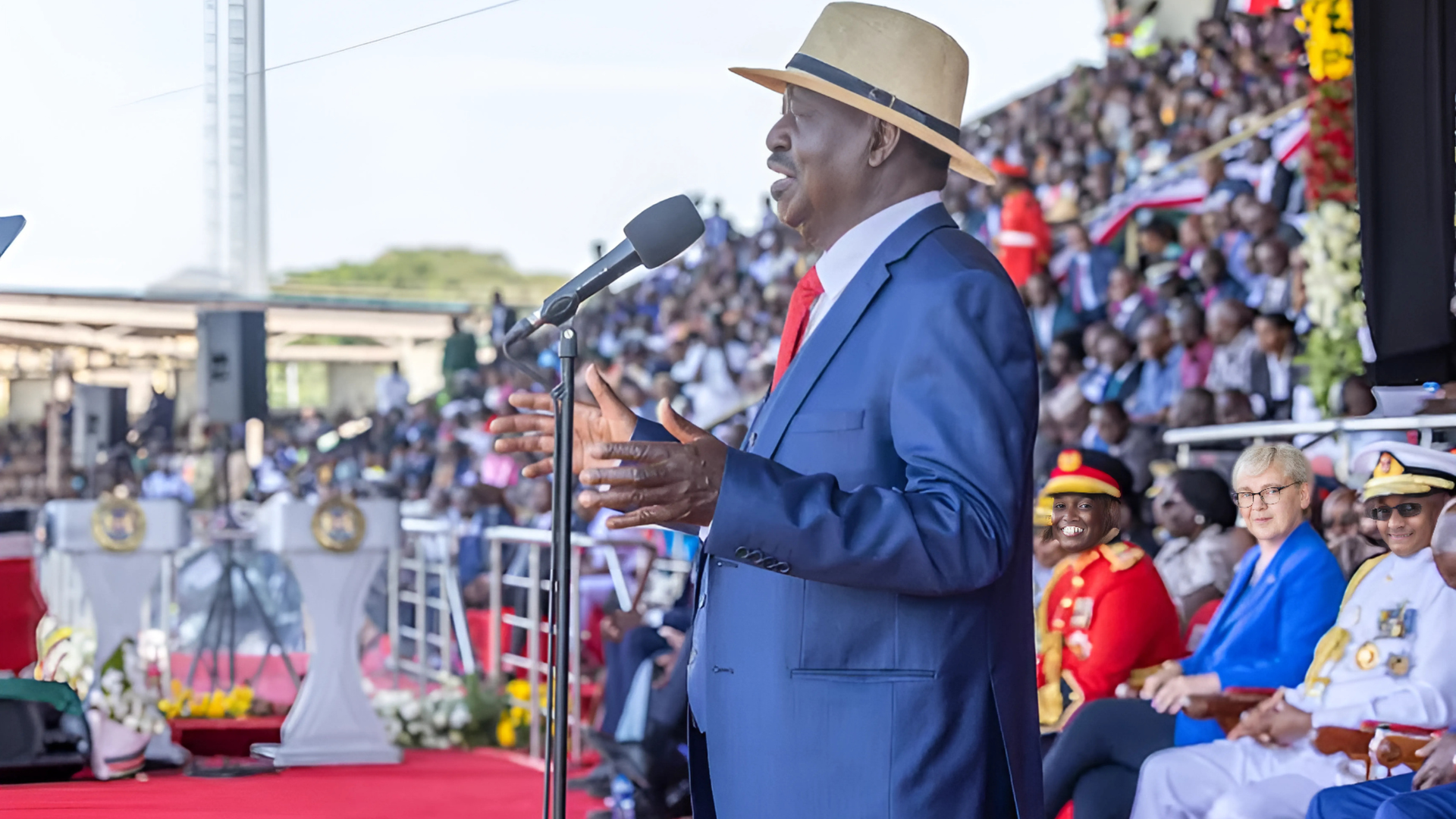
In the coastal city of Mombasa, veteran opposition leader Raila Odinga broke his silence on the planned June 25 demonstrations, offering a measured endorsement of the protests while emphasizing the need for order and legality. Speaking at a groundbreaking ceremony in the county, the Orange Democratic Movement (ODM) leader invoked Kenya’s Constitution to underscore the right of citizens to assemble and express their grievances, while urging young protesters to adhere to legal protocols to avoid clashes with law enforcement. His remarks come as the nation braces for nationwide demonstrations to commemorate the one-year anniversary of the 2024 anti-government protests, which saw significant unrest and loss of life.
Odinga’s address was a careful balancing act, reflecting his dual role as a champion of democratic rights and a senior figure in Kenya’s broad-based government, formed in the wake of last year’s unrest. The protests, largely driven by Kenya’s youth and known as the Gen Z movement, are expected to draw thousands to the streets of Nairobi, Mombasa, Kisumu, and other major towns. They aim to honor those who died during the 2024 demonstrations, particularly during the unprecedented breach of Parliament, and to renew calls for accountability, transparent governance, and respect for human rights.
“Article 37 of our Constitution is clear,” Odinga said, addressing a crowd under the midday sun. “Every Kenyan has the right to peacefully assemble, demonstrate, picket, and present petitions to public authorities. This is not a privilege granted by the state—it is a sacred right enshrined in our laws.” He paused, letting the weight of his words settle, before adding, “But with rights come responsibilities. I urge our young people to notify the police in advance, to state where the demonstrations will begin and end, so that order can be maintained.”
Odinga’s call for structured protests was a nod to the legal framework governing public demonstrations in Kenya, which requires organizers to inform law enforcement of planned gatherings. He cited examples from around the world, noting that even in nations like the United States, the United Kingdom, and India, protesters are required to coordinate with authorities to ensure safety. “In London, in Paris, in New York, people submit requests to the police before they march,” he said. “This is not about asking for permission—it is about ensuring that demonstrations remain peaceful and do not descend into chaos.”
The former Prime Minister also directed sharp criticism at the government, accusing it of attempting to suppress the planned protests. “Trying to stop these demonstrations is not the way to handle this,” Odinga said, his voice rising with conviction. “The government must allow Kenyans to express their views. The right to protest is ironclad, and no force in this country has the authority to silence the people.” His remarks were met with applause from the crowd, many of whom waved ODM flags and chanted slogans in support of the upcoming marches.
The June 25 demonstrations are deeply symbolic, marking a year since the 2024 protests against the controversial Finance Bill, which proposed steep tax increases amid a soaring cost of living. Those protests, spearheaded by Kenya’s digitally savvy youth, escalated into a broader anti-government movement, culminating in the storming of Parliament on June 25, 2024. The unrest left dozens dead, hundreds injured, and sparked allegations of police brutality, including the use of live ammunition and reports of abductions. The anniversary demonstrations aim to honor the victims while pressing for justice and systemic reforms.
Odinga’s endorsement of the protests comes amid heightened political tension, as the Gen Z movement has resisted attempts by traditional politicians to co-opt their cause. The youth-led protests of 2024 were notable for their lack of centralized leadership, relying instead on social media to mobilize and coordinate. This grassroots approach has posed a challenge for figures like Odinga, whose historical influence as an opposition leader has been tested by the emergence of a new generation of activists. Some within the movement have expressed skepticism about Odinga’s motives, given his integration into President William Ruto’s broad-based government, which includes several ODM figures in key Cabinet positions.
Despite these tensions, Odinga sought to align himself with the aspirations of the youth, framing their right to protest as a cornerstone of Kenya’s democracy. “Our young people are the heartbeat of this nation,” he said. “Their voices must be heard, and their grievances must be addressed. The government cannot ignore the pain and loss experienced by so many families last year.” He called for independent investigations into the violence of 2024, echoing demands from human rights organizations for accountability and compensation for victims.
International attention has also turned to the upcoming protests, with foreign missions issuing statements of concern. A joint statement from 12 envoys, including those from the United States, the United Kingdom, and Canada, expressed alarm over reports of excessive force by law enforcement and the deployment of armed gangs to disrupt peaceful demonstrations. “Safeguarding the right to assemble is essential to upholding Kenya’s democratic traditions,” the statement read, urging all parties to ensure peaceful protests and avoid violence.
Odinga’s remarks were not without personal reflection. As a veteran of Kenya’s struggle for multiparty democracy, he drew on his own history of leading protests against authoritarian regimes. “I have walked these streets before,” he said, his tone softening. “I know what it means to stand up for what is right, even when the odds are against you. But I also know that change comes when we act with discipline and purpose.” His words were a subtle appeal to the youth to channel their anger into organized, nonviolent action, while reminding the government of its obligation to protect protesters’ rights.
The government’s response to Odinga’s remarks has been muted, with no official statement addressing his call for free expression. However, sources within State House suggest that President Ruto is closely monitoring the situation. The broad-based government, formed as a political compromise to quell last year’s unrest, remains fragile, and the outcome of the June 25 protests could test its stability. A heavy-handed police response risks reigniting public anger, while a low turnout could embolden critics of Odinga’s influence within the administration.
As the nation prepares for the demonstrations, security forces have been placed on high alert, with reports of increased police presence in major urban centers. Civil society groups and families of last year’s victims have vowed to join the marches, carrying placards and candles in memory of those lost. In Nairobi, organizers have announced plans for coordinated marches through the Central Business District, while in Kisumu, a stronghold of Odinga’s support, protesters are expected to gather at key public squares.
For Odinga, the June 25 protests represent both a challenge and an opportunity. His ability to navigate the expectations of the youth while maintaining his role in government will shape his legacy as a statesman. “This is not about politics,” he said, concluding his address in Mombasa. “This is about the soul of our nation. Let us march with dignity, let us demand justice, and let us build a Kenya where every voice is heard.”