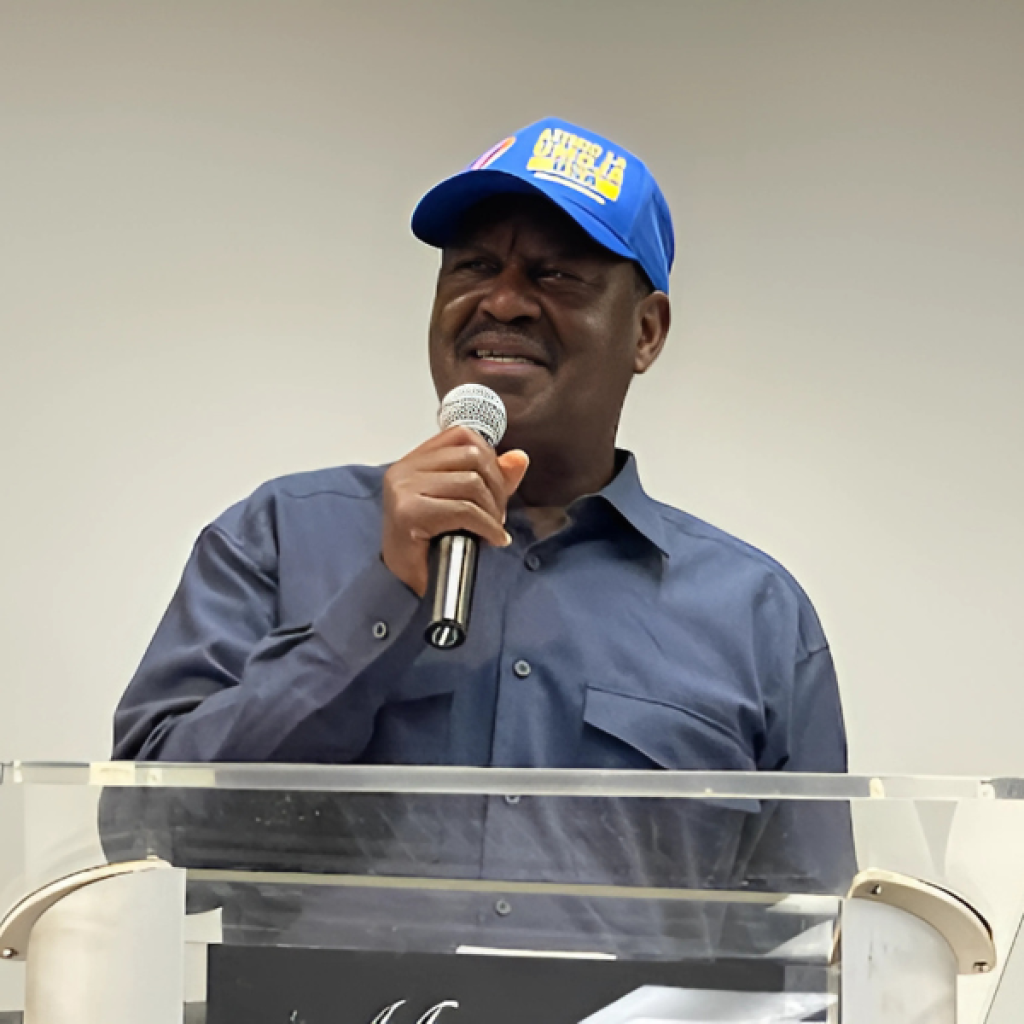
Rt. Hon. Raila Odinga, leader of the Orange Democratic Movement (ODM), delivered a blistering critique of the church during a public address in Jomvu, Mombasa, accusing it of hypocrisy in its support for the Gen Z-led protests. Speaking on the eve of the first anniversary of the 2024 anti-government demonstrations, which saw a breach of Kenya’s Parliament, Odinga’s remarks ignited a firestorm of debate, exposing deep-seated tensions between political leaders, religious institutions, and the youth movement. His comments, laced with frustration, underscored the complex interplay of faith, politics, and activism in Kenya’s volatile political landscape.
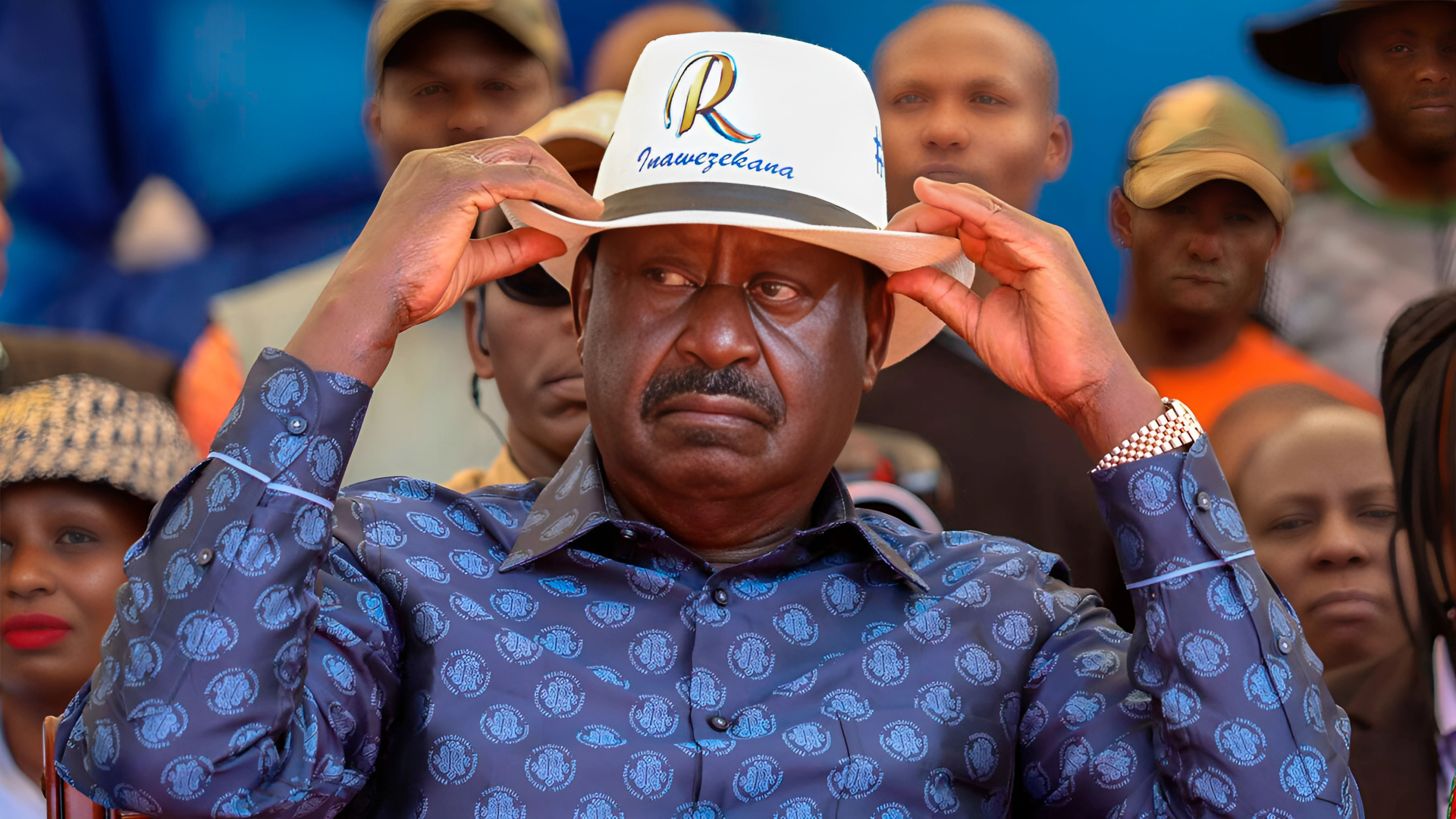
Odinga’s address came as the nation braced for planned protests on June 25, 2025, organized to commemorate the lives lost during last year’s unrest and to renew demands for justice and economic reform. The Gen Z protests, which erupted in 2024 over the controversial Finance Bill, have evolved into a broader movement against governance failures, with young Kenyans taking to the streets in unprecedented numbers. The church, particularly the Catholic Bishops’ Conference and Anglican leaders, has recently voiced support for these demonstrations, urging peaceful marches and condemning police brutality. It was this stance that drew Odinga’s ire, as he contrasted the church’s current solidarity with its silence during earlier opposition-led protests.
“In 2023, when our boys and girls were killed during the Azimio-led protests, we sought to pray for them in churches, but we were turned away,” Odinga said, his voice heavy with indignation. “The doors of All Saints’ Cathedral and other sanctuaries were closed to us. Now, in 2024 and 2025, the same church says, ‘We stand with the youth.’ Where were they when our people were bleeding? This is the height of hypocrisy.” Odinga’s remarks referenced the 2023 demonstrations, which he spearheaded to protest the high cost of living and alleged electoral irregularities. Those protests, like the Gen Z marches, were met with heavy police response, resulting in dozens of deaths and widespread allegations of state-sponsored violence.
The ODM leader’s accusations struck a nerve, reigniting discussions about the church’s role in Kenya’s political sphere. Historically, religious institutions have been influential in shaping public opinion, often mediating between the state and citizens during times of crisis. During the 1990s, for instance, the church was a vocal advocate for multiparty democracy, earning it a reputation as a moral compass. However, in recent years, critics, including Odinga, have accused religious leaders of selective activism, aligning with the government or opposition based on political expediency. “The church cannot pick and choose when to speak,” Odinga continued. “If you claim to stand for justice, you must stand for it consistently, not when it suits your image.”
Odinga’s critique was not without context. In 2023, when the Azimio coalition sought to hold memorial services for protest victims, several prominent churches, including the Catholic Archdiocese of Nairobi, reportedly declined to host such events, citing concerns over politicization. Some religious leaders argued that hosting opposition-led services could be perceived as endorsing a partisan agenda, potentially alienating congregants or drawing government scrutiny. This decision, however, alienated opposition supporters, who viewed it as a betrayal of the church’s duty to comfort the afflicted. The contrast with the church’s recent support for Gen Z protests—seen as apolitical and youth-driven—fueled Odinga’s charge of double standards.
The timing of Odinga’s remarks added to their weight. The June 25 protests, dubbed the “Gen Z Memorial March,” are expected to draw thousands to Nairobi, Kisumu, Mombasa, and other cities. Organizers, largely leaderless and coordinated via social media, have emphasized their commitment to nonviolence, carrying candles and placards to honor the over 60 protesters killed in 2024. The church’s endorsement, articulated in a statement by Catholic Bishops on June 24, called for restraint from both protesters and police. “We stand in solidarity with the youth seeking justice,” the bishops said, urging the government to address the root causes of unrest. This public support, however, appeared to Odinga as a selective embrace of a cause that has gained broader public sympathy.
Odinga’s comments also reflected his evolving relationship with the Gen Z movement. In 2024, he initially hailed the protests as a continuation of his own fight against economic injustice, but faced backlash when some youth accused him of attempting to co-opt their cause. A viral video of a young woman urging him to “stay at home” went viral, prompting Odinga to step back, acknowledging the protests’ independent nature. “They told me, ‘Baba, you have done enough. Let us finish this battle,’ and I respected their wishes,” he said in Jomvu, recalling the moment. Despite this, his decision to enter a political pact with President William Ruto’s government in 2024, which saw ODM members appointed to Cabinet, has drawn accusations of betrayal from some Gen Z activists, complicating his standing with the youth.
The church, for its part, has not yet responded directly to Odinga’s accusations, but religious leaders have defended their recent activism. At a press conference earlier on June 24, Anglican Bishop Joseph Mwangi emphasized the church’s commitment to justice. “Our role is to speak truth to power, regardless of who is in power,” he said. “The Gen Z protests have awakened the nation, and we cannot remain silent when young Kenyans are crying out.” Such statements, however, have done little to quell Odinga’s frustration, who sees the church’s selective engagement as emblematic of broader societal inconsistencies.
The controversy has sparked mixed reactions among Kenyans. On social media, some praised Odinga for calling out the church’s perceived duplicity, with users recounting instances of churches refusing to host opposition events. Others, however, criticized him for politicizing the Gen Z protests, arguing that his remarks risk dividing a movement that has thrived on its nonpartisan nature. “Raila should focus on supporting the youth, not settling old scores,” said a Nairobi-based activist, speaking anonymously. Political analysts, meanwhile, view Odinga’s outburst as a strategic move to reassert his relevance amid questions about his influence over the youth.
The broader context of Odinga’s remarks reveals a nation at a crossroads. The Gen Z protests have reshaped Kenya’s political discourse, empowering a generation that operates outside traditional political structures. Unlike past movements, which often relied on figures like Odinga to mobilize support, the current protests are decentralized, driven by social media and a shared sense of grievance. This shift has challenged established leaders, including Odinga, whose historical role as a champion of reform is now scrutinized by a younger, more skeptical audience. His critique of the church, while rooted in genuine frustration, also reflects an attempt to align himself with the youth’s demand for accountability, even as he navigates his own political tightrope.
President William Ruto, whose administration faces renewed pressure from the protests, has remained silent on Odinga’s remarks but has reiterated his commitment to dialogue. Speaking at a rally in Bomet on June 24, Ruto urged calm, saying, “Kenya is bigger than any individual or group. Let us work together to build our nation.” His government, however, has ruled out permitting street protests, citing economic disruptions, a stance that has further inflamed tensions. The National Police Service, under Inspector General Douglas Kanja, has promised to protect peaceful protesters but warned against breaches of public order, setting the stage for a potentially volatile day.
As Kenya awaits June 25, Odinga’s accusations have added a new layer of complexity to an already charged atmosphere. The church, caught in the crossfire, faces scrutiny over its moral authority, while Odinga’s own legacy as a reformist hangs in the balance. For the Gen Z protesters, the controversy is a distraction from their core demands: justice for victims, economic equity, and an end to police brutality. Yet, it underscores the enduring challenge of uniting Kenya’s diverse voices in pursuit of a common goal.
Odinga concluded his Jomvu address with a call for reflection. “The church must look in the mirror and ask itself what it stands for,” he said. “If it is to be a sanctuary, it must be a sanctuary for all, not just for those who are popular today.” His words, delivered with the gravitas of a seasoned statesman, left no doubt about his conviction, even as they deepened the fault lines in Kenya’s ongoing struggle for justice and unity.