By Brenda Wereh28 Jun, 202533 mins read 2,489 views
0 comments 0 likes
President William Ruto appointed former Gender Principal Secretary Collette Suda, Peris Muthoni Kimani, and Benjamin Juma Imai to the National Police Service Commission for six years, alongside Lucy Minayo Lugatia and Anthony Nzau Musau to the Complaints Commission for three years, while revoking former Bungoma Governor Wycliffe Wangamati’s appointment as chairperson of the Public Service Superann
President William Ruto announced a series of high-profile appointments to key government commissions, signaling his administration’s intent to strengthen oversight and reform in critical public sectors. In a Gazette notice issued from State House, Nairobi, Ruto appointed former Gender Principal Secretary Collette Suda, alongside Peris Muthoni Kimani and Benjamin Juma Imai, as members of the National Police Service Commission (NPSC) for a six-year term, effective immediately. Concurrently, Lucy Minayo Lugatia and Anthony Nzau Musau were named members of the Complaints Commission for a three-year term. In a surprising move, the President also revoked the appointment of former Bungoma Governor Wycliffe Wangamati as chairperson of the Public Service Superannuation Fund Board of Trustees, a decision that has sparked speculation about internal government dynamics.
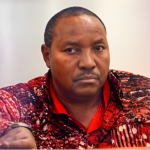
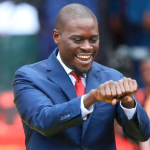
Collette Suda
The appointments come at a time of heightened public scrutiny of Kenya’s security and public service sectors, with ongoing protests and demands for transparency dominating national discourse. Speaking at a public event in Eldoret shortly after the Gazette notice, Ruto emphasized the need for competent leadership in these institutions. “We are committed to ensuring our commissions are led by individuals of integrity who will drive reforms and serve Kenyans,” he said. The appointments, particularly to the NPSC, are seen as part of Ruto’s broader agenda to modernize the police service, which has faced criticism for its handling of recent protests and allegations of human rights abuses.
Collette Suda, a seasoned academic and public servant, brings a wealth of experience to the NPSC. Previously serving as Principal Secretary for Higher Education and Research and as Chief Administrative Secretary under former President Uhuru Kenyatta, Suda has a reputation for navigating complex bureaucratic landscapes. During her vetting by the National Assembly’s Administration and Internal Security Committee on June 9, 2025, she faced questions about her lack of direct policing experience but defended her suitability with confidence. “My background in academia and public service equips me to contribute to a more accountable and inclusive police service,” Suda told lawmakers. “I’m here to share my expertise and ensure the NPSC delivers on its mandate.” Her appointment has been hailed by some as a step toward diversifying the commission’s perspective, though critics argue her lack of policing expertise could pose challenges.
Peris Muthoni Kimani and Benjamin Juma Imai, appointed alongside Suda, are less known but bring their own credentials to the NPSC. Kimani, a legal expert with a background in public administration, emphasized her commitment to transparency during her vetting. “The police service must rebuild public trust,” she said. “I will push for reforms that prioritize accountability and fairness.” Imai, a former senior police officer, is expected to provide insider knowledge to the commission’s deliberations. “Having served in the field, I understand the challenges officers face,” Imai stated during his vetting. “But I also know the public’s expectations, and we must bridge that gap.” The trio’s appointment completes the NPSC’s nine-member composition, which includes a mix of civilians and retired police officers, as mandated by the Constitution.
The NPSC, established under Article 246 of the Constitution, oversees human resource functions within the National Police Service, including recruitment, promotions, and discipline. Recent years have seen the commission focus on automating recruitment processes to curb corruption and implementing welfare programs for officers, such as contributory benevolent funds and mortgage schemes. Ruto, who has prioritized police reforms since taking office in 2022, praised the commission’s progress during a March 2025 event. “The NPSC has made strides in modernizing our police service,” he said. “These new appointees will build on that foundation.” However, the commission faces ongoing challenges, including budgetary constraints and public distrust, particularly in light of allegations of police misconduct during the 2024 and 2025 protests.
The appointments to the Complaints Commission, officially known as the Commission on Administrative Justice, are equally significant. Lucy Minayo Lugatia, a human rights advocate with a history of grassroots activism, is expected to bring a citizen-centric perspective to the commission. “My focus will be on ensuring Kenyans have a voice when they feel wronged by public institutions,” Lugatia said in a recent interview. Anthony Nzau Musau, a career civil servant with experience in governance, vowed to uphold the commission’s mandate of addressing maladministration. “We must ensure public officers act with integrity,” Musau said. The Complaints Commission, often referred to as the Ombudsman, plays a critical role in holding government agencies accountable, and the new appointees are expected to tackle a backlog of cases amid rising public complaints.
The revocation of Wycliffe Wangamati’s appointment as chairperson of the Public Service Superannuation Fund Board of Trustees has raised eyebrows, given his prominence as a former Bungoma Governor and a vocal supporter of Ruto’s Kenya Kwanza alliance. Wangamati, who lost his gubernatorial seat in 2022, was appointed to the board in early 2025, a move seen as a reward for his loyalty. However, his abrupt removal has fueled speculation about internal rifts within the ruling coalition. A senior Kenya Kwanza official, speaking anonymously, suggested that Wangamati’s revocation was linked to “strategic realignments” ahead of the 2027 elections. “The President is making tough decisions to streamline key institutions,” the official said. Wangamati, in a brief statement, expressed disappointment but vowed to continue supporting Ruto’s agenda. “I respect the President’s decision and will serve Kenya in other capacities,” he said.
The Public Service Superannuation Fund, which manages pensions for civil servants, is a critical institution with assets worth billions of shillings. Its leadership is pivotal to ensuring financial security for retirees, and Wangamati’s revocation has raised questions about who will replace him. “The fund needs stable leadership to protect the interests of public servants,” said Jane Wambui, a pensioners’ advocate. “This change must not disrupt ongoing reforms.” The government has not yet named a new chairperson, but sources indicate an announcement is imminent.
The appointments and revocation come against a backdrop of political tension, with opposition leaders and civil society groups accusing Ruto of consolidating power through strategic appointments. The National Assembly’s vetting process, which approved Suda, Kimani, and Imai, was contentious,WITH SOME LAWMAKERS QUESTIONING THE TRANSPARENCY OF THE SELECTION PROCESS. “We need to ensure these appointments are not just political rewards,” said opposition MP Peter Kamau during the vetting. Ruto, however, defended his choices, arguing that they reflect a commitment to merit and diversity. “These are individuals with proven track records,” he said in Eldoret. “They will serve Kenyans with dedication.”
Public reaction has been mixed, with some welcoming the appointments as a step toward reform, while others view them as part of Ruto’s broader strategy to control key institutions. On platforms like X, users debated the implications, with one posting, “Suda’s appointment is a good move, but Wangamati’s sacking raises questions about Ruto’s inner circle.” Another user wrote, “The NPSC needs fresh perspectives, but we’re watching to see if these appointees deliver.” The sentiment reflects a broader public desire for accountability, particularly in the wake of the Gen Z protests that have demanded systemic change.
Civil society groups, including the Kenya Human Rights Commission, have called for vigilance to ensure the new appointees uphold their mandates. “The NPSC and Complaints Commission are critical to our democracy,” said director Ann Wanjiru. “We expect these new members to act independently and prioritize public interest.” The Law Society of Kenya also weighed in, urging the government to provide adequate resources to both commissions. “These institutions must be empowered to deliver,” said President Faith Odhiambo.
The appointments also align with Ruto’s broader governance agenda, which includes implementing recommendations from the Maraga Taskforce on police reforms and strengthening public service delivery. The NPSC’s role in automating recruitment and improving officer welfare has been a focal point, with recent allocations of KSh7.5 billion to the National Police Service, including KSh5 billion for insurance shortfalls, reflecting this commitment. Similarly, the Complaints Commission’s expanded mandate to address maladministration is seen as crucial to restoring public trust in government.
As Kenya navigates economic challenges and political unrest, the new appointees face a daunting task. Suda, Kimani, and Imai will need to balance the demands of police reform with public expectations for accountability, while Lugatia and Musau must tackle systemic inefficiencies in public administration. The revocation of Wangamati’s appointment, meanwhile, serves as a reminder of the fluid nature of political alliances in Ruto’s administration. “These changes are about building a stronger Kenya,” Ruto said, closing his Eldoret speech. “We will not waver in our commitment to reform.” Whether these appointments deliver on that promise remains to be seen, but for now, they mark a significant moment in Kenya’s evolving governance landscape.
Former Kiambu Governor Ferdinand Waititu has secured a major bail reprieve from the High Court, with Justice Winfrida Okwany reducing his bail from Sh53.5 million to Sh20 million cash pending appeal in his ongoing corruption case.
President Ruto and Governor Sakaja signed a cooperation agreement allocating funds for 50,000 new streetlights, water plants saving 50 million litres daily, 27 km Nairobi River sewer and ward road upgrades, with Ruto calling it a partnership to make the city livable while opposition senators warn of devolution threats.
A staff member at Moi Teaching and Referral Hospital allegedly stole Sh10 million by falsifying patient bills as paid in the eCitizen system while diverting the money to her personal account, prompting an ongoing police and hospital investigation.