By Brenda Wereh23 Jul, 202531 mins read 2,345 views
0 comments 0 likes
PLP leader Martha Karua called on Raila Odinga to reconsider supporting President William Ruto, asserting Odinga’s pivotal role in sustaining the government, while firmly rejecting dialogue with the Kenya Kwanza administration.
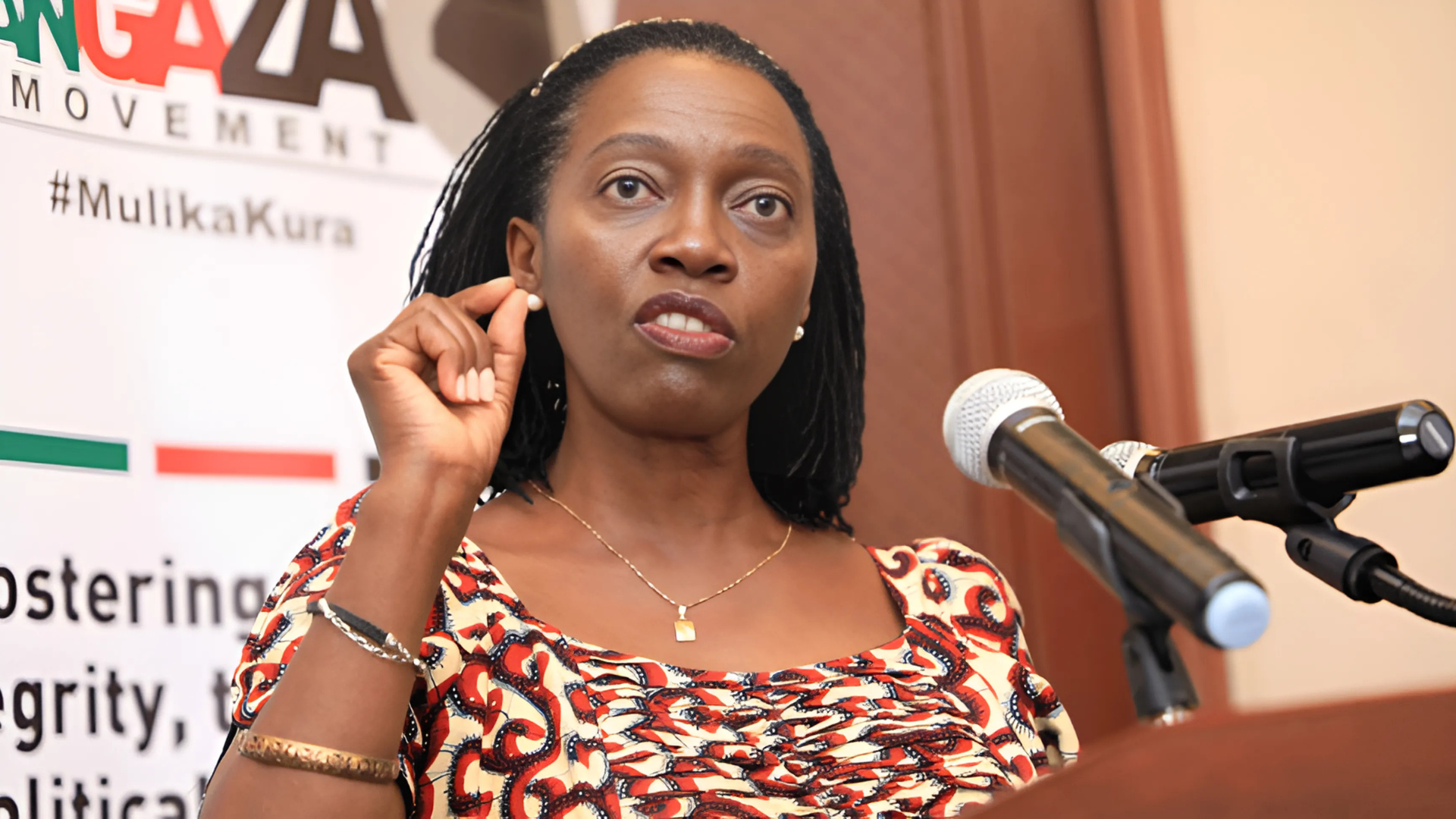
People’s Liberation Party leader Martha Karua made waves on Wednesday, July 23, 2025, during a live interview on NTV, revealing that she had recently reached out to Orange Democratic Movement leader Raila Odinga with a pressing request. Speaking from the studio at 9:30 AM East Africa Time, Karua urged Odinga to reconsider his support for President William Ruto, suggesting that the veteran politician’s backing is currently the linchpin holding the Kenya Kwanza administration together. The revelation has sparked intense discussions across the country, with Karua emphasizing the moral and political implications of Odinga’s alliance with Ruto. “I called Raila to ask him to reflect on his conscience, because right now, he is the one keeping this government afloat,” she said, her voice steady as she addressed the camera. The statement has deepened the rift within the opposition, drawing both support and criticism from various quarters.
PLP leader Martha Karua
The interview, part of NTV’s morning program, came at a time of heightened political tension, with Kenya grappling with economic challenges and ongoing debates over governance. Karua, a prominent figure known for her legal expertise and opposition stance, clarified that her call to Odinga was not a debate but a direct appeal. “I didn’t want a back-and-forth; I just wanted to prick his conscience about the direction we’re heading,” she explained, pausing to sip water as the studio lights reflected her determined expression. The PLP leader’s comments build on her long-standing criticism of the Kenya Kwanza administration, which she has accused of mismanagement and impunity, a narrative she reinforced during the discussion.
Karua went further to dismiss any possibility of engaging in dialogue with the Ruto-led government, labeling it an unacceptable option. “Dialogue with the rogue Kenya Kwanza administration is not on the table,” she declared, her tone firm as she leaned forward in her chair. She argued that such talks would only serve to legitimize what she perceives as an illegitimate regime, a stance that echoes her previous opposition to the National Dialogue Committee process. The refusal has reignited debates about the opposition’s strategy, with some viewing it as a principled stand and others as a missed opportunity for reconciliation. Outside a tea stall in Kisumu, a man listening to the broadcast on a radio remarked, “She’s right to say no; they can’t be trusted.”
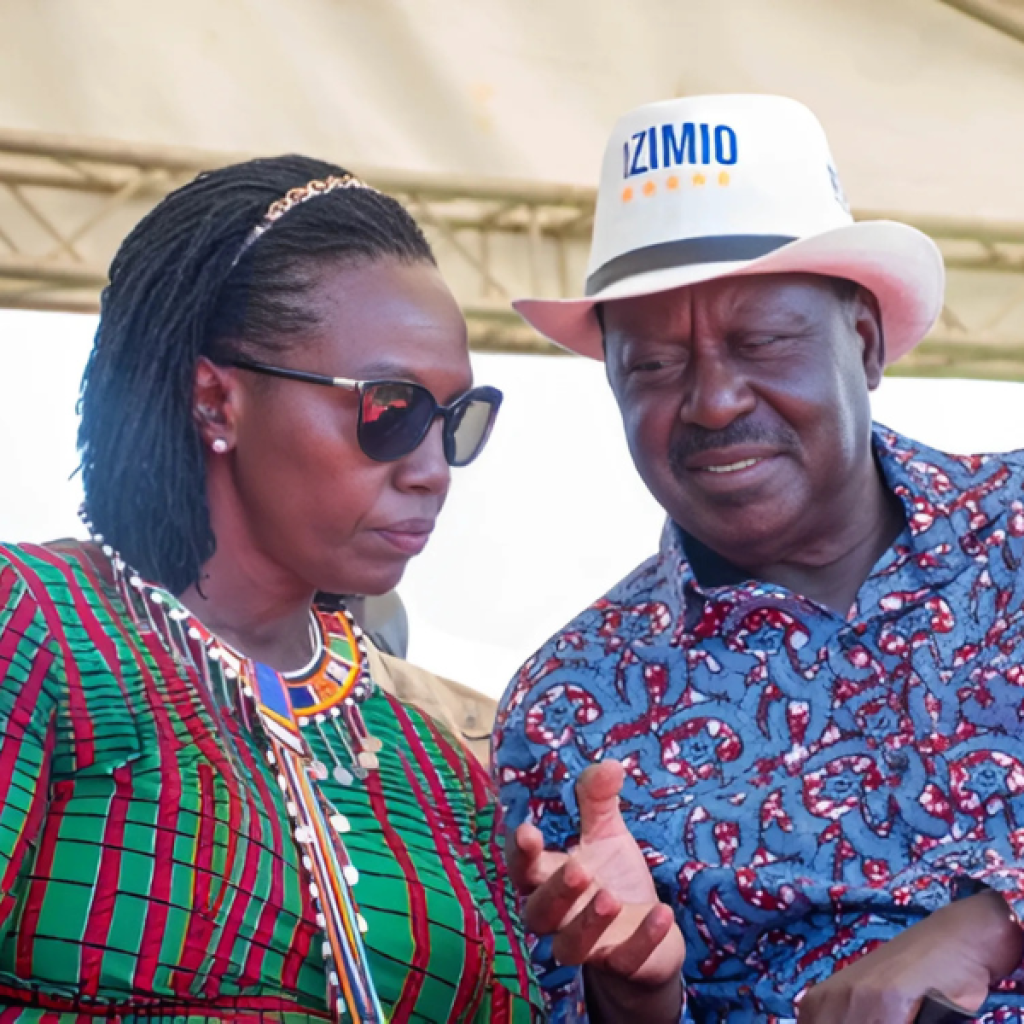
The context of Karua’s call to Odinga traces back to the shifting political alliances following the 2022 elections and the subsequent formation of a broad-based government. Odinga, after years as a fierce critic of Ruto, entered into a partnership with the president, a move that saw several ODM members appointed to cabinet positions. Karua, who served as Odinga’s running mate in that election, has since distanced herself from this arrangement, resigning from the Azimio coalition to lead the PLP. During the interview, she hinted at the personal toll of their parting ways. “I reminded Raila that without his support, this regime would struggle to stand,” she said, her words carrying a mix of frustration and resolve.
Public reactions to Karua’s statements have been varied, reflecting the polarized political landscape. In Nairobi’s bustling streets, a vendor selling fruits nodded in agreement. “If Raila pulls back, Ruto will feel the heat,” he said, packing oranges as customers gathered around. In contrast, a teacher in Nakuru, tuning into the interview via her phone, expressed concern. “Dialogue could solve things; rejecting it might make it worse,” she noted, marking papers as the broadcast played in the background. The sentiment on social media platforms has been equally divided, with some praising Karua’s boldness while others question her motives, suggesting a bid for political relevance ahead of 2027.
Karua’s assertion that Odinga is the backbone of the current administration points to the strategic importance of the ODM leader’s support. Since the broad-based government was formalized, Odinga’s influence has been credited with stabilizing Ruto’s administration amid protests and economic discontent. Karua, however, sees this as a betrayal of the opposition’s mandate. “He’s propping up a government that’s failed the people,” she told the interviewer, her hands gesturing emphatically. This perspective has resonated with some youth activists in Mombasa, where a group gathered at a community center discussed the interview. “She’s speaking for us; we need change, not compromise,” said a young man, his voice rising above the chatter.
The PLP leader’s rejection of dialogue aligns with her consistent advocacy for accountability and the rule of law. She argued that past attempts at negotiation, such as the NADCO process, yielded little for ordinary Kenyans, benefiting only political elites. “Those talks were a waste of time; they gave us nothing but more seats for the big boys,” she said, her tone laced with sarcasm. This stance has drawn support from civil society groups in Eldoret, where a community leader organizing a forum remarked, “Karua is holding the line where others have bent.” Yet, it has also raised concerns among those who see dialogue as a path to address issues like abductions and economic hardship, with a shopkeeper in Thika noting, “Talking could help, but she’s set against it.”
The interview shed light on the personal dynamics between Karua and Odinga, revealing a relationship strained by differing visions. Karua recounted making two calls to Odinga in July 2023, one to deliver a personal message and another to question his support for Ruto. “I told him I didn’t want a discussion, just to remind him of his role,” she said, her gaze fixed on the interviewer. This revelation has fueled speculation about a deeper rift, with some suggesting Karua aims to position herself as a leading opposition figure. A driver in Garissa, listening to the replay on his radio, mused, “She’s trying to take Raila’s place, but it’s a big risk.”
The political implications of Karua’s stance are significant, especially with the 2027 elections on the horizon. Her refusal to engage with Kenya Kwanza could solidify her base among hardline opposition supporters, particularly in the Mount Kenya region, where she retains strong influence. However, it risks isolating her from moderates within ODM and other Azimio factions open to negotiation. In Kitui, a farmer tending his crops overheard the interview on a neighbor’s radio and said, “She’s brave, but Raila’s support is too big to ignore.” The PLP, rebranded from NARC-Kenya, has positioned itself as a liberation movement, and Karua’s comments reinforce this identity.
Across rural areas like Marsabit, the news spread via radio waves, with a herder pausing to listen under a tree. “If Raila listens, things might change,” he said, adjusting his hat against the sun. In urban centers like Nyeri, a student at a cyber cafe scrolled through updates, noting, “Karua’s got a point; the government needs pressure.” The dialogue rejection has also drawn international attention, with diaspora communities in the UK discussing it over tea. “She’s standing firm, but it’s a tough fight,” said a Kenyan nurse in London, reflecting on the broadcast she watched online.
Karua’s interview concluded with a call for unity among opposition forces, though she stopped short of outlining a concrete plan. “We need to organize and stand together, but not with those who’ve lost their way,” she said, her voice softening as the segment wrapped up. The absence of a detailed strategy has left some wondering about the PLP’s next moves, with a youth leader in Naivasha planning a meeting to discuss the implications. “We need to see action, not just words,” he told a group gathered at a local field. The tension between Karua and Odinga, once allies, underscores a broader struggle within the opposition to define its future.
As the day progressed, the story rippled through Kenya’s diverse landscapes. In Mombasa, a fisherman mending nets listened to the radio, saying, “Raila holds the key; let’s see what he does.” In contrast, a mother in Kisii, feeding her children, expressed hope. “If Karua pushes hard, maybe we’ll get justice.” The interview, aired at a time when public trust in leadership is low, has become a focal point for those demanding accountability. A vendor in Gikomba market, selling second-hand clothes, added, “She’s stirring the pot; let’s hope it cooks something good.” The nation awaits Odinga’s response, with the political landscape poised for further shifts.
The afternoon brought a quiet intensity to Nairobi, where Karua’s supporters gathered outside the NTV offices, their conversations blending with the city’s hum. A community organizer in Turkana, planning a radio discussion, reflected, “This could wake people up.” The PLP leader’s stand against dialogue, coupled with her appeal to Odinga, marks a critical juncture in Kenya’s opposition politics. As the sun set, the country remained divided yet engaged, with the outcome of this political drama likely to shape the path toward 2027 and beyond.
Former Kiambu Governor Ferdinand Waititu has secured a major bail reprieve from the High Court, with Justice Winfrida Okwany reducing his bail from Sh53.5 million to Sh20 million cash pending appeal in his ongoing corruption case.
President Ruto and Governor Sakaja signed a cooperation agreement allocating funds for 50,000 new streetlights, water plants saving 50 million litres daily, 27 km Nairobi River sewer and ward road upgrades, with Ruto calling it a partnership to make the city livable while opposition senators warn of devolution threats.
A staff member at Moi Teaching and Referral Hospital allegedly stole Sh10 million by falsifying patient bills as paid in the eCitizen system while diverting the money to her personal account, prompting an ongoing police and hospital investigation.