By Brenda Wereh12 Aug, 202526 mins read 2,444 views
0 comments 0 likes
ODM leader Anyang’ Nyong’o confirms the party will field a presidential candidate in the 2027 general elections. Details on ODM’s election strategy here.
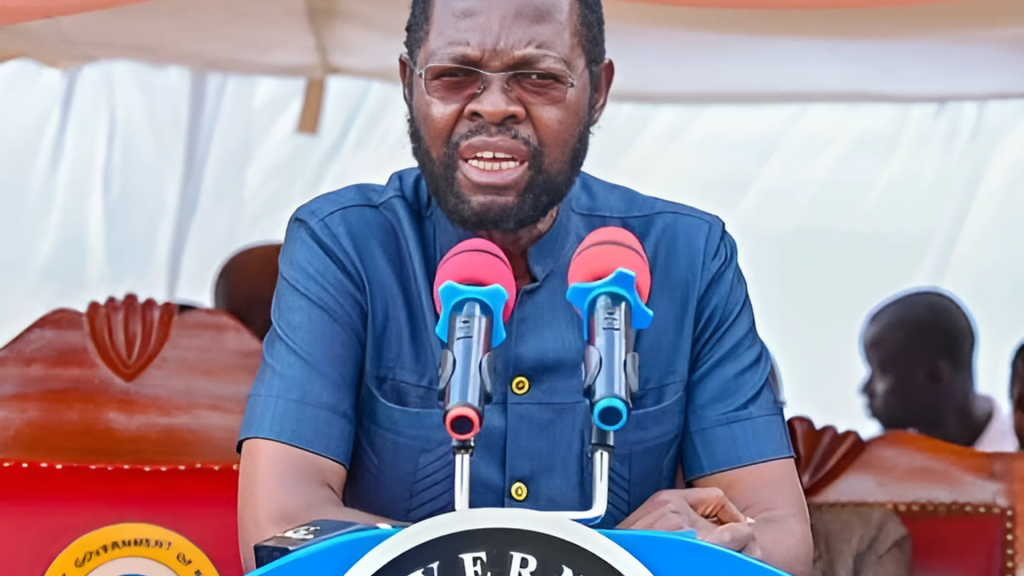
In a significant development for Kenya’s political landscape, Kisumu Governor and interim Orange Democratic Movement (ODM) party leader, Professor Peter Anyang’ Nyong’o, has confirmed that the ODM will field a presidential candidate to challenge President William Ruto in the 2027 general elections. This announcement, made during a media interview on August 12, 2025, signals ODM’s intent to remain a formidable force in Kenyan politics despite recent collaborations with the ruling United Democratic Alliance (UDA) government. Nyong’o’s remarks have sparked widespread discussion, with implications for the opposition’s strategy, coalition dynamics, and the broader political trajectory leading up to 2027.
The Orange Democratic Movement, founded in 2005, is one of Kenya’s most prominent political parties, known for its strong grassroots support, particularly in the Luo Nyanza, Coast, and parts of Nairobi and Turkana regions. Historically led by former Prime Minister Raila Odinga, ODM has been a key player in opposition politics, advocating for reforms, devolution, and social justice. The party has consistently fielded candidates in presidential elections since its inception, with Odinga running five times (1997, 2007, 2013, 2017, and 2022) without securing the presidency. Despite these losses, ODM remains a significant political force, with a robust network of elected officials, including governors, senators, and members of parliament.
In recent years, ODM’s relationship with the ruling Kenya Kwanza coalition, led by President William Ruto, has been complex. Following the 2024 Gen Z protests, which criticized the government’s economic policies and governance, ODM entered into a cooperative arrangement with Ruto’s administration. Several high-ranking ODM members were appointed to cabinet positions, prompting speculation that the party might align with Kenya Kwanza in 2027. However, Nyong’o’s recent statements clarify that ODM remains an independent entity, committed to its opposition roots and determined to contest the presidency.
On August 12, 2025, during an interview on TV47, Kisumu Governor Anyang’ Nyong’o announced that ODM would field a presidential candidate in the 2027 general elections. “Yes, our party will field a presidential candidate to challenge President William Ruto in the 2027 general elections. Currently, that is the position because the party is an independent one, and it has the right to field a candidate,” Nyong’o stated. He emphasized that ODM would contest all elective positions, from Members of County Assembly (MCAs) to the presidency, underscoring the party’s ambition to expand its influence across the political spectrum.
Nyong’o’s announcement was echoed by ODM chairperson and Homa Bay Governor Gladys Wanga on October 15, 2024, during a reception for Nyong’o at Kisumu International Airport. Wanga declared, “In the coming election, we hope that our party will sweep seats starting from MCA, MPs, Senators, Governors, and we are not going to leave any seat including the presidency of this country.” These statements reflect a unified party stance, signaling ODM’s intent to consolidate its base and challenge the ruling coalition head-on.
Nyong’o’s remarks come at a pivotal moment for ODM. The party has faced criticism for its recent collaboration with the Ruto administration, with some accusing it of diluting its opposition credentials. Raila Odinga’s public support for Ruto, expressed during the funeral of veteran women’s rights champion Phoebe Asiyo on August 8, 2025, further fueled speculation about a potential ODM-UDA alliance. Odinga hinted at cooperation beyond 2027, stating, “I am confident we will move beyond 2027.” However, Nyong’o clarified that ODM’s participation in government is strategic, aimed at stabilizing the country during the 2024 protests, and does not equate to a formal alliance with Kenya Kwanza. “The ODM party is participating in the government without being in the government. The government was formed by the UDA. We cannot change that; it can only be changed during elections,” he explained.
This distinction is crucial. By reaffirming ODM’s independence, Nyong’o seeks to reassure the party’s base that it has not abandoned its opposition role. The announcement also counters claims that ODM is losing popularity, particularly following Raila Odinga’s pursuit of the African Union Commission (AUC) chairmanship, which has raised questions about his availability to lead the party into 2027.
While Nyong’o did not specify the presidential candidate, speculation has centered on Raila Odinga, who remains ODM’s most prominent figure. On August 12, 2025, Nyong’o’s ally status and comments during the TV47 interview led some media outlets to interpret his statement as confirmation that Odinga would run. The Kenya Times reported, “President William Ruto’s plan for re-election has suffered a potential setback after the Orange Democratic Movement (ODM) Party announced that former Prime Minister Raila Odinga will run for president in 2027.”
However, other reports suggest that ODM is considering alternative candidates. Nationspy.com speculated that Nyong’o himself could be a potential flagbearer, citing his leadership as interim party leader and his long-standing influence within ODM. The party’s focus on nurturing a new generation of leaders, as Nyong’o noted during the Kisumu reception, also raises the possibility of younger figures like Gladys Wanga or ODM Secretary-General Edwin Sifuna emerging as contenders. Sifuna’s public rejection of supporting Ruto’s re-election further underscores the party’s commitment to fielding its own candidate.
Siaya Senator Dr. Oburu Oginga, Raila’s brother, provided further insight in a February 2025 interview, stating, “We shall have our own presidential candidate as ODM, and should there be a need for an alliance with other like-minded parties, we shall agree on the best candidate.” He affirmed that Raila remains eligible to contest, but the party is open to other leaders stepping forward. This flexibility suggests that ODM is preparing for multiple scenarios, including a potential coalition, while maintaining its independent candidacy.
Nyong’o’s announcement has generated mixed reactions. Supporters view it as a bold reaffirmation of ODM’s opposition role, with social media posts on X praising the party’s ambition to contest all seats. Critics, however, argue that ODM’s collaboration with Ruto undermines its credibility, with some questioning whether the party can mount a viable challenge without Raila at the helm. Political analyst Dr. Obora Okoth noted that ODM’s limited stake in the government (20% of cabinet positions) allows it to distance itself from Kenya Kwanza’s failures, potentially strengthening its campaign narrative.
Professor Anyang’ Nyong’o’s confirmation that ODM will field a presidential candidate in 2027 marks a pivotal moment in Kenya’s political landscape. The decision underscores ODM’s commitment to its opposition roots, despite its current cooperation with the Ruto administration. Whether Raila Odinga or a new leader emerges as the candidate, ODM’s strategy hinges on mobilizing its strongholds, navigating coalition dynamics, and addressing internal divisions. As the 2027 elections approach, ODM’s ability to balance its government participation with its opposition identity will determine its success in challenging President Ruto’s re-election bid. With Nyong’o and Wanga at the forefront, ODM is poised to reinvigorate its campaign, setting the stage for a fiercely contested election.
Former Kiambu Governor Ferdinand Waititu has secured a major bail reprieve from the High Court, with Justice Winfrida Okwany reducing his bail from Sh53.5 million to Sh20 million cash pending appeal in his ongoing corruption case.
President Ruto and Governor Sakaja signed a cooperation agreement allocating funds for 50,000 new streetlights, water plants saving 50 million litres daily, 27 km Nairobi River sewer and ward road upgrades, with Ruto calling it a partnership to make the city livable while opposition senators warn of devolution threats.
A staff member at Moi Teaching and Referral Hospital allegedly stole Sh10 million by falsifying patient bills as paid in the eCitizen system while diverting the money to her personal account, prompting an ongoing police and hospital investigation.