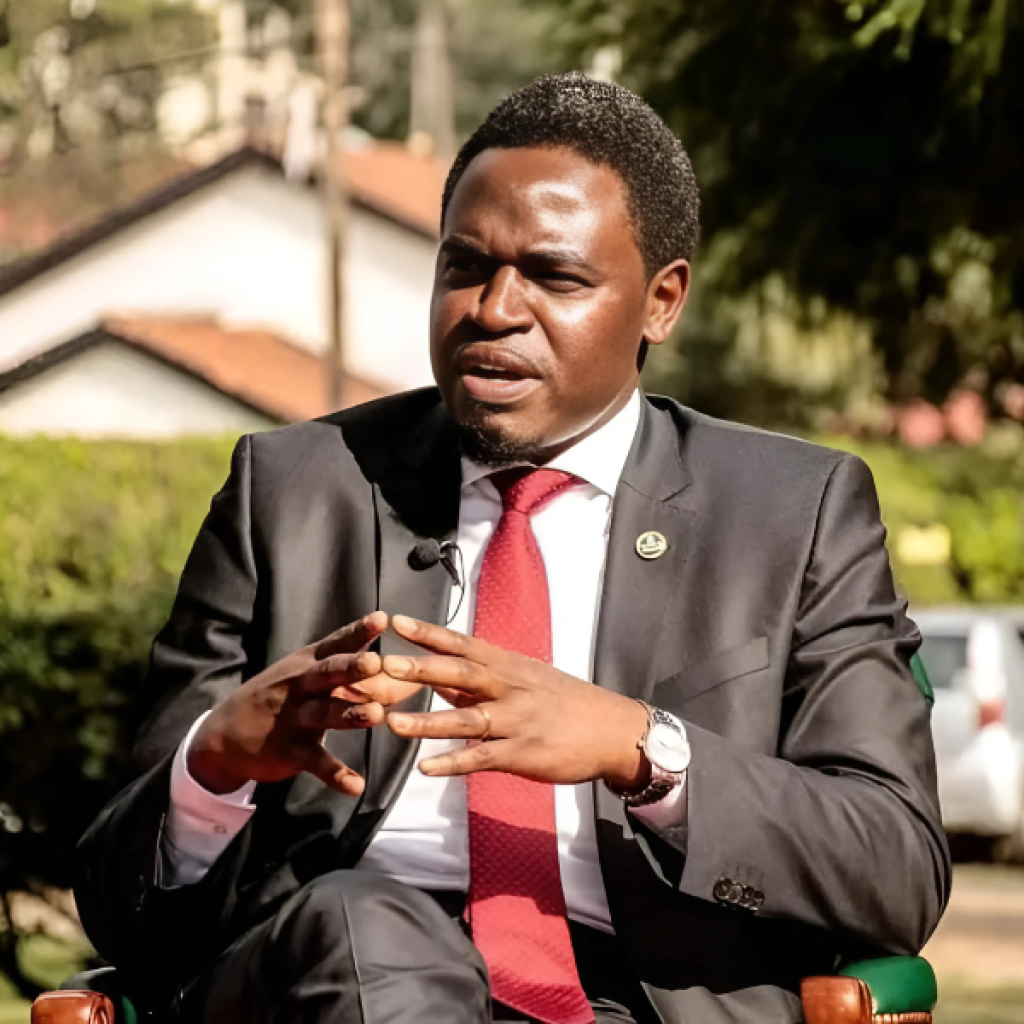
Nelson Havi, the former President of the Law Society of Kenya (LSK), issued a stern warning to police officers, urging them to defy President William Ruto’s controversial directive to shoot protesters in the legs during demonstrations. Speaking at a press conference in Nairobi, Havi, a prominent lawyer known for his outspoken advocacy, cautioned that such actions could result in fatal injuries and expose individual officers to personal legal accountability, including criminal charges and civil lawsuits. His remarks come amid heightened tensions following the violent Saba Saba protests on July 7, which left 31 dead and over 400 injured, reigniting debates over police conduct and the right to protest in Kenya. Havi’s call underscores a growing chorus of voices demanding accountability as the nation grapples with a KSh11.36 trillion public debt, youth unemployment, and allegations of state-sponsored violence.
The directive in question, attributed to President Ruto, emerged during a security briefing in Nakuru on July 8, where the head of state reportedly instructed the National Police Service (NPS) to target protesters’ legs to deter chaos during demonstrations. The order was a response to escalating protests, particularly those led by Generation Z, which have rocked cities like Nairobi, Kisumu, and Naivasha since June 2024. The protests, initially sparked by the death of blogger Albert Ojwang in custody, have expanded into demands for economic reforms, an end to abductions, and accountability for police brutality. Ruto’s directive, which followed Interior Minister Kipchumba Murkomen’s earlier “shoot to kill” order for attacks on police stations, has drawn sharp criticism for its potential to escalate violence. “Shooting in the legs can sever arteries and lead to death,” Havi said at the press conference. “Officers must know they will be held personally liable for following unlawful orders.”
Havi’s warning is rooted in Kenya’s legal framework, particularly the Constitution and international human rights standards. Article 37 guarantees the right to peaceful assembly, while Article 244 mandates the NPS to uphold human rights and operate independently of political influence. Drawing on his experience as LSK president from 2020 to 2022, Havi emphasized that officers cannot evade responsibility by claiming they were following orders. “The Nuremberg principle applies,” he said, referencing the post-World War II trials that held individuals accountable for executing illegal directives. “If an officer shoots a protester and causes death or injury, they will face murder or assault charges in their personal capacity.” He cited the recent ODPP approval of murder charges against Police Constable Klinzy Masinde Baraza for the June 17 fatal shooting of mask vendor Boniface Kariuki Mwangi as a precedent for individual liability.
The Saba Saba protests, commemorating the 1990 pro-democracy movement, saw widespread violence, with the Kenya National Commission on Human Rights documenting 31 fatalities, many from gunshot wounds. Incidents like the invasion of Kitengela Sub-County Hospital, where goons disrupted a cesarean section, and looting in Naivasha have intensified public outrage. Havi, who has been a vocal critic of the Ruto administration, accused the government of deploying plainclothes officers and state-sponsored gangs to infiltrate protests and discredit the movement. “The directive to shoot in the legs is not about crowd control; it’s about intimidation,” he said, urging officers to uphold their oath to serve the public. His remarks were echoed by activists on X, where the hashtag #StopPoliceBrutality trended, with one user posting, “Havi’s right—officers aren’t robots. They must refuse unlawful orders.”
The NPS, under Inspector General Douglas Kanja, has faced mounting pressure over its handling of protests. A July 9 High Court ruling barred Kanja from setting up roadblocks in Nairobi’s CBD to block demonstrations, reinforcing constitutional protections. Havi praised the judiciary’s role, noting recent rulings that held former Inspector General Japhet Koome personally liable for violence during a 2024 doctors’ strike. “The courts are our last line of defense,” he said. “Officers must understand that no one will shield them when they violate the law.” The LSK, now led by Faith Odhiambo, announced plans to deploy pro bono lawyers to represent victims of police violence, with Havi pledging to lead legal efforts against offending officers.
Public sentiment is polarized. On X, some Kenyans supported Havi’s stance, with a Nairobi resident posting, “Police must protect, not kill. Thank you, Havi, for reminding them of their duty.” Others, however, expressed skepticism about officers defying orders in a hierarchical institution like the NPS. “Officers fear losing their jobs,” wrote a user from Kisumu. “Havi’s call is bold, but will it change anything?” The protests have disrupted businesses, with losses estimated at KSh6 billion since June 2024, prompting the Kenya Private Sector Alliance to call for dialogue. “We need peace, but also justice,” said a retailer on Moi Avenue, reflecting the delicate balance between order and accountability.
The government has defended its security measures, with Murkomen arguing that protests have been infiltrated by criminals, citing incidents like the looting of Naivas and Powerstar supermarkets in Naivasha. “Our officers are protecting critical installations,” he said, dismissing Havi’s warning as “incitement.” President Ruto, speaking at a development forum, emphasized economic initiatives like the ClimateWorx program, which employs 110,000 youth, but avoided addressing the shooting directive directly. The opposition, led by figures like Rigathi Gachagua and Kalonzo Musyoka, has seized on Havi’s remarks, amplifying their boycott of state-linked businesses to pressure the government. “Ruto’s orders are a declaration of war on Kenyans,” Gachagua said, urging citizens to resist.
Havi’s call draws on his history of challenging government overreach. As LSK president, he led lawsuits against unconstitutional policies and was briefly detained in 2021 for criticizing state actions. His warning to police officers reflects a broader push for accountability, with the People’s Restoration Justice Commission (PRJC), supported by the opposition, documenting protest-related atrocities. “We’re building a case for justice,” said PRJC member Dan Maanzo, noting plans to pursue private prosecutions if the ODPP delays. The commission has documented over 80 abductions since June 2024, including Ojwang’s case, which remains under investigation with six suspects charged.
The legal implications for officers are significant. The Penal Code classifies causing death through unlawful use of force as murder, punishable by life imprisonment. Havi cited the case of Baby Pendo, killed during the 2017 election protests, where officers faced charges after years of legal battles. “No officer can claim ignorance,” he said, urging the NPS to train personnel on human rights standards. The Independent Policing Oversight Authority (IPOA) has launched investigations into 25 protest-related deaths, with ballistic reports pending in several cases. “We’re committed to holding officers accountable,” an IPOA official said, though public trust in the agency remains low due to past delays.
The protests, driven by Gen Z’s decentralized, digital-first approach, have challenged traditional political structures. Unlike the 2024 anti-Finance Bill demonstrations, which forced policy changes, the 2025 protests demand systemic reforms, including police restructuring. “We’re not just fighting for Boniface or Ojwang; we’re fighting for our future,” said a protester in Dandora. Havi’s call has resonated with activists, who see it as a legal lifeline. “Officers must choose: follow Ruto’s orders or uphold the Constitution,” said activist Wanjiku Thiga. On X, a post read, “Havi’s courage is what we need. Police, listen to him, not Ruto.”
The government faces a delicate balancing act. With a 4.8 percent economic growth projection for 2025 and ongoing unrest, Ruto’s administration risks further alienating the youth, who form a third of Kenya’s 50 million population. The NPS, reporting 52 injured officers during Saba Saba, insists it has exercised restraint. “Our officers are under attack,” said spokesperson Muchiri Nyaga, citing vandalism of police stations. Yet, reports of plainclothes officers and alleged state-sponsored gangs have fueled distrust, with human rights groups documenting their presence in Naivasha and Kitengela.
As Kenya navigates this turbulent period, Havi’s warning underscores the stakes for both officers and citizens. The judiciary’s recent rulings, including the ban on CBD roadblocks, signal a commitment to protecting protest rights, but enforcement remains a challenge. “Officers must act with conscience,” Havi said, addressing young recruits directly. “Your duty is to the Kenyan people, not to unlawful orders.” Whether his call will inspire defiance within the NPS or further polarize the nation remains uncertain, but it has galvanized a movement determined to hold power to account.