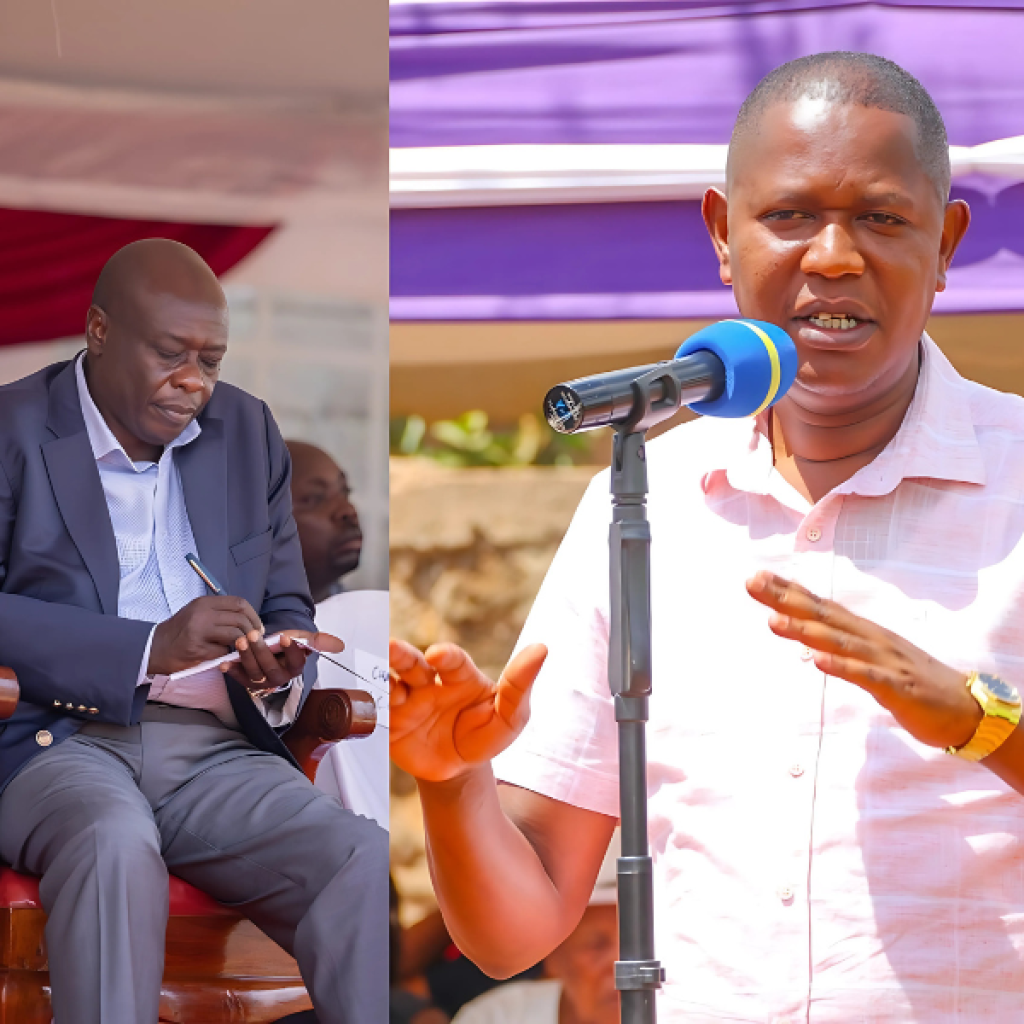
Kibwezi West Member of Parliament Mwengi Mutuse delivered a scathing critique of former Deputy President Rigathi Gachagua’s ‘cousin mantra,’ labeling it a dangerous form of tribal politics that threatens Kenya’s unity. Speaking at a public event in Malindi, Mutuse accused Gachagua of exploiting ethnic identities to rebuild his political base, particularly through his Democracy for Citizens Party, as the 2027 general election looms. The MP, who played a pivotal role in Gachagua’s impeachment in October 2024, warned that the former deputy president’s rhetoric, which frames communities like the Kamba, Kisii, and Mijikenda as ‘cousins’ of the Gikuyu, risks deepening ethnic divisions in a country still healing from past political strife. Mutuse’s remarks, made amid heightened political activity in the Coast and Ukambani regions, reflect a broader struggle over Kenya’s electoral narrative, with unity and development pitted against ethnic mobilization.
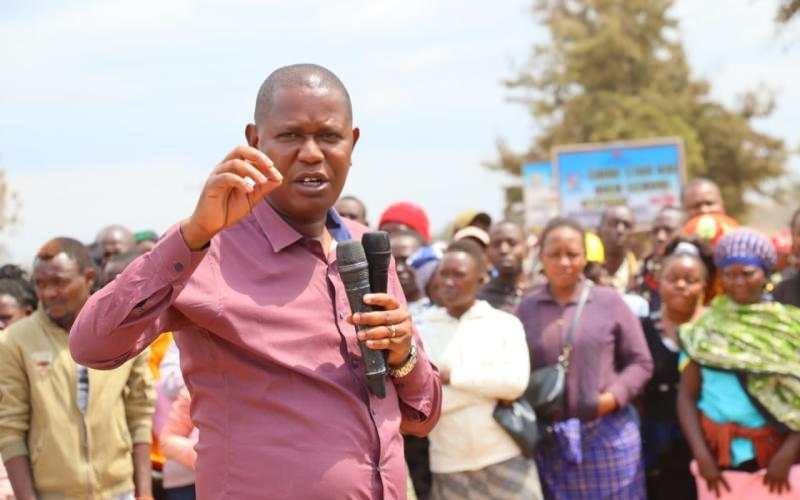
Mutuse’s condemnation of Gachagua’s ‘cousin mantra’ centers on its shift from his earlier ‘shareholding’ rhetoric, which sparked controversy for suggesting that only regions that voted for President William Ruto’s Kenya Kwanza coalition in 2022 deserved government resources. “When he was in power, Gachagua said Malindi had no shares because of its voting pattern,” Mutuse told the crowd in Malindi. “Now, out of office, he calls you his cousins. This is hypocrisy meant to exploit our communities.” The MP, elected on the Maendeleo Chap Chap ticket, argued that Gachagua’s newfound appeal to kinship is a calculated strategy to forge a Bantu voting bloc, aligning communities like the Gikuyu, Kamba, and Luhya against other ethnic groups. He urged Kenyans to reject such tactics, emphasizing that the 2010 Constitution envisions a unified nation free from tribalism.
The ‘cousin mantra’ emerged as Gachagua intensified his political comeback through public rallies, particularly in Ukambani and the Coast, where he has sought alliances with opposition leaders like Wiper’s Kalonzo Musyoka. The phrase, initially perceived as a rhetorical flourish, has grown into a deliberate strategy to reframe the Gikuyu, Embu, Meru, and Akamba (GEMA) alliance, extending it to other Bantu communities. “Gachagua’s talk of cousins is not about family; it’s about power,” said Mutuse, accusing the former deputy president of weaponizing cultural ties to regain influence after his impeachment. The MP’s remarks echo sentiments expressed by other leaders, including Labour Cabinet Secretary Alfred Mutua, who called the mantra an insult to the Kamba, asserting, “We are in-laws, not cousins, and we won’t be used as political pawns.”
Mutuse’s critique is deeply personal, given his role in spearheading Gachagua’s impeachment. As vice chairperson of the National Assembly’s Justice and Legal Affairs Committee, Mutuse tabled a motion citing 11 grounds, including gross constitutional violations, abuse of office, and promoting tribalism through the ‘shareholding’ ideology. “Gachagua wanted to chain Kenya with tribalism,” Mutuse said in Malindi, referencing his earlier impeachment arguments. “We removed him to build a united Kenya, and we won’t let him drag us back.” The impeachment, upheld by the Senate on October 17, 2024, was a landmark moment, marking the first time a Kenyan deputy president was removed from office. Mutuse’s actions earned him both praise and criticism, with Gachagua’s supporters accusing him of betraying the Mount Kenya region.
The Malindi event, attended by local leaders and residents, was part of Mutuse’s broader campaign to promote development and unity in the Coast region. He highlighted recent government projects, such as the planned tarmacking of the Emali-Ukia road, as evidence of President Ruto’s commitment to equitable development. “Unlike Gachagua, who sidelined regions like the Coast for not voting Kenya Kwanza, this government is delivering for all Kenyans,” Mutuse said, pointing to infrastructure and empowerment programs. The 45-kilometer road project, set to begin in February 2026, is expected to boost trade in Makueni, Kajiado, and Machakos counties, a stark contrast to Gachagua’s alleged focus on Mount Kenya’s Mau Mau roads. “We’re building roads for everyone, not just one region,” Mutuse added, drawing applause from the crowd.
Public sentiment, as reflected on platforms like X, reveals a polarized response to Gachagua’s ‘cousin mantra.’ Some users praise his efforts to unite Bantu communities, with one writing, “Gachagua’s cousin talk is waking up the Kikuyu, Kamba, and Luhya to their voting power.” Others, however, align with Mutuse, condemning the strategy as divisive. “Kenya is one nation, not a collection of cousins,” posted a Mombasa resident. “Mutuse is right to call out this tribal nonsense.” The hashtag #CousinMantra trended briefly, with users debating whether Gachagua’s approach signals a return to the ethnic politics that fueled violence in 2007-2008. “We can’t afford another tribal election,” wrote a Nairobi-based user, urging leaders to focus on policy over identity.
Gachagua’s political resurgence has been marked by bold moves, including the launch of the Democracy for Citizens Party in May 2025. His rallies, often alongside opposition figures like Kalonzo Musyoka and Eugene Wamalwa, aim to challenge Ruto’s re-election bid by framing him as a one-term president. “The cousins are coming together to reclaim Kenya,” Gachagua declared at a June 2025 rally in Emali, drawing cheers from supporters. However, critics like Mutuse argue that this rhetoric undermines the 2010 Constitution’s emphasis on national unity. “The Constitution calls us brothers and sisters, not cousins,” Mutuse said, citing the preamble’s vision of an indivisible nation. He accused Gachagua of exploiting ethnic identities to mask his failure to deliver during his tenure, particularly in regions outside Mount Kenya.
The debate over Gachagua’s tactics has reignited discussions about Kenya’s history of ethnic politics. The 2010 Constitution sought to curb tribalism by promoting devolution and equitable resource distribution, but leaders like Gachagua continue to leverage ethnic alliances. “Gachagua’s cousin mantra is a repackaged version of his shareholding nonsense,” said political analyst Jane Mwangi in Nairobi. “It’s a desperate attempt to stay relevant after his impeachment.” Mwangi noted that Gachagua’s focus on Bantu communities risks alienating non-Bantu groups, such as the Luo and Kalenjin, potentially fracturing opposition coalitions. “Kenyans want leaders who talk about jobs and healthcare, not tribal cousins,” she added.
Mutuse’s stand has not been without controversy. In Makueni, some residents view him as a hero for challenging Gachagua’s divisive politics, while others see him as a traitor for aligning with Ruto against a fellow GEMA leader. “Mutuse betrayed our region by impeaching Gachagua,” said a shopkeeper in Wote, reflecting lingering loyalty to the former deputy president. Others, like farmer George Mutinda, support Mutuse’s focus on development. “The Emali-Ukia road will transform our lives,” Mutinda said. “Gachagua’s talk of cousins won’t put food on our tables.” Mutuse has dismissed accusations of being a “political gun for hire,” insisting that his actions are driven by a commitment to Kenya’s unity.
The coastal region, where Mutuse spoke, has become a battleground for competing narratives. Gachagua’s visits to Malindi and Mombasa, where he called locals his “cousins,” have drawn criticism from leaders like Tana River Senator Danson Mungatana, who praised Mutuse for his role in Gachagua’s ouster. “Gachagua was an embarrassment, dividing Kenyans with his shareholding talk,” Mungatana said at a Hola event. “Mutuse helped us embrace a leader like Kindiki, who unites us.” The endorsement of Deputy President Kithure Kindiki by coastal and Ukambani leaders underscores the shifting allegiances, with Kindiki positioning himself as a unifying figure against Gachagua’s ethnic rhetoric.
As the 2027 election approaches, Mutuse’s call to reject the ‘cousin mantra’ resonates with those wary of tribal politics. “We need a Kenya where every citizen has a stake, not just those called cousins,” he said in Malindi, urging voters to prioritize development over ethnic alliances. The MP’s advocacy aligns with Ruto’s push for a broad-based government, though critics argue that the Kenya Kwanza administration has its own challenges, including allegations of favoritism in appointments. “Mutuse talks unity, but let’s see if Ruto’s government walks the talk,” said a Mombasa-based analyst, pointing to the need for inclusive policies.
The political tussle has also sparked legal and social debates. Gachagua’s ongoing court case challenging his impeachment highlights the ‘shareholding’ and ‘cousin’ narratives as key grounds for his removal. “The Senate was right to act,” said Mutuse, defending the impeachment process. “Gachagua’s rhetoric violated Article 131, which demands national unity.” Meanwhile, civil society groups have called for dialogue to address ethnic tensions, with the National Cohesion and Integration Commission planning forums to counter divisive narratives. “We can’t let 2027 become another 2007,” said a commission official, referencing the post-election violence that killed over 1,000 Kenyans.
For now, Mutuse’s rejection of Gachagua’s ‘cousin mantra’ has positioned him as a vocal advocate for unity, but the road to 2027 remains fraught with challenges. As Gachagua continues to mobilize support, and Ruto’s allies counter with development promises, Kenya’s political future hangs in the balance. “Let’s vote for ideas, not tribes,” Mutuse urged, a message that could define the nation’s path forward.