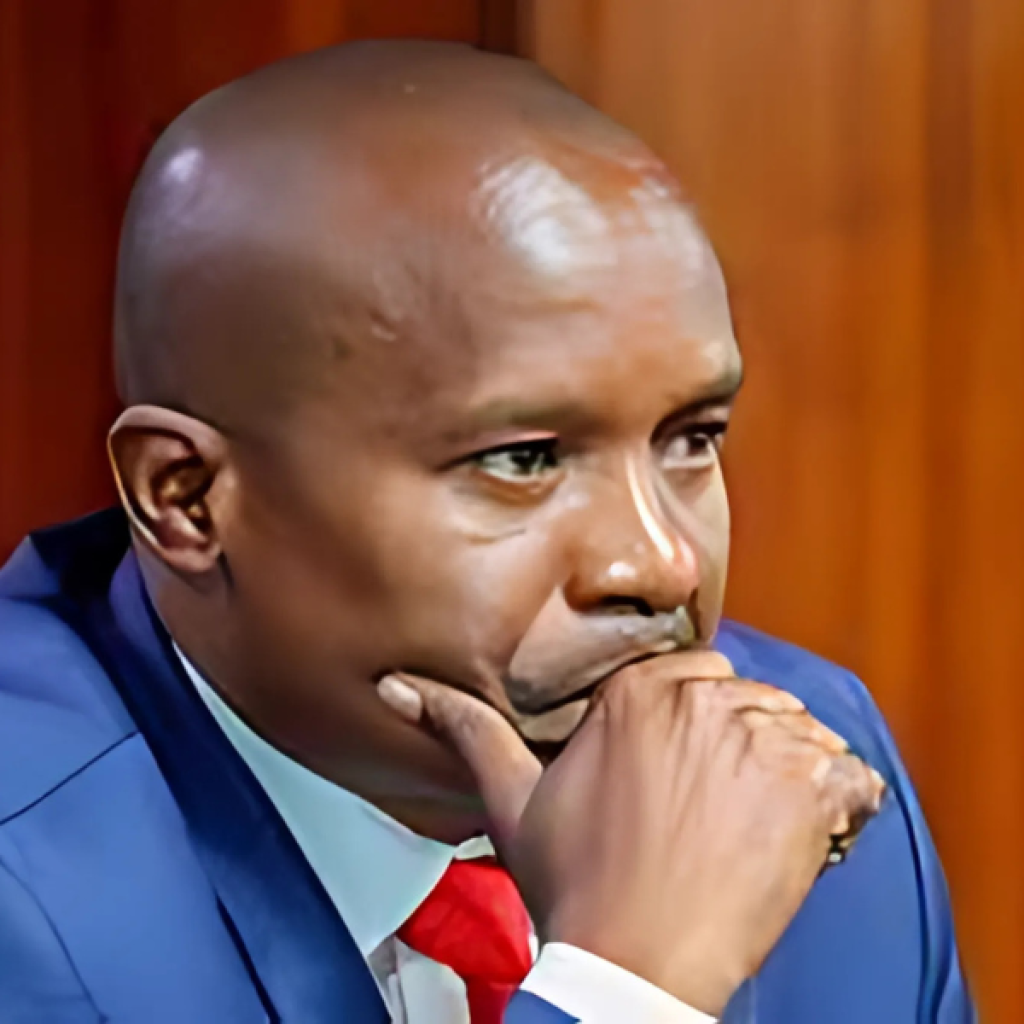
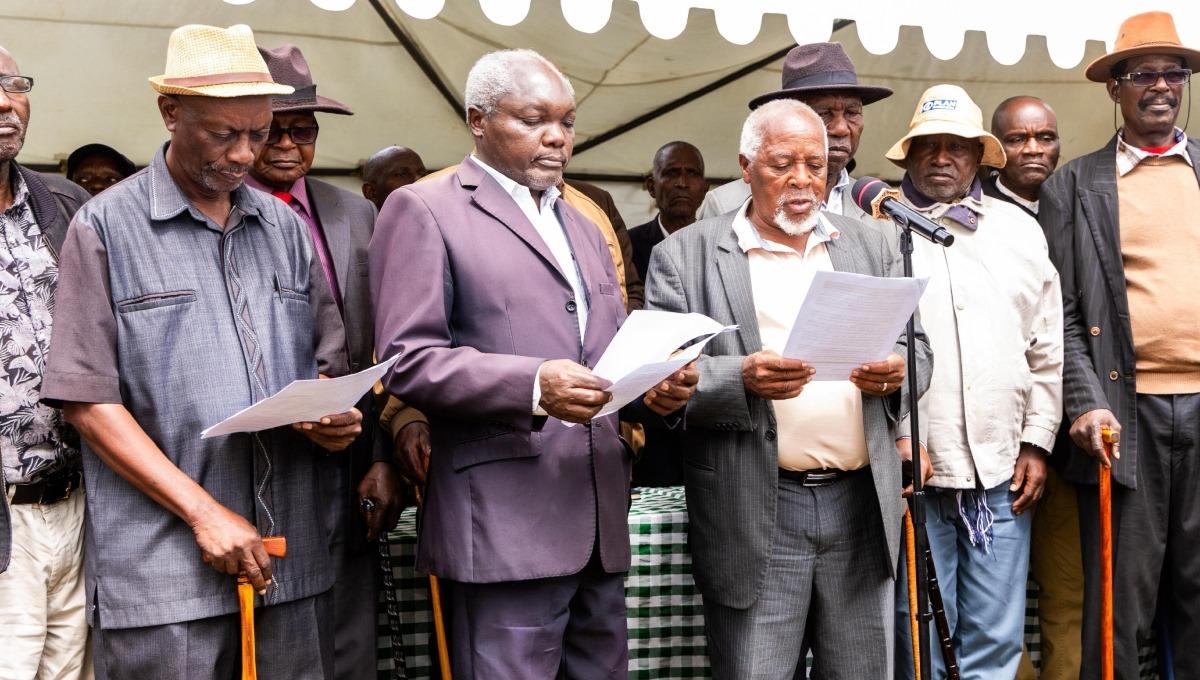
A significant shift in the political landscape of Kenya’s Mount Kenya region unfolded as elders from the eastern counties of Meru, Embu, and Tharaka Nithi issued a powerful statement, dubbed the Runyenjes Declaration, reaffirming their unwavering support for Deputy President Kithure Kindiki. The elders, drawn from the influential Njuri Ncheke, Nyangi Ndiriri, and Ngome councils, categorically rejected the leadership claims of impeached former Deputy President Rigathi Gachagua, accusing him of fueling tribal divisions and undermining regional unity. The declaration, read in Runyenjes by respected elders Ben Kanyenji, Benard Munyi, and Mohammed Ruguongo, marks a pivotal moment in the region’s politics, signaling a realignment of loyalties as Kenya approaches the 2027 general election. The elders’ endorsement of Kindiki, coupled with their call for unity, underscores the deepening rift between Mt Kenya East and Gachagua’s camp, setting the stage for a contentious battle for regional influence.
The Runyenjes Declaration builds on the elders’ earlier stance, articulated in the Izaak Walton Declaration of September 15, 2024, when over 500 elders from the same counties withdrew their support for Gachagua and endorsed Kindiki, then the Interior Cabinet Secretary, as their liaison to President William Ruto’s administration. “We repeat what we said clearly last year: Rigathi Gachagua divided our people, confused our region, and failed to deliver development,” the elders stated, their voices resonating with frustration over Gachagua’s tenure. They accused the former deputy president of fostering ethnic divisions between Mt Kenya East and Mt Kenya West, questioning whether his persistent attacks on Kindiki stemmed from regional bias. “Is Rigathi attacking Prof. Kindiki just because he hails from Mt Kenya East, unlike his predecessors from Mt Kenya West?” asked Elder Kanyenji, emphasizing that such rhetoric insults the entire community.
The elders’ support for Kindiki is rooted in his performance since assuming the deputy presidency in October 2024, following Gachagua’s impeachment. They praised Kindiki’s focus on discipline, national unity, and development, citing his efforts to curb insecurity in regions like the North Rift and Meru, as well as his leadership in economic empowerment initiatives. “Prof. Kindiki has shown wisdom and integrity,” said Elder Munyi, highlighting the deputy president’s collaborative work with President Ruto. “He is bridging the gap between Mt Kenya East and West, ensuring our region speaks with one voice.” The elders urged Kindiki to remain steadfast, vowing to protect him from political attacks. “Anyone attacking Prof. Kindiki is attacking all of us,” they declared, signaling a unified front against Gachagua’s attempts to reclaim influence.
Gachagua’s fall from grace has been a dramatic chapter in Mt Kenya politics. His impeachment, upheld by Parliament for alleged constitutional violations and gross misconduct, marked a turning point, with Kindiki’s unanimous appointment as deputy president seen as a victory for Mt Kenya East. The elders lauded Parliament’s decision, describing it as lawful and just. “Gachagua’s leadership style was defined by failure and division, even from his days as a District Officer,” said Elder Ruguongo, referencing Gachagua’s early career. The elders’ criticism echoes sentiments expressed on X, where users have debated the region’s leadership dynamics. “Mt Kenya East is done with Gachagua’s chaos,” posted a user from Meru, while another wrote, “Kindiki is uniting us, not dividing us like Rigathi did.”
The Runyenjes Declaration comes amid escalating tensions between Gachagua and Kindiki, with the former intensifying his anti-government campaign through the Democracy for Citizens Party. Gachagua’s recent tour of Meru, where he sought to rally support, met resistance, with clashes reported in Nkubu and Meru towns. “We are aware that MPs allied to Ruto tried to stop my meetings,” Gachagua said in Meru on June 21, accusing local leaders of mobilizing goons. His call to reject Kenya Kwanza candidates in 2027 has further alienated him from the elders, who insist that only the government of the day commands their loyalty. “Njuri Ncheke works with the elected leadership,” said Meru chairman Adriano Aruyaru. “Gachagua must wait for 2027 to seek support through the ballot.”
Kindiki, a senior Njuri Ncheke elder, has emerged as a unifying figure for Mt Kenya East. His rise, attributed partly to the council’s 2015 endorsement as the Meru community’s spokesman, has solidified his stature. “Our son deserves respect,” Aruyaru said, condemning Gachagua’s personal attacks, including his mockery of Kindiki’s voice as lacking “bass.” In a January 2025 church service in Embu, Kindiki responded, urging leaders to focus on solutions rather than insults. “Leadership is not about bragging; it’s about serving Kenyans,” he said, dismissing Gachagua’s claims about government failures as divisive. Kindiki’s economic empowerment forums, criticized by Gachagua as neglecting service delivery, have been defended as initiatives to support small businesses and hustlers, particularly in rural areas.
The elders’ endorsement reflects broader regional dynamics, with Mt Kenya East seeking greater influence after years of being overshadowed by Mt Kenya West. The region’s leaders, including Embu Governor Cecily Mbarire and Tharaka Nithi’s Muthomi Njuki, have rallied behind Kindiki, emphasizing development over political bickering. “We need leaders who deliver, not those who sow discord,” said Mbarire, who has championed projects like the KSh 1 billion electrification initiative in Embu. The elders also called on Kindiki to secure more development projects, with one elder, Makarena, warning, “If he fails to bring progress, Gachagua’s attacks will gain traction.” This sentiment underscores the pressure on Kindiki to deliver tangible results, especially in a region grappling with economic challenges like falling milk prices and illicit brews.
Gachagua’s camp, however, remains defiant. Allies like Kiambu Senator Karungo Thang’wa have accused Kindiki’s supporters of plotting to marginalize Mt Kenya West, framing the elders’ declaration as a divisive tactic. “Gachagua remains our voice,” Thang’wa said, dismissing Kindiki’s endorsement as a ploy to weaken the region’s unity. Gachagua’s recent criticism of Kikuyu musicians for visiting Kindiki’s Karen residence, where he alleged they were paid to promote government agendas, further escalated tensions. “These artists betrayed our community,” he said in Murang’a, calling for a boycott. Kindiki defended the musicians, arguing they sought support to dismantle exploitative cartels in the creative industry, not political favors.
The political rift has historical roots, with Kindiki and Gachagua vying for Ruto’s running mate position in 2022. Political analyst Oscar Mutugi noted that Ruto’s initial preference for Kindiki was overruled by Gachagua’s assertive personality and the numerical strength of Mt Kenya West. “This is a rematch of that 2022 tussle,” Mutugi said, suggesting that Kindiki’s current role positions him as a formidable contender for regional leadership. The elders’ declaration, coupled with support from 48 MPs and 21 Mt Kenya East legislators, reinforces this shift, with leaders like Nyeri Senator Wahome Wamatinga abandoning Gachagua for Kindiki.
Public sentiment is mixed, with X posts reflecting both support for Kindiki’s development focus and nostalgia for Gachagua’s vocal advocacy for Mt Kenya. “Kindiki is calm and delivers, unlike Gachagua’s noise,” posted a user from Tharaka Nithi. Conversely, a Murang’a user wrote, “Gachagua fought for our farmers; Kindiki is just following Ruto’s script.” The elders’ call for unity aims to quell such divisions, but Gachagua’s legal battles, including a pending case challenging his impeachment, add complexity. “We’re not against Gachagua personally, but his tactics harm our region,” said a Nyangi Ndiriri elder, urging dialogue over confrontation.
As 2027 approaches, the Runyenjes Declaration signals a critical realignment in Mt Kenya politics. Kindiki’s challenge will be to maintain this support while navigating economic and social challenges, including youth unemployment and agricultural reforms. The elders’ plea for unity, backed by their cultural authority, underscores the need for a cohesive Mt Kenya voice. “We want a region that stands together,” said Aruyaru, urging residents to reject divisive politics. Whether Kindiki can consolidate this support and deliver on development promises will determine the region’s trajectory in a politically charged landscape.