By Brenda Wereh27 Jul, 202533 mins read 2,295 views
0 comments 0 likes
Kenyan lawmakers face backlash after reallocating Sh5.9 billion from capitation funds to cover national exam costs—raising parental concerns over school funding shortfalls.
Controversy erupted in Kenya’s education sector as Members of Parliament (MPs) faced intense backlash over a proposal to slash school capitation funds, threatening the sustainability of the country’s free education policy. The announcement by Treasury Cabinet Secretary John Mbadi, indicating a reduction in secondary school capitation from KSh 22,244 to KSh 16,900 per student annually, has sparked outrage among educators, parents, and opposition leaders. Critics argue that this move undermines decades of progress in ensuring access to quality education for all Kenyan children, a legacy championed by former President Mwai Kibaki. This article explores the proposed cuts, the criticisms they have attracted, their potential impact on Kenya’s education system, and the broader implications for the nation’s future.
The proposed reduction in capitation funds, announced by Treasury CS John Mbadi on July 24, 2025, has sent shockwaves through Kenya’s education sector. Under the Free Day Secondary Education (FDSE) program, secondary schools are entitled to KSh 22,244 per student annually, while primary schools receive KSh 1,420 and junior secondary schools KSh 15,043 per learner. However, the Treasury’s plan to cut secondary school capitation to KSh 16,900—coupled with Mbadi’s statement that “the era of free education, as we knew it, is over”—has raised alarms about the government’s commitment to free basic education, a constitutional right under Article 53(1)(b).
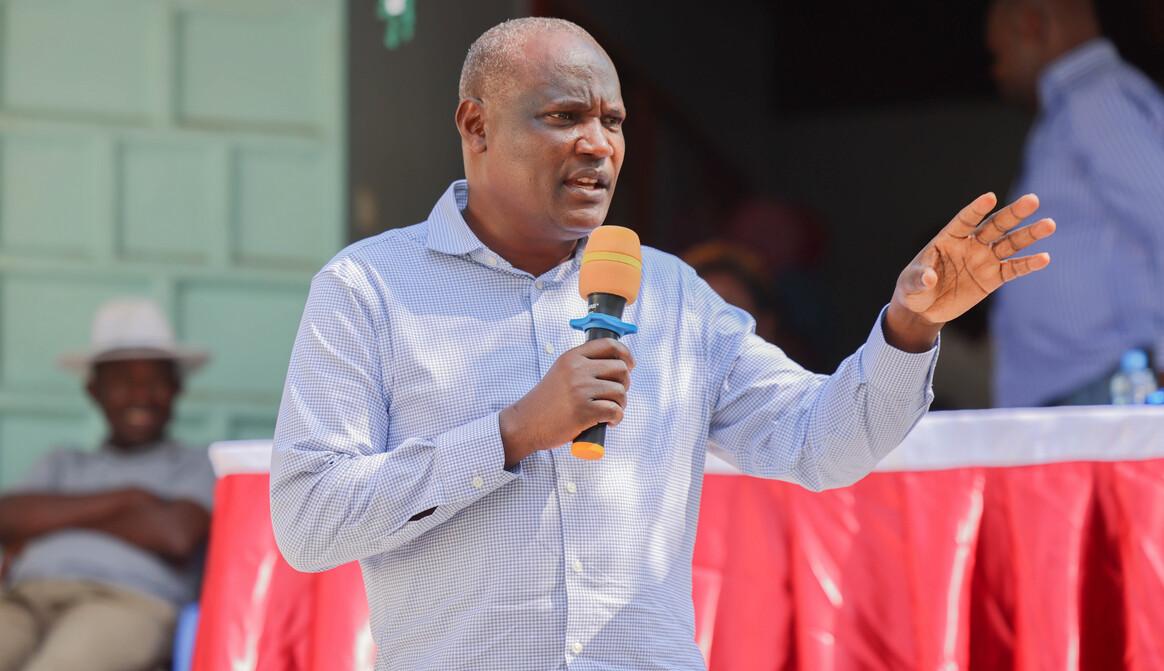
Mbadi has attributed the shortfall to inadequate budget allocations approved by Parliament, arguing that the current budget only supports about KSh 17,000 per secondary school student. He criticized MPs for questioning the Treasury’s failure to disburse the full amount while having approved reduced budgets themselves. “In fact, Parliament reduced the capitation we had proposed in the latest budget. Once the budget is passed, where do I get the extra money to pay the full KSh 22,000?” Mbadi remarked during a thanksgiving ceremony in Suba South on July 25, 2025.
The proposed cuts come at a critical time, as schools prepare for the third term and the rollout of the Competency-Based Curriculum (CBC) enters its next phase with Grade 10 in 2026. The reduction in funding threatens to exacerbate existing financial strains, with schools already grappling with a KSh 64 billion capitation shortfall accumulated over the past five years.
The proposal has drawn sharp criticism from various stakeholders, including educators, parents, and opposition MPs, who view it as a betrayal of Kenya’s children. The Kenya Secondary Schools Heads Association (KSSHA) Nyanza Chairperson George Opiyo described the cuts as “an unfortunate move,” warning that they would worsen the already strained financial situation in schools, particularly day schools that rely heavily on capitation. Opiyo, principal of Dr. Aloo Gumbi Secondary School in Kisumu East, noted that some schools might be forced to close early or introduce extra levies to survive.
KSSHA National Chairman Willy Kuria echoed these concerns, highlighting that schools are owed over KSh 18 billion for Terms I and II of 2025 alone. “Schools are facing a major crisis. These financial constraints have severely impacted the smooth running of many institutions, with day schools bearing the brunt,” Kuria stated. He criticized the government for disbursing only KSh 3,471.60 per student in 2025, the lowest in recent years, compared to KSh 4,505.50 in 2024.
Opposition MPs, led by figures like Opiyo Wandayi, have accused the government of sabotaging free education through untimely disbursements. Wandayi, speaking in March 2024, called out the Education Ministry for inconsistent timelines, arguing that delayed funds expose principals and teachers to the wrath of parents and suppliers. Similarly, Kibra MP Peter Orero criticized the Ministry for penalizing school administrators who seek alternative funding, noting that each learner is shortchanged by about KSh 9,000 annually.
Social media platforms, particularly X, have amplified the public’s discontent. Posts from users like @safariwithselle labeled the cuts as “an assault on the republic itself,” while @TonyTaiti warned that millions of children from poor families could be forced out of school. Kakamega MPs, as reported by @Tv47Newske, rejected the cuts outright, emphasizing the risk to students’ futures.
The proposed capitation cuts threaten to cripple school operations, particularly in marginalized and rural areas where funding is already stretched thin. Schools rely on capitation to cover essential expenses such as learning materials, non-teaching staff salaries, meals, and co-curricular activities. The reduction to KSh 16,900 per secondary school student—coupled with delays in disbursing even this amount—has forced many institutions to adopt drastic measures, including food and water rationing, cutting back on co-curricular activities, and accumulating debts with suppliers.
Margaret Naliaka, a parent from Bungoma, expressed frustration, questioning, “How free is education when I have to pay for lunch, textbooks, and maybe even extra teachers?” Her concerns reflect a broader fear that the cuts will increase dropout rates, particularly among learners from low-income families. KSSHA has proposed fee hikes to offset the shortfall, recommending an additional KSh 19,628 for national schools and KSh 5,372 for day schools, a move that could further burden parents.
The cuts also jeopardize the CBC’s implementation, which requires significant investment in infrastructure, teacher training, and resources. With Grade 10 set to begin in 2026, schools are already under pressure to accommodate growing enrollment, making the timing of the cuts particularly detrimental.
In response to the criticism, the government has defended its position, citing fiscal constraints and the need for a sustainable funding model. Mbadi proposed consolidating bursary funds from the National Government Constituencies Development Fund (NG-CDF), National Government Affirmative Action Fund (NGAAF), and county governments into a single education fund, with 40% allocated to schools. This, he argued, would eliminate the need for students to seek bursaries from MPs and ensure equitable support.
Education CS Julius Ogamba has also reassured stakeholders that the free education policy remains intact, with efforts underway to address funding gaps. On July 25, 2025, Basic Education PS Julius Bitok announced plans to lobby Parliament for an enhanced education budget to cover capitation and national examinations. Bitok emphasized the government’s achievements, including the recruitment of 100,000 teachers in three years and the rollout of the Kenya Education Management Information System (KEMIS) to improve funding accuracy.
National Assembly Majority Leader Kimani Ichung’wah has pledged parliamentary support for a supplementary budget to address the shortfall, stressing that free education is a cornerstone of the Kenya Kwanza administration. “As we go to the supplementary budget, we will provide adequate resources. Resources follow policy, and the policy is free education,” Ichung’wah stated on July 26, 2025.
The debate over capitation cuts is particularly poignant given Kenya’s history of prioritizing education. Former President Mwai Kibaki’s introduction of free primary education in 2003 was a transformative step, enabling millions of children to access schooling. Former President Uhuru Kenyatta later expanded this to include free day secondary education. Mbadi clarified that full capitation of KSh 22,000 was never fully achieved, even under Kenyatta’s administration, due to budget constraints.
However, the current crisis threatens to unravel these gains. MPs like Robert Mbui have questioned the sustainability of free education, noting that schools received only KSh 14 billion of the expected KSh 28 billion in Term 1 of 2025, leading to operational challenges. The Kenya National Union of Teachers (KNUT) and KSSHA have warned that without immediate action, schools may shut down, disrupting learning for millions.
Critics argue that the government must prioritize education funding and improve transparency to prevent mismanagement. The proposed merger of NG-CDF and NGAAF into a single fund has potential but requires robust oversight to avoid becoming a “slush fund for the politically connected,” as cautioned by People Daily. Nairobi Senator Edwin Sifuna has called for a long-term strategy to ensure timely disbursements, emphasizing the need for continuous funding to support school operations and infrastructure.
Public sentiment, as reflected on X, demands accountability from MPs, with users like @KevmanXII highlighting the irony of lawmakers approving their own perks while cutting education funds. The Democracy for Citizens Party (DCP) has issued an ultimatum, threatening nationwide protests if the funds are not released by August 8, 2025.
The proposal to slash school capitation funds in Kenya has ignited a fierce debate about the future of free education. MPs face mounting criticism for approving budgets that fall short of the sector’s needs, while the Treasury’s fiscal constraints highlight deeper structural challenges. As schools struggle with debts and operational difficulties, the risk of increased dropout rates and compromised education quality looms large. The government’s commitment to addressing the shortfall through supplementary budgets and fund consolidation offers hope, but stakeholders demand swift action and transparency. With the CBC’s next phase on the horizon, Kenya stands at a crossroads: invest in its children’s future or risk betraying the promise of universal education. The resolution of this crisis will shape not only the education sector but also the nation’s social and economic trajectory for years to come.
Former Kiambu Governor Ferdinand Waititu has secured a major bail reprieve from the High Court, with Justice Winfrida Okwany reducing his bail from Sh53.5 million to Sh20 million cash pending appeal in his ongoing corruption case.
Kenya National Highways Authority names Eng. Luka Kipchumba Kimeli as Director General while Kenya Roads Board appoints Judith Otsyula to the same role in major leadership changes for Kenya's roads sector.
Kenya’s Committee on Communication, Information and Innovation has rejected calls for a complete ban on TikTok, instead proposing mandatory local storage of Kenyan user data and full compliance with national laws in a report adopted for debate in the National Assembly.