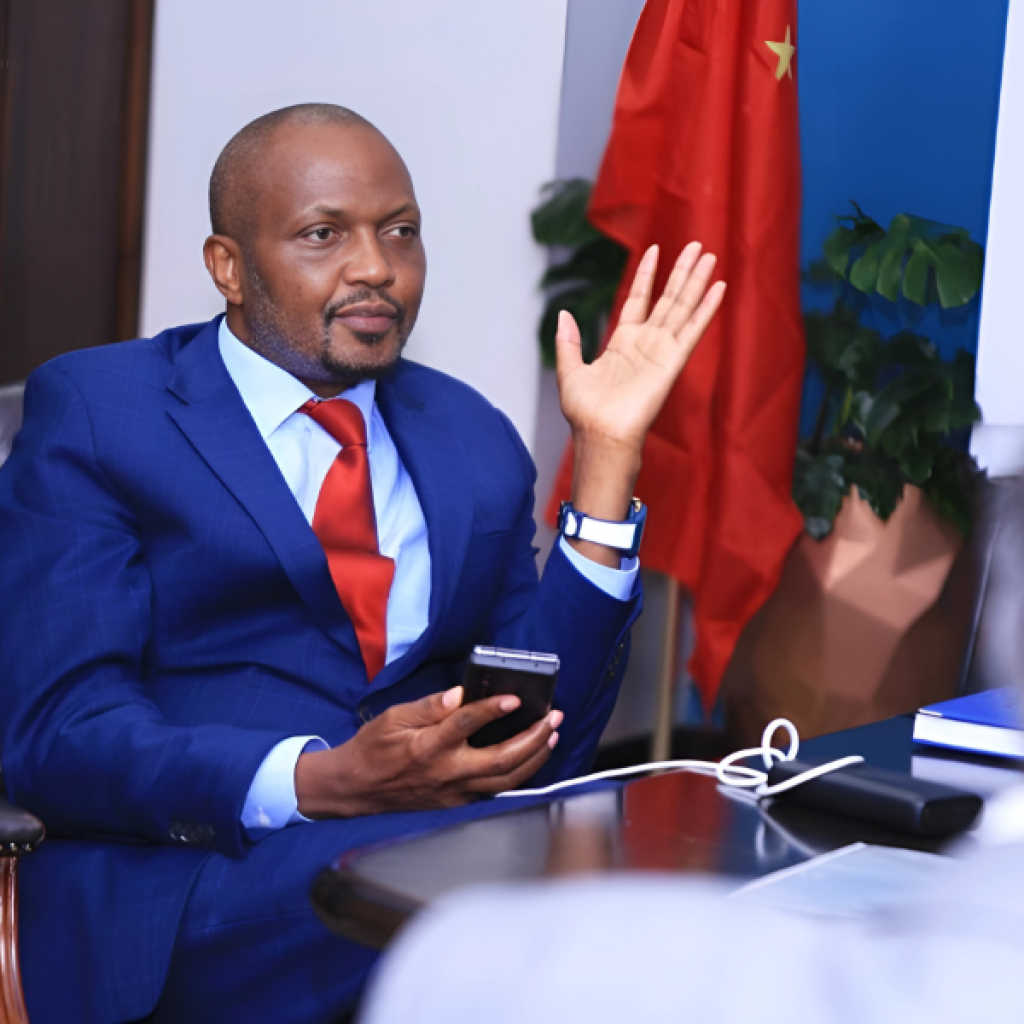
Kenya’s political arena, often marked by fierce rivalries and high-stakes campaigns, is witnessing an unusual proposition that could reshape its future. Moses Kuria, a senior advisor to President William Ruto, has ignited a national conversation by suggesting that the 2027 presidential election may not be a traditional contest but a moment of collective agreement among the country’s leaders. Speaking at a political rally in Kiambu on June 20, 2025, Kuria drew parallels to the landmark 2002 election, where Mwai Kibaki’s landslide victory followed a unified opposition coalition. His remarks, which advocate for a consensus-driven approach to leadership transition, come at a time when opposition figures, led by former Deputy President Rigathi Gachagua, are intensifying calls for President Ruto to serve only one term. Kuria’s vision of unity over division offers a bold prediction for Kenya’s political trajectory, raising both hope and skepticism.
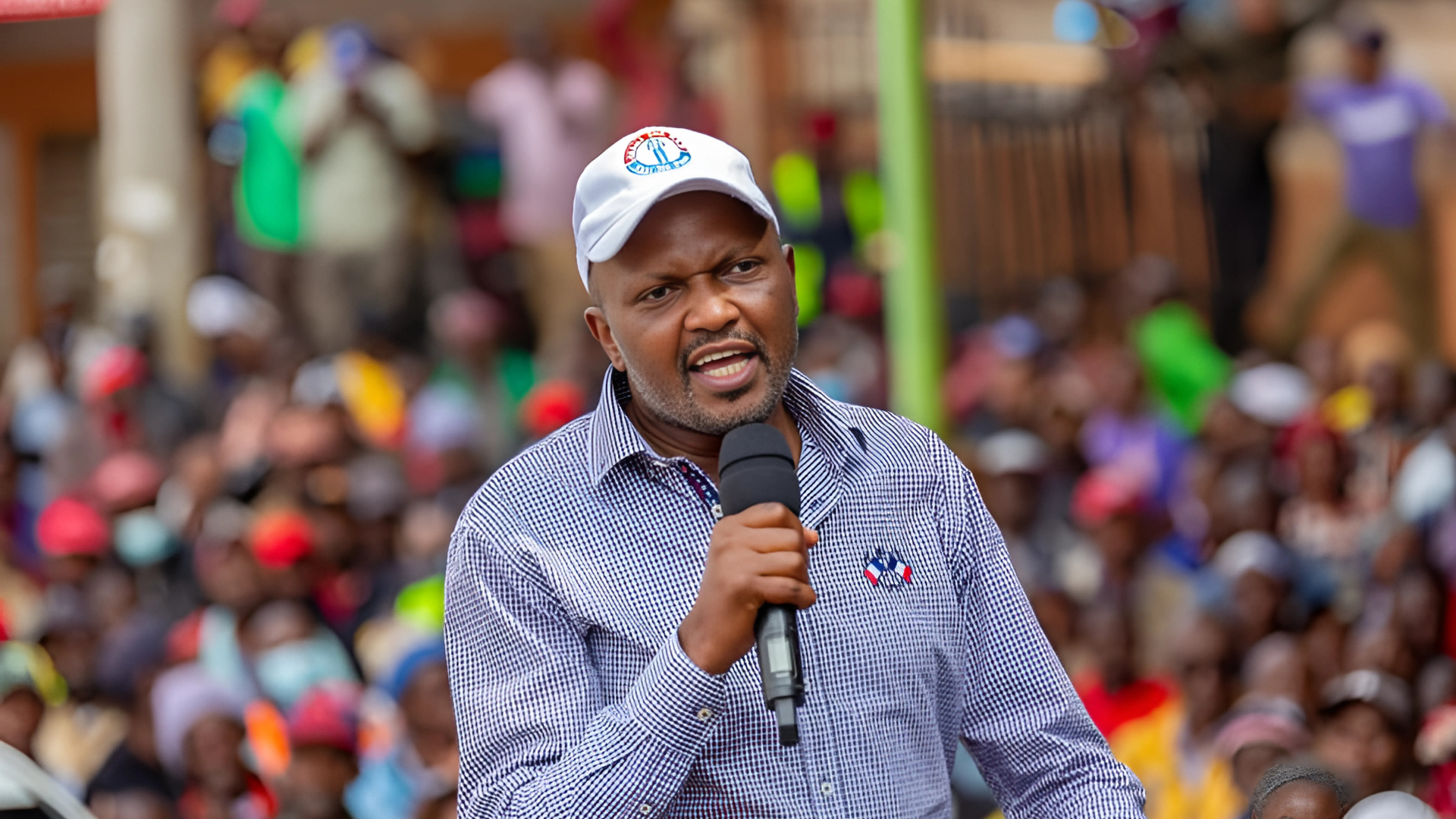
Kuria’s central argument is that Kenya stands at a pivotal moment, where the nation’s need for stability outweighs the allure of competitive politics. “By 2027, we will not have an election in the usual sense,” he told the enthusiastic crowd. “It will be a moment for Kenya, much like 2002, where we will have a national agreement that this country comes first.” He pointed to the 2002 election, where the National Rainbow Coalition (NaRC) brought together opposition heavyweights like Raila Odinga, Kijana Wamalwa, and Charity Ngilu to back Kibaki against the ruling KANU party. The result was a resounding victory that ended decades of KANU dominance and ushered in a period of optimism. Kuria believes a similar coalition could emerge, uniting Kenya’s political elite to prioritize national interests over personal ambitions.
The advisor’s remarks reflect a broader sentiment that Kenya’s history of divisive elections has often come at a cost. Polls in 2007, 2017, and to a lesser extent 2022 were marred by violence, legal disputes, and deep polarization. “We’ve seen what happens when we fight for power at all costs,” said Jane Wambui, a Nairobi-based political analyst. “Kuria is tapping into a desire for a less confrontational path, but the question is whether our leaders can set aside their egos.” Kuria argues that a consensus approach could stabilize the economy, strengthen institutions, and foster social cohesion, particularly in a country grappling with challenges like youth unemployment and rising living costs.
To illustrate his point, Kuria highlighted recent efforts at political reconciliation. The broad-based government agreement signed in March 2025 between Ruto’s Kenya Kwanza coalition and Raila Odinga’s Azimio la Umoja aimed to address pressing issues like healthcare and infrastructure. While the pact has faced criticism for its slow progress, Kuria sees it as a foundation for future unity. “This agreement shows we can work together,” he said. “By 2027, I believe we’ll see leaders from across the spectrum come together for a shared vision.” His optimism suggests that negotiations among key players—Ruto, Raila, and others—could lead to a pre-election deal, potentially endorsing a single candidate or coalition to avoid a fractious race.
However, Kuria’s vision faces significant hurdles, not least from opposition voices advocating for a different outcome. Former Deputy President Rigathi Gachagua, now a leading figure in the Democratic Citizens Party (DCP), has been vocal in his campaign for a “one-term” presidency for Ruto. Speaking at a rally in Nyeri on June 18, 2025, Gachagua argued that Ruto’s administration has failed to deliver on key promises, including job creation and economic relief. “Kenyans gave Ruto five years, and that’s enough,” he declared. “We need new leadership in 2027 to fix this country.” Gachagua’s rhetoric, backed by allies like Cleophas Malala, positions DCP as a direct challenge to Ruto’s re-election bid, complicating Kuria’s call for consensus.
Gachagua’s push resonates with segments of the population frustrated by economic challenges. Inflation has driven up fuel and food prices, while youth unemployment remains a pressing issue. “I voted for Ruto in 2022, but things are harder now,” said Peter Kamau, a boda boda operator in Thika. “If Gachagua or someone else can do better, I’m ready for change.” Yet, Kuria dismisses the one-term narrative as divisive. “Those calling for one term are thinking about 2027, not Kenya’s future,” he said. “We need to focus on what unites us, not what tears us apart.” His remarks suggest that Gachagua’s campaign could be countered by a broader coalition that neutralizes regional and ethnic rivalries.
The prospect of a consensus-driven election raises questions about how such an agreement would be reached and who would lead it. Kuria has not named a potential candidate, but speculation abounds. Some analysts suggest Ruto could seek re-election with opposition backing, while others point to Raila Odinga as a unifying figure, given his experience and recent collaboration with the government. “Raila has the stature to bring people together,” said analyst Wambui. “But his history of contested elections makes some wary.” Alternatively, a dark-horse candidate from outside the current political elite could emerge, much like Kibaki did in 2002. Kuria’s ambiguity on this point has fueled debate, with critics accusing him of floating a vague idea to deflect scrutiny from Ruto’s challenges.
The mechanics of achieving consensus are another challenge. Kenya’s political culture is deeply rooted in competition, with parties and candidates vying for power through rallies, manifestos, and voter mobilization. A pre-election agreement would require unprecedented trust among leaders known for their rivalries. “It’s a noble idea, but our politicians are too ambitious,” said Mary Ndungu, a voter in Mombasa. “They’ll agree in public, then scheme behind closed doors.” Kuria acknowledges the difficulty but insists it’s possible. “In 2002, nobody thought KANU could be defeated, but we did it because we united,” he said. “We can do it again if we put Kenya first.”
The 2002 analogy, while compelling, has its limits. That election followed years of opposition fragmentation and public discontent with KANU’s rule under President Daniel arap Moi. Today, Ruto’s administration, while facing criticism, retains a strong base, particularly in the Rift Valley and parts of Central Kenya. Moreover, the political landscape is more fragmented, with DCP, ODM, and smaller parties vying for influence. “2002 was a unique moment,” said political commentator John Mwangi. “Replicating it in 2027 would require a level of coordination we haven’t seen since.” Kuria, however, remains undeterred, framing the consensus as a response to modern challenges like economic recovery and global uncertainties.
Public reaction to Kuria’s remarks is mixed. Some Kenyans welcome the idea of a less divisive election, seeing it as a chance to heal old wounds. “I’m tired of elections that pit us against each other,” said Sarah Wanjiku, a shopkeeper in Nakuru. “If our leaders can agree, maybe we can focus on building the country.” Others view it with suspicion, fearing it could undermine democracy. “Consensus sounds nice, but who decides the terms?” asked James Otieno, a university student in Eldoret. “We need a fair vote, not a backroom deal.” These concerns highlight the delicate balance between unity and accountability in Kuria’s proposal.
As 2027 approaches, Kuria’s comments have set the stage for a broader debate about Kenya’s political future. Will the country embrace a model of consensus, or will the familiar cycle of competition prevail? The answer depends on the willingness of leaders like Ruto, Raila, and Gachagua to prioritize national interests over personal ambitions. “This is about legacy,” Kuria said at the Kiambu rally. “We have a chance to show the world that Kenya can lead with unity, not division.”
For now, the idea remains a bold vision, one that challenges conventional politics and invites Kenyans to imagine a different kind of election. Whether it materializes will depend on the negotiations, compromises, and public sentiment in the years ahead. As the nation watches, Kuria’s words serve as both a call to action and a reminder of the power of collective will in shaping Kenya’s destiny.