By Brenda Wereh26 Jun, 202531 mins read 2,586 views
0 comments 0 likes
Zohran Mamdani, a 33-year-old Democratic socialist and son of Ugandan immigrants, emerged as the Democratic nominee for New York City mayor on June 25, 2025, defeating Andrew Cuomo in a historic primary upset, highlighting the city’s diverse electorate and progressive momentum.
On June 25, 2025, Zohran Kwame Mamdani, a 33-year-old state assemblyman from Queens, declared victory in New York City’s Democratic mayoral primary, marking a historic moment for the nation’s largest city. As the son of Ugandan immigrants and a self-identified Democratic socialist, Mamdani’s upset over former Governor Andrew Cuomo, a political veteran, underscored a shift toward a more diverse and progressive Democratic coalition. If elected in November, Mamdani would become the city’s first Muslim and South Asian mayor, a milestone in a metropolis renowned for its cultural mosaic. His campaign, fueled by grassroots energy and bold policy proposals, resonated with young voters, immigrants, and communities of color, reflecting New York’s evolving electorate.
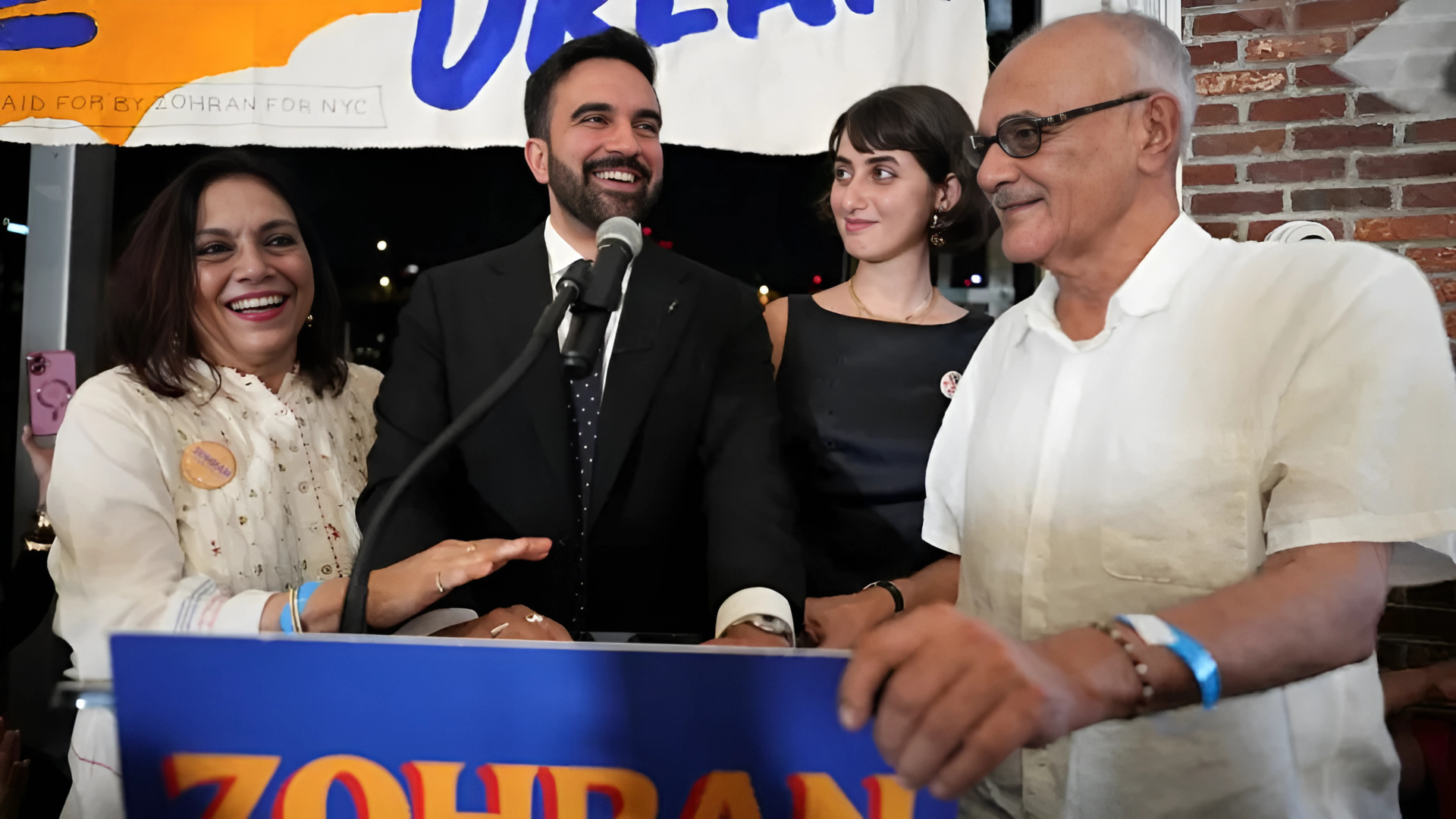
Zohran Mamdani with his parents Mahmood Mamdani (R) and Mira Nair (L) and wife Rama Duwaji (C)Advertisement Photo: Reuters
Born in Kampala, Uganda, Mamdani moved to New York City at age seven with his parents, Mahmood Mamdani, a prominent postcolonial studies scholar, and Mira Nair, an acclaimed filmmaker. Raised in a household steeped in intellectual and artistic activism, he attended the Bronx High School of Science and later earned a degree in Africana studies from Bowdoin College, where he co-founded the campus chapter of Students for Justice in Palestine. Before entering politics, Mamdani worked as a foreclosure prevention counselor and briefly pursued a career as a hip-hop artist. His 2020 election to the New York State Assembly, defeating a four-term incumbent, signaled his ability to challenge entrenched power. “I’ve always believed in fighting for the working class,” Mamdani said at a campaign event in Jackson Heights. “This city belongs to all of us, not just the elite.”
Mamdani’s campaign for mayor, launched in October 2024, initially seemed a long shot. Facing a crowded field of nine candidates, including Cuomo, a three-term governor with national name recognition, Mamdani leaned on a progressive platform that addressed New York’s affordability crisis. He proposed free city buses, universal child care, city-run grocery stores to combat food insecurity, and a rent freeze for rent-stabilized apartments, all funded by taxing the wealthy. His unapologetic stance as a Democratic socialist, coupled with viral social media campaigns, transformed him into a serious contender. “This is a city where one in four people live in poverty,” he told supporters at a rally. “We can’t keep doing the same things and expect different results.”
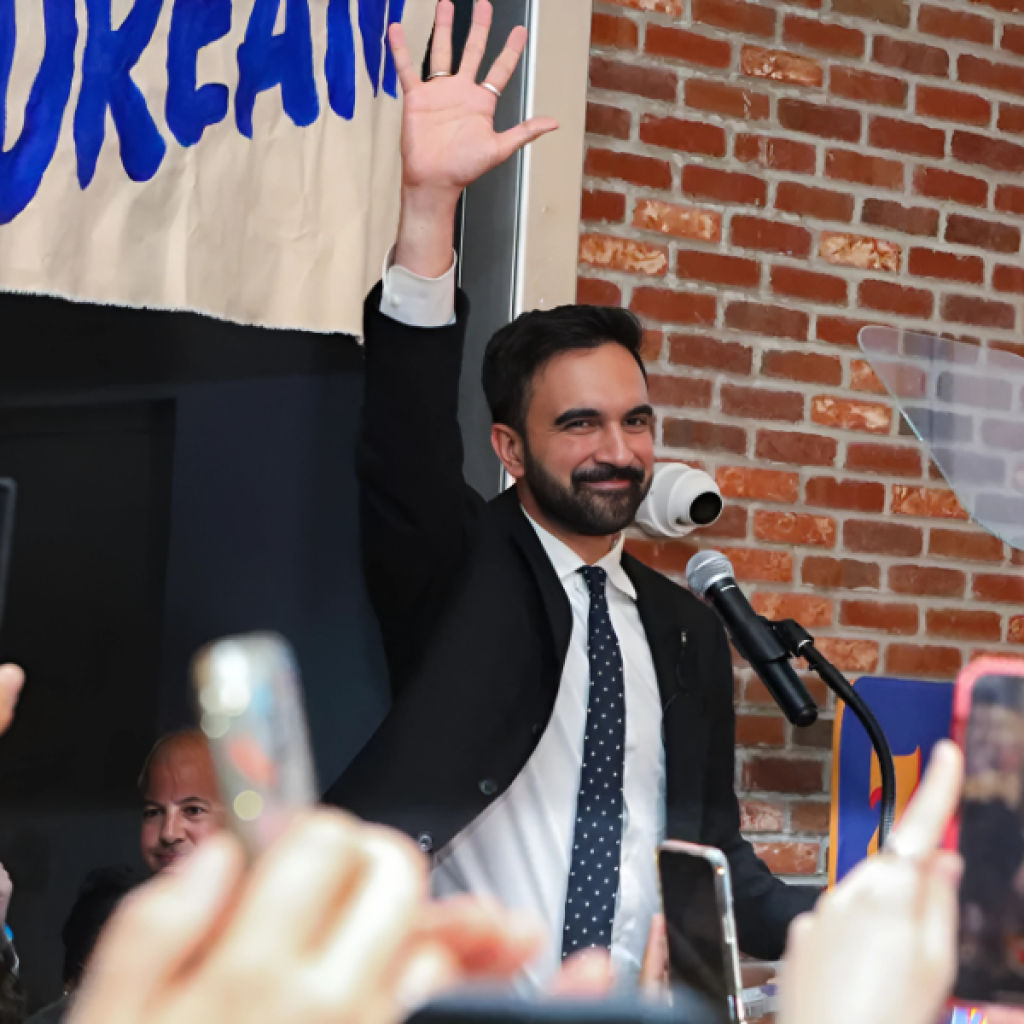
The primary, held under New York’s ranked-choice voting system, saw Mamdani secure 43.5 percent of first-choice votes, compared to Cuomo’s 36.3 percent, with 95 percent of precincts reporting. Cuomo, whose campaign relied on union endorsements and significant funding from a super PAC, conceded late Tuesday night. “Tonight was not our night,” he said at the carpenters union headquarters in Manhattan. “I want to applaud the Assemblyman for a really smart and great campaign.” Mamdani’s victory speech in Long Island City was electric, with supporters chanting his name. “Tonight, we made history,” he declared, quoting Nelson Mandela: “It always seems impossible until it is done. My friends, we have done it.”
Mamdani’s rise was propelled by a diverse coalition, particularly in Queens, Brooklyn, and Manhattan. He performed strongly in neighborhoods like Jackson Heights, Woodside, and Richmond Hill, home to large South Asian and Latino populations, as well as affluent areas like Park Slope and the East Village. His campaign’s Spanish-language outreach and engagement with Muslim and Arab voters in Astoria proved pivotal. “He understands us. He belongs to us,” said Lokmani Rai, a supporter at a Jackson Heights event. “He’s from our community, the immigrant community.” Mamdani’s ability to connect with young and first-time voters, many energized by his TikTok videos and public stunts like breaking a Ramadan fast on a subway with a burrito, amplified his appeal.
However, his campaign was not without controversy. Mamdani’s vocal criticism of Israel and support for Palestinian rights drew criticism from some Jewish leaders. A bill he introduced to end tax-exempt status for charities tied to Israeli settlements sparked debate, with the Orthodox Union’s Rabbi Moshe Hauer urging him to “reject and rein in” associated rhetoric. Mamdani faced daily Islamophobic threats, prompting a police hate-crimes investigation. “Racism shows what’s broken in our politics,” he told a reporter, emphasizing his commitment to fight for all New Yorkers. Despite tensions, prominent Jewish figures like Representative Jerry Nadler endorsed him, citing his pledge to combat hate. “I’ve spoken with Zohran, and he’s committed to protecting Jewish New Yorkers,” Nadler said.
The primary’s outcome reflected a broader Democratic divide, pitting progressives against the establishment. Mamdani’s endorsements from Alexandria Ocasio-Cortez and Bernie Sanders bolstered his credentials. “Zohran has shown what a coalition of working-class New Yorkers can do,” Ocasio-Cortez said at a rally, criticizing Cuomo’s record. Cross-endorsements with candidates like Brad Lander, who placed third, helped Mamdani consolidate progressive votes. “Together, we are sending Andrew Cuomo back to the suburbs,” Lander told supporters, joining Mamdani on stage. The Working Families Party and groups like New York Communities for Change also backed Mamdani, amplifying his grassroots momentum.
Cuomo, once a dominant figure, faced challenges reviving his career after resigning in 2021 amid sexual harassment allegations. His campaign’s attacks on Mamdani, accusing him of wanting to raise taxes and defund the police, failed to sway voters. “His decision to focus on me shows he’s scared,” Mamdani said in the campaign’s final weeks. Despite securing a third-party line for November, Cuomo left his plans ambiguous. The general election will feature Mamdani against incumbent Mayor Eric Adams, running as an independent, and Republican Curtis Sliwa. With Democrats outnumbering Republicans eight to one in New York, Mamdani is favored, but the race promises to be competitive.
Mamdani’s victory signals a generational and ideological shift. At 33, he represents a millennial perspective, emphasizing affordability and equity. His proposals, like a $30 hourly minimum wage by 2030 and city-led housing development, challenge traditional reliance on private developers. Critics question the feasibility of his plans, with business leader Kathy Wylde warning, “This is a capitalist city with a historic relationship with Israel. He’ll need to navigate that.” Yet supporters like Jagpreet Singh of DRUM argue, “There’s nobody who represents the issues I care about like Zohran.”
The primary saw record turnout, with over 980,000 Democrats voting, surpassing 2021 figures. Mamdani’s campaign, backed by tens of thousands of volunteers and $8 million in small-donor contributions, outperformed expectations. “We were never assuming a low-turnout win,” said spokesperson Andrew Epstein. “We wanted people turning out in record numbers.” His ability to mobilize diverse communities, from South Asians to young professionals, reshaped the electorate. In Staten Island, volunteer Janos Marton noted, “He brought in new people—South Asians, Muslims, young people—across the city.”
The race also highlighted New York’s diversity as its strength. Mamdani’s campaign events, like one in Jackson Heights where children played and Latino vendors sold snacks, embodied the city’s multicultural fabric. His Urdu-language campaign video and use of Bollywood clips connected with South Asian voters, while his focus on affordability resonated broadly. “This city is in danger of losing what makes it special,” he said, pointing to poverty and hunger. His platform aims to preserve that diversity through policies like public child care and green schools.
As the November election approaches, Mamdani faces challenges. Some Black voters, particularly in the Bronx and Southeast Queens, favored Cuomo, reflecting tensions with progressives. City Council Speaker Adrienne Adams, the first Black speaker, declined to cross-endorse Mamdani, citing differences with her moderate base. “Black communities need sustained engagement,” her advisor Missayr Boker said. Mamdani’s ability to bridge these divides will be critical. “I will be the mayor for every New Yorker, whether you voted for me or felt too disillusioned to vote,” he pledged.
The national Democratic Party is watching closely. Mamdani’s win, following Trump’s 2024 victory, suggests voters crave bold, progressive leadership. “This shows New Yorkers want change,” said former Mayor Bill de Blasio. Yet, political scientist Patrick Egan cautioned, “It’s a mistake to think this is a one-size-fits-all recipe for Democrats.” Mamdani’s ability to govern a complex city will be tested, but his primary triumph has already redefined New York’s political landscape, proving diversity and grassroots energy can upend the establishment.
President Ruto and Governor Sakaja signed a cooperation agreement allocating funds for 50,000 new streetlights, water plants saving 50 million litres daily, 27 km Nairobi River sewer and ward road upgrades, with Ruto calling it a partnership to make the city livable while opposition senators warn of devolution threats.
Nairobi Governor Johnson Sakaja and the national government are set to sign a Cooperation Agreement at State House today at 3 PM, with Sakaja denying any surrender of key county functions while Senator Edwin Sifuna warns against unconstitutional transfers.
Nairobi Woman Representative Esther Passaris has sharply criticised ODM Secretary-General Edwin Sifuna, accusing him of arrogance, disregarding party leadership and weakening internal discipline, while revealing that Raila Odinga personally intervened multiple times to urge restraint.