The sugar industry in Kenya, particularly in the Nyanza and Western regions, has long been a cornerstone of the rural economy, supporting over 400,000 small-scale farmers and indirectly impacting the livelihoods of approximately eight million Kenyans. However, the sector has faced persistent challenges, including high production costs, outdated technology, mismanagement, and competition from cheap sugar imports.
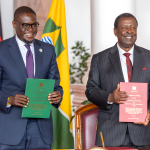
In a bold move to address these issues, the Kenyan government, under the leadership of DP Kithure Kindiki, has partnered with private sector players to revitalize the sugar industry. This collaboration aims to modernize operations, boost farmer incomes, and restore the sector’s economic viability.

Kenya’s sugar industry has a rich history dating back to the colonial era, with the establishment of the Miwani Sugar Factory in 1922 and the Ramisi factory in 1927. Initially dominated by private, Indian-owned estates, the sector saw significant expansion post-independence through government policies outlined in Sessional Paper No. 10 of 1965. These policies aimed to promote indigenous entrepreneurship, redress regional economic imbalances, and foster socioeconomic development through cash crops like sugarcane in Western and Nyanza provinces.

However, the industry has faced decades of decline due to a combination of factors: mismanagement, high debt levels, obsolete milling technologies, and competition from cheap imported sugar. By 2023, 52% of Kenya’s sugar consumption was met through imports, highlighting the sector’s inability to meet domestic demand. Public sugar mills, such as Mumias, Nzoia, Chemelil, Muhoroni, and South Nyanza (Sony), once economic powerhouses, have struggled with financial distress, with debts accumulating to KSh 128 billion by 2023.
Recognizing the sugar sector’s critical role in Kenya’s agricultural economy, the government has implemented a series of reforms to address these challenges. In October 2023, President William Ruto announced a KSh 117 billion bailout to write off debts owed by public sugar mills, including KSh 65 billion to banks, KSh 50 billion in taxes, and KSh 2 billion in farmers’ dues. This debt relief was designed to pave the way for private sector involvement through long-term lease agreements.
The government’s strategy also includes the Sugar Act 2024, signed into law by President Ruto, which establishes the Kenya Sugar Board (KSB) as an independent regulator to oversee sector reforms. The Act introduces a quality-based sugarcane payment system, incentivizing farmers to deliver high-quality cane, and reintroduces the Sugar Development Levy (SDL) at 4% of the value of domestic and imported sugar to fund research, development, and infrastructure. Additionally, the government has allocated KSh 600 million to the Kenya Sugar Research and Training Institute (KESRETI) to develop superior sugarcane varieties that mature faster, reducing the current 19–24-month maturation period to as little as nine months.

To address cane shortages, which dropped by 26.6% in the first eight months of 2023, the government temporarily closed sugar mills in July 2023 to allow cane to mature. This measure, though controversial, aimed to stabilize supply chains and ensure sustainable production. The government has also expanded sugarcane growing zones beyond Western Kenya, using Geographic Information System (GIS) mapping to allocate fields to specific mills, reducing cane poaching and improving supply chain efficiency.
The cornerstone of the government’s revival plan is the leasing of five public sugar mills—Nzoia, Chemelil, Muhoroni, Sony, and Miwani—to private companies. These lease agreements, finalized in 2025, involve significant capital injections to modernize operations and enhance efficiency. The private sector’s involvement is seen as a critical step to address the inefficiencies that have plagued state-owned mills.
Nzoia Sugar Company: Leased to West Kenya Sugar Company, owned by billionaire Jaswant Rai, with a KSh 5.76 billion investment to upgrade facilities and boost production. West Kenya Sugar, established in 1989, has a proven track record in sugarcane transport and processing, making it a strategic partner.
Chemelil Sugar Company: Leased to Kibos Sugar and Allied Industries Ltd., which will invest KSh 4.5 billion to modernize the factory. Kibos, operational since 1999, has integrated its operations to process cane from its own farms and neighboring growers.
Muhoroni Sugar Company: Leased to West Valley Sugar Company Ltd., part of the Kipchimchim Group, with a KSh 1.23 billion investment. The Kipchimchim Group’s diversified portfolio in agriculture and logistics positions it to enhance Muhoroni’s operations.
Sony Sugar Company: Leased to Busia Sugar Industry Ltd., with a KSh 1 billion investment. Busia Sugar, operational since 2019, focuses on improving farmer livelihoods and community development.
Mumias Sugar Company: While still under receivership, Mumias has benefited from government interventions, including a KSh 150 million bonus payment to farmers in 2025, the first of its kind in the sector.
These lease agreements, spanning 20–30 years, aim to inject capital, modernize equipment, and improve management practices. The Kenya Sugar Board has ensured that no public land will be lost, with proceeds from leases reinvested into cane development and community infrastructure.
Farmers, who supply over 94% of sugarcane to Kenya’s 16 milling factories, are at the heart of these reforms. The government has introduced several measures to address their challenges:
Price Increase: In May 2025, the KSB raised the sugarcane price from KSh 5,300 to KSh 5,500 per tonne, ensuring fair compensation. Millers are mandated to implement timely payments to rebuild farmer trust.
Bonus Payments: The Mumias Sugar bonus program, launched in January 2025, distributes 50% of annual lease rent to farmers based on the quantity of cane supplied, with additional payments for quality. This model is set to be replicated across other leased mills.
Subsidized Inputs: The government is distributing subsidized fertilizers to boost productivity and reduce production costs, which have historically been higher than in other COMESA countries.
Catchment Areas: The Sugar Act 2024 establishes sugarcane catchment areas to streamline supply chains and prevent cane poaching, ensuring farmers deliver to mills within their regions.
These measures have been lauded by stakeholders like the Kenya National Federation of Sugarcane Farmers (KNFSF), who see them as a step toward restoring farmer confidence. However, concerns remain about the influence of sugar cartels and the need for transparency to prevent the replacement of old barons with new ones.

Despite the optimism surrounding these reforms, the sugar sector faces significant hurdles. The leasing of public mills has sparked opposition from some political leaders and farmers, who fear job losses and loss of community control over assets. In May 2025, cane farmer Jared Opiyo from Migori voiced concerns that privatization could disadvantage local economies. Azimio La Umoja Coalition lawmakers, led by Opiyo Wandayi, criticized the temporary closure of mills in 2023 as “economic sabotage,” arguing it disrupted livelihoods in Nyanza and Western Kenya.
The sector also grapples with competition from cheap sugar imports, which have flooded the market and rendered locally produced sugar less competitive. In 2014, smuggled sugar was sold at KSh 2,800 per 50kg bag, compared to the official price of KSh 3,600, highlighting the ongoing challenge of illegal imports. The Sugar Act 2024 aims to address this by imposing stricter import regulations, but enforcement remains a concern.
Additionally, small-scale farming, with average landholdings as low as 2 acres in areas like Nyando, limits economies of scale, making sugarcane a capital-intensive crop ill-suited to fragmented land. The government’s push for new sugarcane varieties and irrigation projects, such as the Lower Nzoia and Lower Kuja schemes, aims to address these structural challenges, but implementation will require sustained investment and coordination with county governments.
The sugar industry’s revival is poised to have far-reaching economic and social benefits. With 832,000 tonnes of sugar produced in 2024, Kenya is on track to achieve surplus production by 2026, potentially enabling regional exports. The sector’s contribution to agricultural GDP and employment, particularly in rural areas, underscores its importance. Over 25% of Kenya’s population relies on the industry directly or indirectly, making its revitalization a priority for poverty reduction and regional development.
The collaboration between the government and private sector is also expected to improve rural infrastructure, with 40% of the Sugar Development Levy allocated to cane development and 15% to regional infrastructure projects. The establishment of a Sugar Tribunal to mediate disputes over pricing and contracts further ensures fair practices, fostering trust between farmers and millers.
The government-private sector partnership offers a promising path forward for Kenya’s sugar industry. The combination of debt write-offs, private investment, and regulatory reforms addresses long-standing structural issues. However, success hinges on effective implementation, transparency, and sustained political will. President Ruto’s commitment to eliminating cartels and ensuring fair pricing must be matched by robust enforcement mechanisms to prevent exploitation.
The introduction of faster-maturing cane varieties and irrigation projects could transform productivity, enabling Kenya to reduce its reliance on imports and compete in regional markets. Collaboration with county governments, as emphasized by Kindiki, will be crucial to align national and local priorities, particularly in addressing land fragmentation and infrastructure deficits.
The collaboration between the Kenyan government and private sector to revive the sugar industry in Nyanza and Western Kenya represents a bold and multifaceted approach to a complex challenge. By addressing debt, modernizing mills, and empowering farmers, the initiative seeks to restore the sector’s economic vitality and improve livelihoods for millions. While challenges like import competition and political opposition persist, the reforms signal a renewed commitment to transforming the sugar industry into a sustainable and competitive pillar of Kenya’s economy. With continued focus and accountability, this partnership could herald a new era of prosperity for sugarcane farmers and the communities they support.