By Brenda Wereh22 Jul, 202544 mins read 2,385 views
0 comments 0 likes
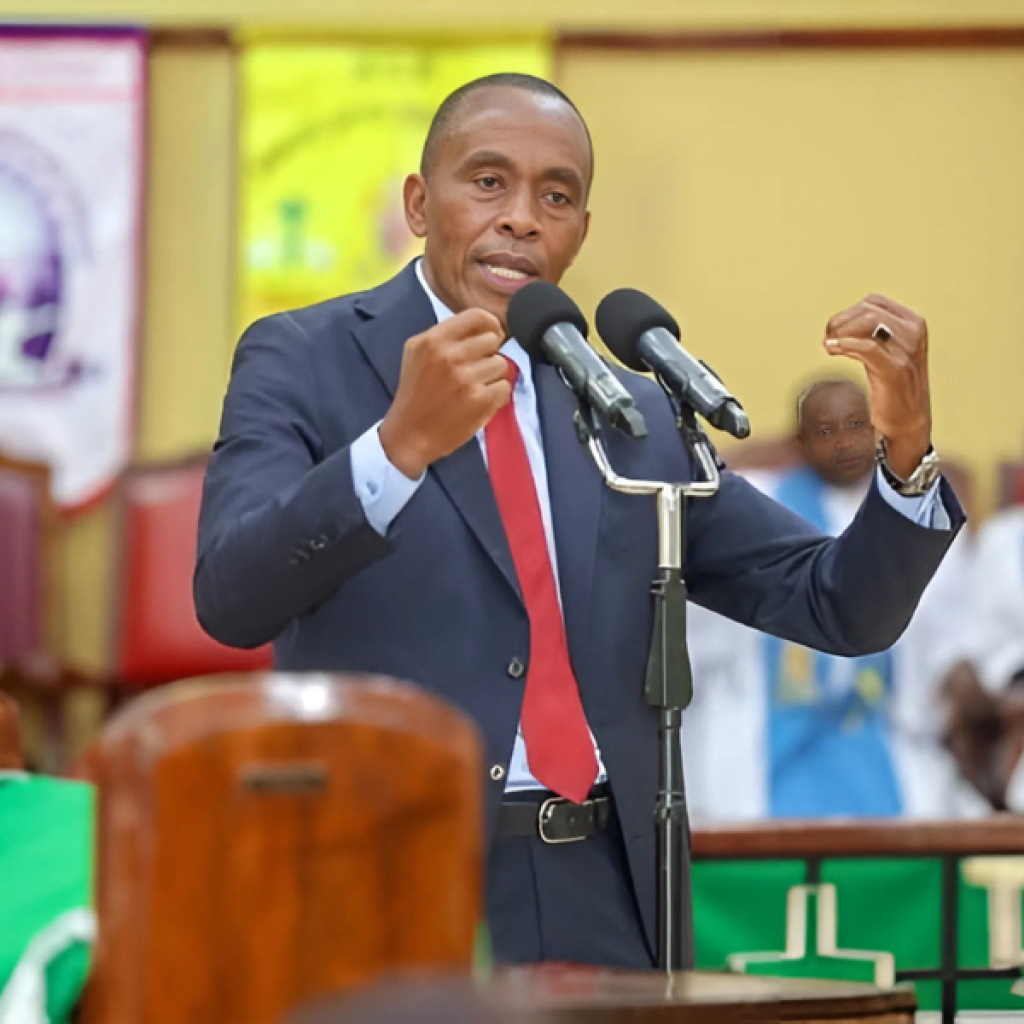
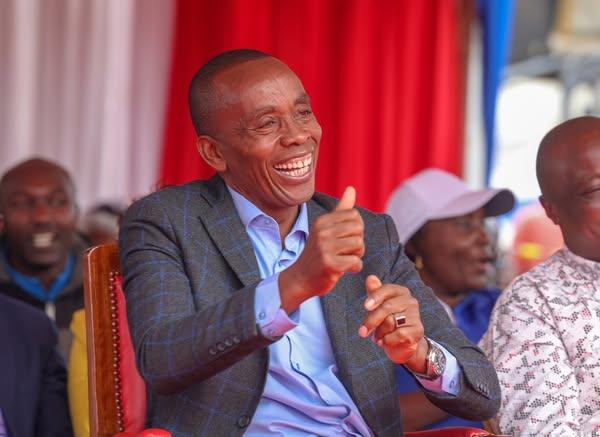
Kiambu Governor Kimani Wamatangi has filed a court petition to block his arrest by the EACC, following allegations of corruption involving irregular county tenders.
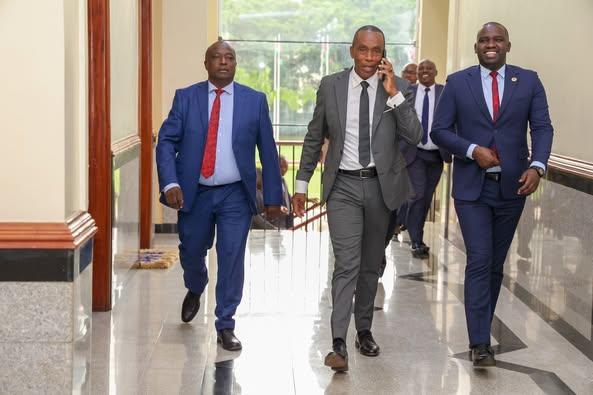
Kiambu Governor Kimani Wamatangi found himself at the center of a high-profile corruption probe when the Ethics and Anti-Corruption Commission (EACC) conducted early morning raids on his residence and county offices, leading to his arrest alongside nine senior county officials. The operation, which resulted in the seizure of Sh12 million and USD 13,000 in cash, was part of an ongoing investigation into alleged financial and procurement malpractices within the Kiambu County Government, with claims of embezzlement totaling up to Sh1.5 billion.
https://shinebet.co.ke/
In response, Governor Wamatangi has moved to court to block what he describes as a politically motivated attempt to derail his administration, igniting a fierce debate about accountability, political persecution, and the fight against corruption in Kenya’s devolved governance system.
The EACC’s operation on April 15, 2025, marked a dramatic escalation in the scrutiny of Governor Wamatangi’s administration. According to multiple sources, including Capital News and Kenyans.co.ke, EACC detectives raided Wamatangi’s residences in Thindigua and Kibiku, as well as county offices, seizing documents and electronic devices deemed crucial to their investigation. The anti-graft agency recovered Sh12 million in Kenyan shillings and USD 13,000 (approximately Sh1.7 million at current exchange rates) from Wamatangi’s home, which they suspect to be proceeds of corruption. The operation also targeted nine senior county officials, including County Secretary Peter Njoroge, County Executive Committee Member for Finance Nancy Njeri, and businessman Bernard Kabaiku, among others, who are accused of participating in a corruption network involving procurement irregularities, conflict of interest, and fictitious payments amounting to Sh1.5 billion.
The EACC’s investigation focuses on several key allegations, including the irregular award of a Sh230 million contract for an Enterprise Resource Planning (ERP) system, conflicts of interest in procurement processes, and the county’s controversial shift from an automated to a manual payment system. The latter, as highlighted by Kiambu Senator Karungo Wa Thang’wa in February 2025, allegedly enabled ghost workers and facilitated the theft of Sh390 million from county coffers. The raids and arrests followed months of pressure from local leaders, including Thang’wa and Kikuyu MP Kimani Ichung’wah, who cited adverse audit reports from the Auditor General’s office for the 2022/2023 and 2023/2024 financial years as evidence of financial mismanagement.
Wamatangi’s Response: A Legal Counteroffensive
Following his release on the evening of April 15, 2025, Governor Wamatangi wasted no time in denouncing the EACC’s actions as a politically motivated “witch-hunt” aimed at tarnishing his reputation and derailing his administration. Speaking to supporters and the media along Kenyatta Avenue in Nairobi, Wamatangi claimed that the raid was orchestrated by unnamed senior government officials who had previously threatened to “ruin his name” before the end of his term. He criticized the scale of the operation, noting that over 50 police officers were deployed to his home and another 200 to the offices of his senior officials, describing the approach as excessive and intimidatory.
Wamatangi’s legal team has since moved to court to block further EACC actions, including any potential re-arrest or prosecution, arguing that the commission’s actions were unlawful and politically driven. According to Wamatangi, the search warrant used during the raid was “fictitious” and obtained fraudulently, as it referred to him as “Paul Njoroge” rather than his correct name, Paul Kimani Njoroge. He contends that this discrepancy invalidates the legal basis for the raid and subsequent arrest. Furthermore, his lawyers argue that the EACC’s actions violate his constitutional rights, including the right to privacy and protection from arbitrary arrest, as guaranteed under Kenya’s 2010 Constitution. They have sought an injunction to halt the investigation pending a judicial review of the EACC’s conduct.
The governor’s legal strategy also emphasizes his status as a prominent businessman, asserting that the cash recovered from his residence was part of his legitimate personal wealth and not proceeds of corruption. This claim has sparked debate, with some, including Kakamega Senator Boni Khalwale, questioning whether the EACC’s actions represent a “weaponization of the fight against corruption” against a known entrepreneur. However, activists from the Bunge Mashinani Initiative, a Kiambu-based civil society group, have dismissed Wamatangi’s claims of political persecution, arguing that the investigation stems from credible audit queries and public demands for accountability.
The Broader Context: Corruption in Kiambu County
Kiambu County, one of Kenya’s wealthiest and most politically significant regions, has a notorious history of corruption scandals. Wamatangi’s predecessor, Ferdinand Waititu, is currently serving a 12-year prison sentence for a Ksh588 million graft case involving the irregular award of a road tender during his tenure. Waititu’s conviction, coupled with ongoing investigations into other county officials, has cemented Kiambu’s reputation as a hotbed of financial mismanagement. The current probe into Wamatangi’s administration revives these concerns, with the EACC alleging that county officials engaged in trading with the county through shell companies and proxies, siphoning off public funds through irregular procurement processes.
The Auditor General’s reports for the 2022/2023 and 2023/2024 financial years have been pivotal in fueling public and political pressure for investigations. These reports highlighted significant gaps in Kiambu’s financial management, including unaccounted expenditures and questionable contracts. For instance, the shift to a manual payment system, as flagged by Senator Thang’wa, was cited as a deliberate move to create opportunities for ghost workers and misappropriation. Additionally, the Sh230 million ERP contract has raised eyebrows due to its alleged ties to Wamatangi’s associates, prompting accusations of favoritism and abuse of office.
Public sentiment in Kiambu is deeply divided. While Wamatangi’s supporters have rallied behind him, staging protests outside the EACC’s Integrity Centre in Nairobi and chanting slogans like “No Wamatangi, no peace,” others, including local activists, argue that the governor must be held accountable. The Bunge Mashinani Initiative, which petitioned the EACC based on the Auditor General’s findings, has called for Wamatangi’s arraignment and urged the commission to expedite its investigations. These contrasting reactions reflect the broader tension between political loyalty and demands for transparency in Kenya’s devolved system.
Legal and Political Implications
Wamatangi’s decision to seek judicial intervention raises critical questions about the balance between anti-corruption efforts and the protection of individual rights. His legal challenge could set a precedent for how courts handle cases involving high-profile public officials accused of graft. If the court grants the injunction, it may temporarily shield Wamatangi from prosecution but could also be perceived as undermining the EACC’s mandate to combat corruption. Conversely, if the court upholds the EACC’s actions, it could embolden the agency to pursue similar high-stakes investigations, potentially deterring malfeasance in county governments.
Politically, the case has intensified scrutiny of President William Ruto’s administration, with Wamatangi’s supporters accusing the national government of targeting the governor for political reasons. These allegations echo broader concerns about the politicization of anti-corruption efforts in Kenya, where investigations are sometimes perceived as tools to settle political scores. Wamatangi’s claim of receiving threats from a senior government official adds fuel to this narrative, though he has not publicly named the individual. The controversy also risks escalating tensions in Kiambu, a key political battleground, as the 2027 elections approach.
The EACC’s Stance and Next Steps
The EACC, led by CEO Abdi Mohamud, has remained steadfast in its commitment to rooting out corruption in Kiambu County. In a statement issued on April 15, 2025, Mohamud described the raids as part of a comprehensive investigation into “alleged financial and procurement malpractices” and emphasized that the recovered cash and documents would support ongoing probes. The agency has indicated that, upon conclusion of its investigations, it may pursue prosecution, forfeiture of unexplained assets, or seizure of corruption proceeds.
The EACC’s focus on Kiambu reflects a broader crackdown on county-level corruption, with similar operations recently conducted in Turkana and other counties. The agency’s actions are part of a renewed push to restore accountability in devolved governance, amid growing public frustration with impunity. However, the EACC faces challenges in maintaining public trust, particularly when high-profile figures like Wamatangi claim political victimization. The outcome of Wamatangi’s court case could significantly impact the agency’s credibility and its ability to pursue future investigations.
Public Reaction and Civil Society’s Role
The arrests have sparked widespread debate across Kenya, with social media platforms like X buzzing with opinions. Posts on X reflect a mix of support for Wamatangi, with some users decrying the EACC’s actions as heavy-handed, and others praising the agency for taking decisive action against alleged corruption. For instance, one user described the raid as treating Wamatangi “like a terrorist,” while another hailed the arrests as a step toward accountability. These reactions underscore the polarized nature of the debate, with Wamatangi’s supporters framing him as a victim of political machinations and critics demanding justice for Kiambu’s residents.
Civil society groups, particularly the Bunge Mashinani Initiative, have played a crucial role in pushing for accountability. Their petition to the EACC, based on audit reports, was instrumental in triggering the investigation. These groups argue that Wamatangi’s administration must address the allegations transparently to restore public trust. Their activism highlights the growing influence of grassroots organizations in holding public officials accountable, even as they face accusations of bias from Wamatangi’s camp.
The unfolding saga of Governor Kimani Wamatangi’s battle with the EACC encapsulates the complex interplay of governance, corruption, and politics in Kenya’s devolved system. As Wamatangi seeks to block his arrest through the courts, the case tests the boundaries of legal accountability and the EACC’s authority to investigate high-profile figures. The allegations of Sh1.5 billion in fraudulent procurement, coupled with the recovery of significant cash from Wamatangi’s residence, have intensified scrutiny of his administration and raised questions about the integrity of Kiambu’s financial management.
Whether the court will grant Wamatangi’s injunction remains uncertain, but the outcome will have far-reaching implications for Kenya’s anti-corruption efforts and the political landscape in Kiambu. For now, the governor’s defiance, coupled with public protests and civil society activism, ensures that this case will remain a focal point of national attention. As Kenya grapples with systemic corruption, the Wamatangi case serves as a stark reminder of the challenges in balancing justice, political power, and public trust in the fight against graft.
Former Kiambu Governor Ferdinand Waititu has secured a major bail reprieve from the High Court, with Justice Winfrida Okwany reducing his bail from Sh53.5 million to Sh20 million cash pending appeal in his ongoing corruption case.
Kenya National Highways Authority names Eng. Luka Kipchumba Kimeli as Director General while Kenya Roads Board appoints Judith Otsyula to the same role in major leadership changes for Kenya's roads sector.
Kenya’s Committee on Communication, Information and Innovation has rejected calls for a complete ban on TikTok, instead proposing mandatory local storage of Kenyan user data and full compliance with national laws in a report adopted for debate in the National Assembly.