By Brenda Wereh01 Jul, 202533 mins read 2,500 views
0 comments 0 likes
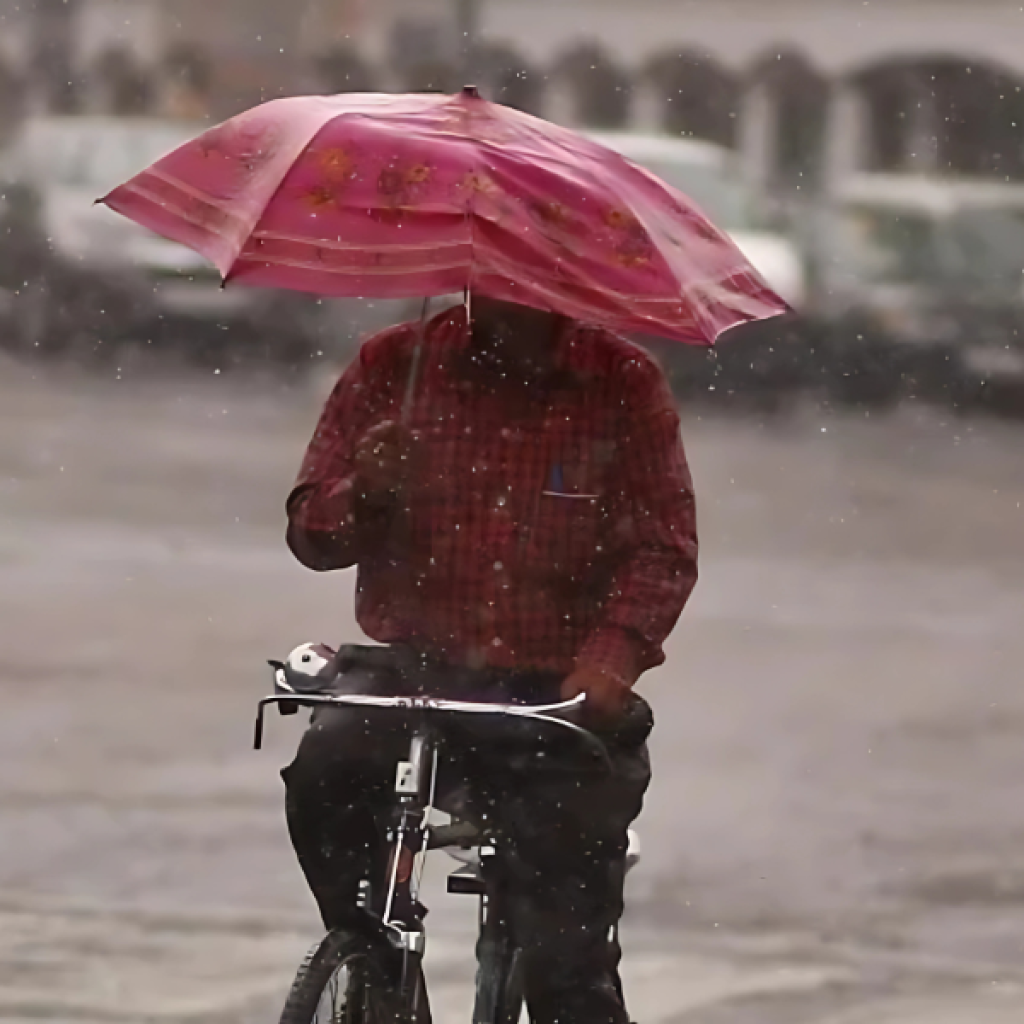
The Kenya Meteorological Department issued a weather alert forecasting mixed patterns nationwide from July 1 to July 7, with rainfall in the Highlands, Rift Valley, and Lake Victoria Basin, scorching heat in the Northeast, and chilly nights in Central Kenya.
https://shinebet.co.ke/
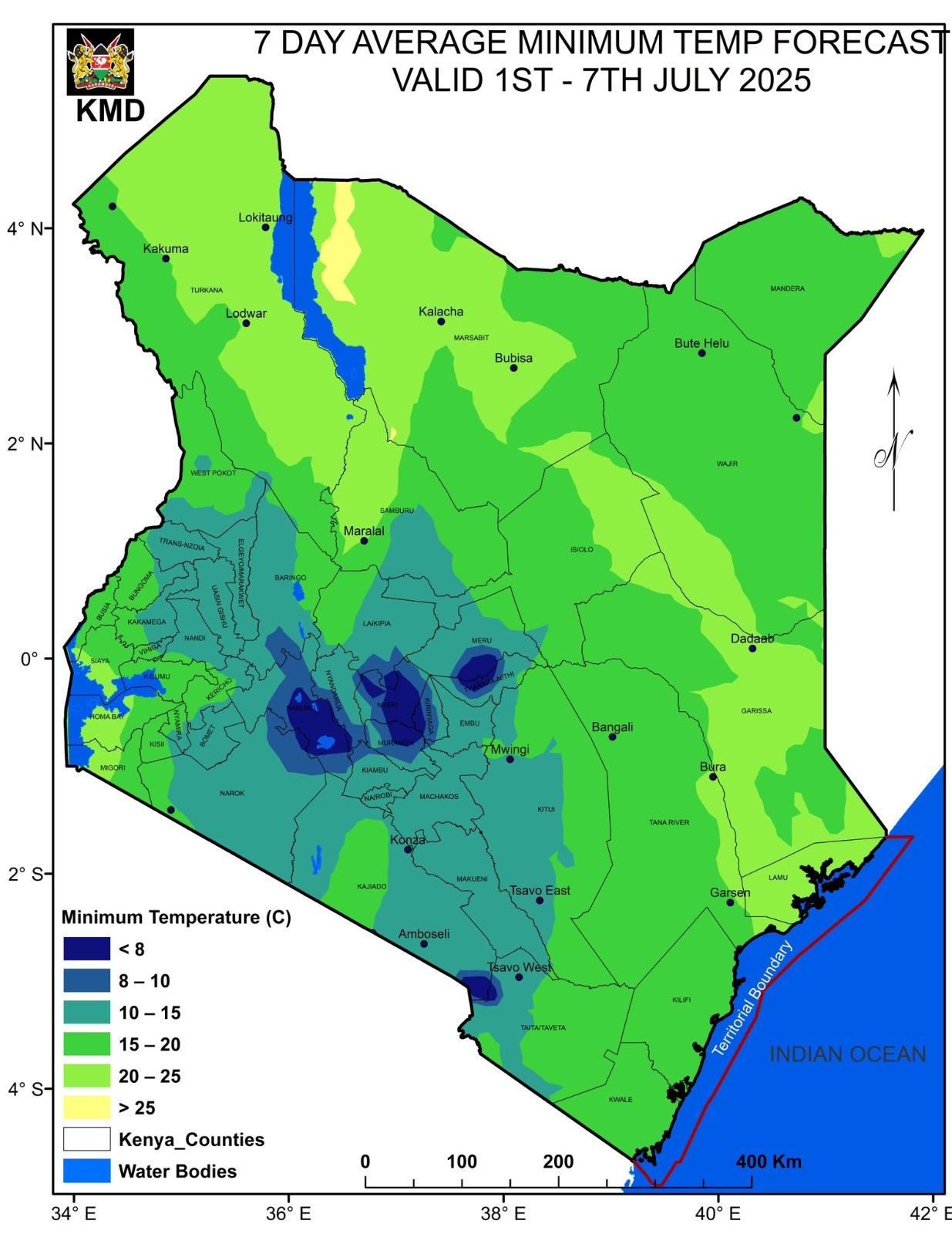
the Kenya Meteorological Department (KMD) issued a comprehensive seven-day weather alert, forecasting a complex mix of weather conditions across the country from July 1 to July 7. The advisory, released through KMD’s official channels, warns of significant rainfall in regions such as the Highlands East and West of the Rift Valley, the Lake Victoria Basin, the Rift Valley, and parts of the Coast, alongside soaring daytime temperatures exceeding 30°C in the Northeast and Northwest, and chilly nights dipping below 10°C in the Central Highlands, including Nairobi. The alert comes as Kenya navigates a volatile weather pattern that could disrupt farming, travel, and daily life, prompting calls for preparedness among residents and local authorities.
The forecast highlights a likelihood of near to above-average rainfall in several key regions, including the Highlands West of the Rift Valley, the Lake Victoria Basin, and parts of the Rift Valley, with some areas expecting up to 120 mm of rain within the week. Counties such as Kisumu, Siaya, Homa Bay, Migori, Kakamega, Vihiga, Bungoma, and Narok are likely to experience moderate to heavy rainfall, with occasional thunderstorms. “Residents in these areas should brace for wet conditions that could affect transportation and farming activities,” said David Gikungu, KMD Director, during a press briefing in Nairobi. “We urge farmers to protect crops and livestock, and motorists to exercise caution on slippery roads.” The rainfall is expected to be particularly intense in the western highlands, where saturated soils could lead to localized flooding in low-lying areas.
In contrast, the northeastern and northwestern regions, including Marsabit, Mandera, Wajir, Garissa, and Turkana, are set to endure scorching daytime temperatures exceeding 30°C. These arid and semi-arid areas, already accustomed to high heat, may face elevated heat stress levels, posing risks to vulnerable populations such as the elderly and outdoor workers. “The heat in these regions will be relentless during the day,” said Gikungu. “We advise residents to stay hydrated and avoid prolonged exposure to the sun.” The forecast also notes that the coastal strip, including Mombasa, Kilifi, Lamu, and Kwale, will experience near-average rainfall with a tendency toward below-average amounts, accompanied by warm temperatures that could disrupt fishing and tourism activities.
The Central Highlands, including Nairobi, Nyeri, Murang’a, Kiambu, and Kirinyaga, are expected to face cool and cloudy conditions with occasional light to moderate rainfall. Nighttime temperatures in these areas could plummet below 10°C, particularly in elevated regions like Nyandarua and parts of the Central Rift Valley. “Nairobi residents should prepare for chilly evenings and foggy mornings,” said Mary Wambui, a meteorologist with KMD. “The cold nights could affect those without adequate shelter, so we’re advising local authorities to monitor vulnerable communities.” The forecast also anticipates strong winds in some areas, particularly along the coast and in the southeastern lowlands, which could exacerbate the impact of the rainfall.
The mixed weather patterns come on the heels of a varied March-April-May (MAM) 2025 “Long Rains” season, which saw near to above-average rainfall in most parts of the country but prolonged dry spells in Mandera and the coastal region. The current forecast for July aligns with the seasonal outlook for June-July-August (JJA) 2025, which predicted near to above-average rainfall in western and central regions, with warmer-than-average temperatures nationwide. However, some areas, including Turkana, West Pokot, and parts of Samburu, are expected to experience cooler-than-average conditions, providing some relief from the heat.
The weather alert has significant implications for Kenya’s agricultural sector, which employs over 70 percent of the population. Farmers in the Lake Victoria Basin and Rift Valley, key food-producing regions, are particularly concerned about the potential for flooding. “Heavy rains can wash away crops or delay planting,” said John Mwangi, a maize farmer in Nakuru County. “We need better drainage systems and timely advisories to protect our livelihoods.” The KMD has responded by collaborating with county governments to issue agro-weather advisories, urging farmers to adopt climate-smart practices such as planting flood-resistant crops and reinforcing drainage systems.
The forecast has also raised concerns about infrastructure and safety. In Nairobi, where urban flooding has become a recurring issue, the county government is under pressure to clear drainage systems ahead of the expected rains. “We’ve seen roads turn into rivers during past rainy seasons,” said Jane Wambui, a commuter in the capital. “The authorities need to act now to prevent chaos.” In response, Nairobi County Governor Johnson Sakaja announced plans to deploy emergency response teams and clear blocked culverts, emphasizing the need for proactive measures. “We’re working with KMD to ensure residents are informed and prepared,” Sakaja said.
The coastal region, while expecting less rainfall than western Kenya, faces its own challenges. Strong winds and occasional showers could disrupt fishing activities, a critical livelihood for communities in Mombasa and Kilifi. “The winds make it dangerous to go out to sea,” said Amina Juma, a fisherwoman in Kilifi. “We rely on KMD’s forecasts to plan our work, but we also need support to cope with these disruptions.” The KMD has advised fishermen to monitor daily updates and avoid venturing into rough waters during periods of strong winds.
Public sentiment, as reflected on platforms like X, underscores the urgency of the situation. “The weather is unpredictable these days,” one user posted. “KMD’s alerts are crucial, but counties need to step up with flood defenses.” Another user expressed frustration, writing, “Nairobi’s drainage system can’t handle these rains. When will we see real solutions?” The hashtag #KenyaWeather trended briefly, highlighting the public’s reliance on KMD’s forecasts and their concerns about the impacts of extreme weather.
The alert also comes amid broader climate challenges in Kenya, where erratic weather patterns have intensified due to global warming. The MAM 2025 season saw severe storms in several regions, causing flash floods and displacing thousands of households. “Climate change is making our weather more extreme,” said Gikungu. “We’re seeing hotter days, colder nights, and heavier rains, which require adaptive measures across all sectors.” The KMD has called for increased investment in climate-resilient infrastructure, such as improved drainage systems and early warning technologies, to mitigate the impacts of such weather patterns.
Local authorities in flood-prone areas like Kisumu and Narok are taking the alert seriously. Kisumu County Commissioner Benson Leparmorijo announced plans to evacuate residents from low-lying areas near Lake Victoria if water levels rise. “We’ve seen devastating floods before,” he said. “This time, we’re working with KMD to ensure timely action.” In Narok, where flash floods have previously disrupted tourism in the Maasai Mara, officials are monitoring river levels and preparing emergency shelters. “The safety of residents and visitors is our priority,” said County Environment Officer Esther Naserian.
The forecast also has implications for Kenya’s tourism sector, a key economic driver. The Maasai Mara and coastal destinations like Diani are popular during the July high season, but heavy rains and strong winds could deter visitors. “We’re advising tourists to check weather updates before traveling,” said James Ndungu, a tour operator in Nairobi. “The rains can make roads impassable, but with proper planning, visitors can still enjoy their trips.” The Kenya Tourism Board has echoed this call, urging operators to coordinate with KMD for real-time updates.
Civil society groups have also weighed in, urging the government to prioritize vulnerable communities. “The elderly, children, and those in informal settlements are most at risk during extreme weather,” said Ann Wanjiku, director of the Kenya Climate Action Network. “We need targeted support, like warm clothing and temporary shelters, for those facing cold nights in the highlands.” Wanjiku’s organization has launched a campaign to distribute blankets and food supplies in Nairobi’s slums, where chilly nights pose health risks.
As Kenya braces for the mixed weather patterns, the KMD’s role in providing timely and accurate forecasts has never been more critical. The department has enhanced its early warning systems, leveraging satellite technology and regional collaborations to improve prediction accuracy. “Our goal is to keep Kenyans safe and informed,” said Wambui. “We’re working round the clock to monitor these conditions and provide updates.” The KMD has also encouraged residents to follow its advisories on social media and through county-level agro-weather bulletins.
The coming week will test Kenya’s resilience as it navigates this complex weather scenario. From farmers in the Rift Valley to fishermen on the coast, the impacts of the forecast will be felt across diverse sectors. For now, the KMD’s alert serves as a clarion call for preparedness, urging Kenyans to adapt to the challenges of an increasingly unpredictable climate. “We can’t control the weather, but we can control how we respond,” said Gikungu. “Let’s stay vigilant and keep safety first.”
Former Kiambu Governor Ferdinand Waititu has secured a major bail reprieve from the High Court, with Justice Winfrida Okwany reducing his bail from Sh53.5 million to Sh20 million cash pending appeal in his ongoing corruption case.
Kenya National Highways Authority names Eng. Luka Kipchumba Kimeli as Director General while Kenya Roads Board appoints Judith Otsyula to the same role in major leadership changes for Kenya's roads sector.
Kenya’s Committee on Communication, Information and Innovation has rejected calls for a complete ban on TikTok, instead proposing mandatory local storage of Kenyan user data and full compliance with national laws in a report adopted for debate in the National Assembly.