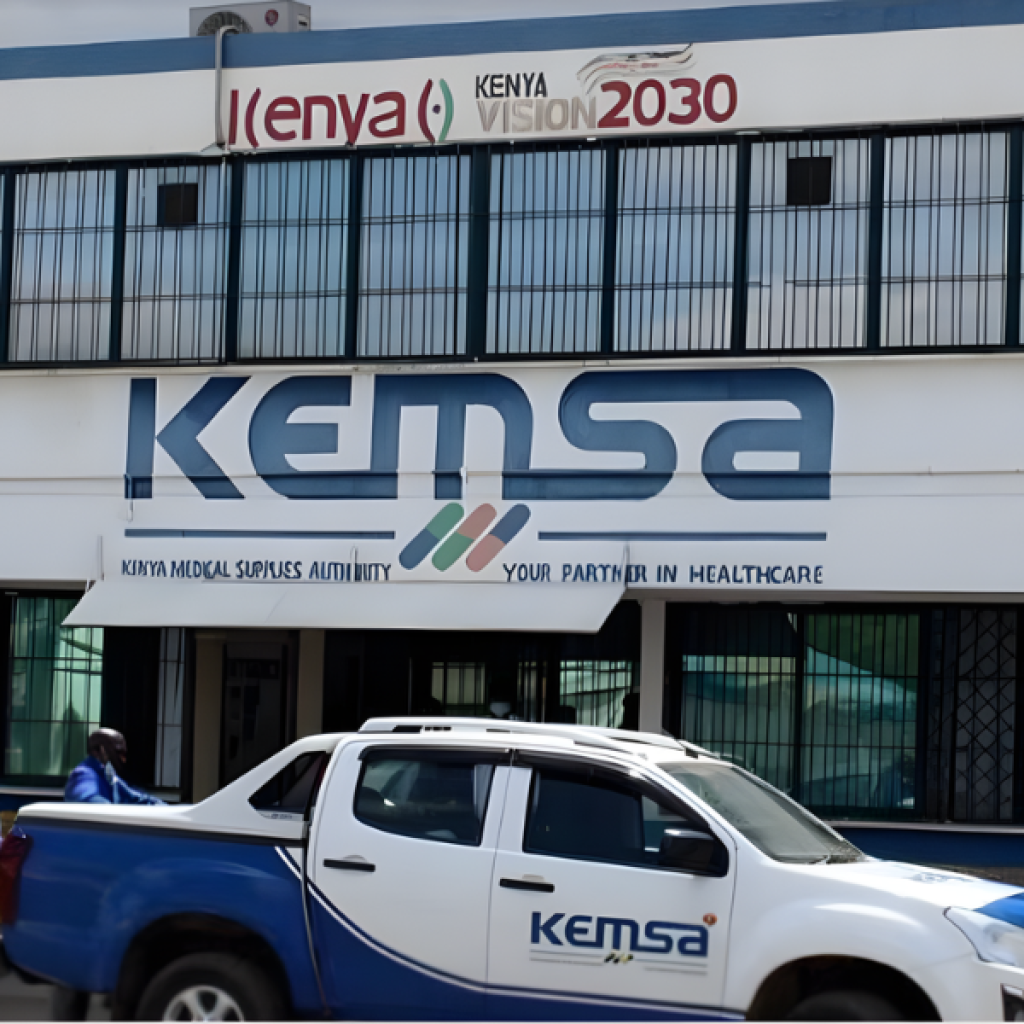
The Kenya Medical Supplies Authority (KEMSA) has lost a major court battle in which it has been ordered to pay Sh1 billion to pharmaceutical supplier UCL over a disputed contract for fixed-dose antiretroviral drug combinations used in Kenya’s national HIV treatment programme.
The ruling, delivered by Justice Chacha Mwita of the High Court’s Constitutional and Human Rights Division on February 13, 2026, directed the immediate lifting of funds from KEMSA’s bank account to satisfy the judgment debt plus accrued interest and costs. The decision brings to an end a prolonged legal dispute that began after UCL supplied the medicines under an emergency procurement arrangement initiated in late 2025 to plug critical shortages in antiretroviral therapy (ART) stocks.
Court documents show that KEMSA, through its procurement department, approached UCL in November 2025 to urgently supply fixed-dose tenofovir/lamivudine/dolutegravir (TLD) and other paediatric formulations needed to prevent treatment interruptions for thousands of patients. UCL fulfilled the order and delivered the consignment, but KEMSA later denied issuing the purchase order and refused to make payment, claiming the procurement was irregular and unauthorised.
UCL moved to court seeking recovery of the Sh1 billion principal sum plus interest, arguing that the medicines had been received, warehoused and distributed to county health facilities, and that KEMSA had benefited from the supply. The supplier also contended that denying payment would jeopardise ongoing HIV programming and expose patients to drug resistance risks.
KEMSA, in its defence, maintained that no valid contract existed because the procurement did not follow due process and that the responsible officers had acted without authority. The authority asked the court to dismiss the suit and declare the purported contract null and void.
Justice Mwita ruled in favour of UCL, finding that KEMSA had accepted delivery, issued goods received notes and distributed the medicines to counties. “The defence of lack of authority rings hollow when the goods were received, stored and issued to end users,” the judge stated in the ruling. “Equity demands that one who benefits from goods and services must pay for them. KEMSA cannot approbate and reprobate.”
The court ordered immediate attachment of funds from KEMSA’s main bank account to satisfy the decree. UCL’s lawyers confirmed that execution proceedings have commenced, with the bank directed to remit the money directly to the supplier.
KEMSA Managing Director Terry Ramadhani said the authority is studying the judgment and will explore appeal options. “We respect the court’s decision but believe there are grounds to challenge certain findings,” Ramadhani said. “Our priority remains uninterrupted supply of medicines to patients. We are engaging the National Treasury to ensure this liability does not disrupt ongoing procurement.”
The case has drawn sharp criticism from health rights advocates who argue that procurement disputes should not jeopardise HIV treatment continuity. “When institutions play games with life-saving drugs, it is patients who suffer,” said Allan Maleche, Executive Director of Kenya Legal & Ethical Issues Network on HIV & AIDS (KELIN). “This judgment sends a strong signal that suppliers who step in during emergencies must be paid promptly.”
The loss adds to KEMSA’s recent financial and operational challenges, including earlier audit queries on procurement irregularities and delayed payments to suppliers. The authority has been under pressure to improve efficiency since the COVID-19 pandemic exposed weaknesses in medical supply chains.
The Sh1 billion payout, if executed, will come from KEMSA’s operational budget, potentially affecting allocations for other essential medicines. The Ministry of Health has not yet commented on how it will mitigate any shortfalls.
Meanwhile, UCL’s legal team hailed the ruling as a victory for legitimate suppliers. “We stepped in to prevent a treatment crisis, delivered quality-assured medicines and now justice has been served,” lead counsel said outside court. “We hope this sets a precedent that emergency procurements must be honoured.”
As KEMSA considers its next legal steps, the judgment underscores ongoing tensions between public procurement rules and the urgent realities of public health needs in Kenya.