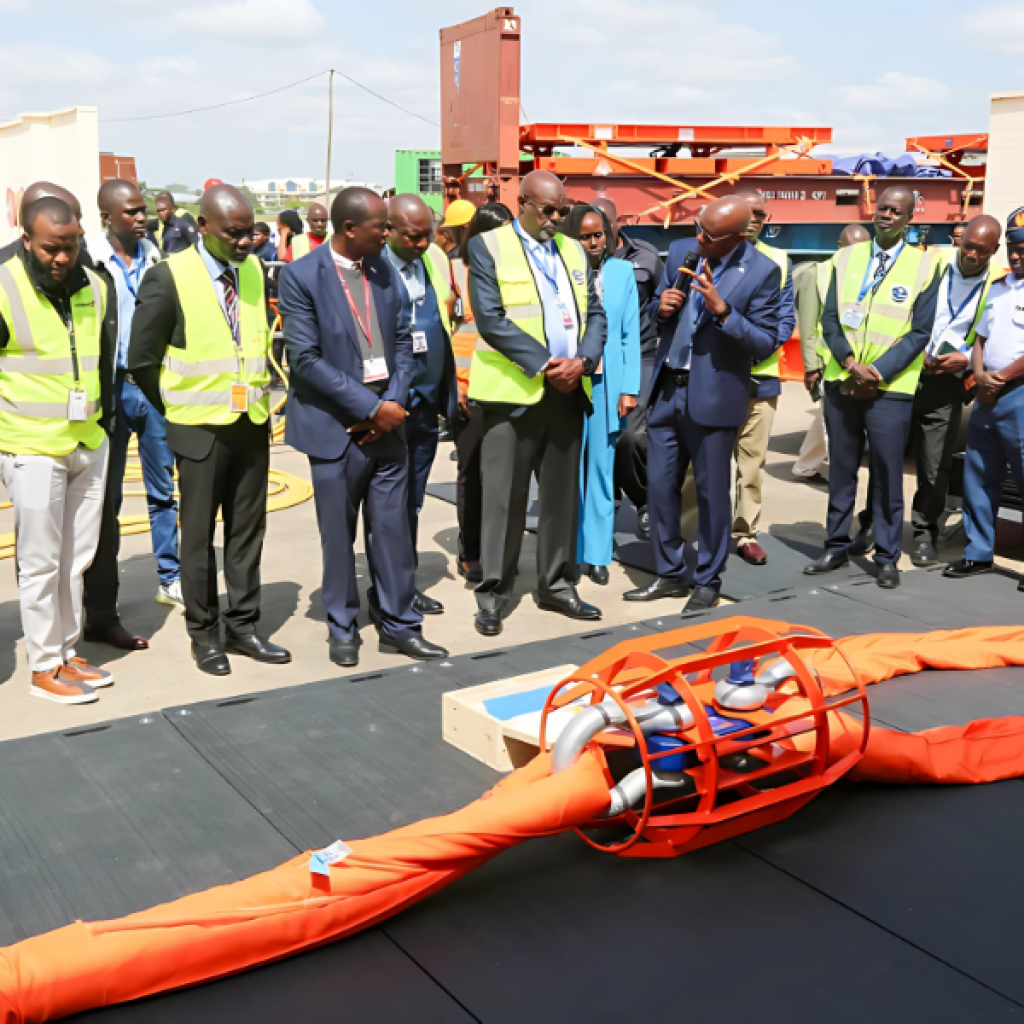
The Kenya Airports Authority (KAA) marked a historic milestone in African aviation with the launch of a state-of-the-art New Generation Aircraft Recovery System at Jomo Kenyatta International Airport (JKIA). The Sh177 million system, supplied by AMS Aircraft Recovery Ltd of the United Kingdom, is the first of its kind in the region and promises to revolutionize how JKIA handles disabled aircraft, ensuring rapid recovery, enhanced safety, and reduced disruptions for passengers and airlines. The unveiling ceremony, held at the airport’s main runway, drew a distinguished crowd of aviation stakeholders, government officials, and industry leaders, who hailed the system as a game-changer for Kenya’s ambition to solidify JKIA as East Africa’s premier aviation hub. With its advanced technology, the system is set to address longstanding challenges posed by runway incidents, which have historically caused significant delays and financial losses.
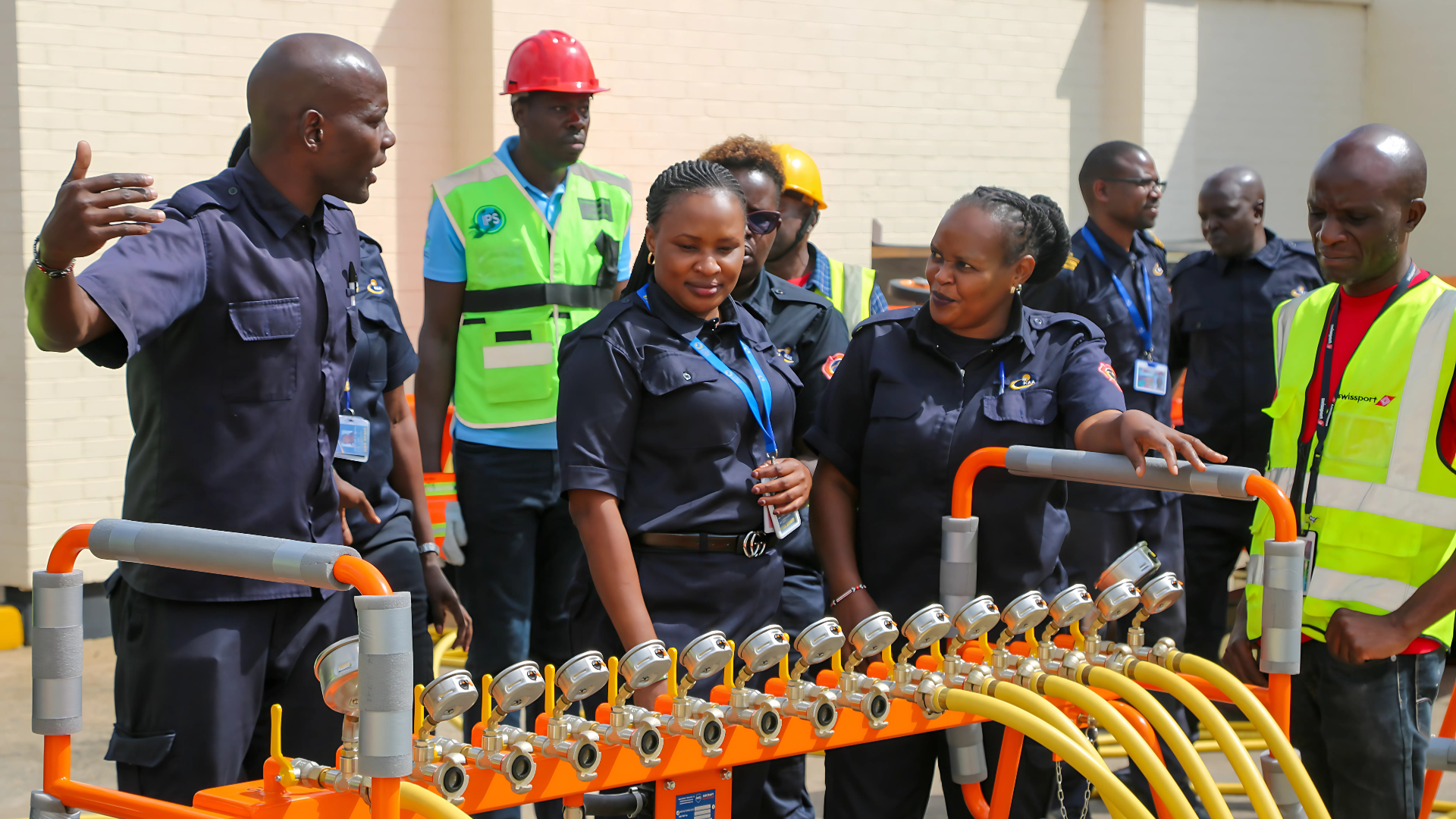
The ceremony, bathed in the golden hues of Nairobi’s late afternoon sun, was a showcase of optimism and ambition. KAA Chairperson Caleb Kositany, who presided over the event, described the acquisition as a bold step toward modernizing Kenya’s aviation infrastructure. “This is a proud moment for KAA and for Kenya,” Kositany said. “This cutting-edge system ensures we can respond swiftly and safely to incidents, protecting lives, assets, and the reputation of JKIA as a reliable hub.” The event was attended by key figures, including KAA Acting Managing Director Nicholas Bodo, AMS Managing Director Yehuda Fishman, and representatives from the Kenya Association of Air Operators (KAAO), Kenya Civil Aviation Authority (KCAA), and the International Air Transport Association (IATA), all of whom underscored the system’s significance for regional aviation.
The New Generation Aircraft Recovery System is designed to address the critical challenge of clearing disabled aircraft from runways and taxiways, a process that has often paralyzed JKIA’s operations due to its reliance on a single runway. Past incidents, such as the April 2023 closure caused by a Singapore Airlines cargo plane’s engine failure and a June 2024 Kenya Airways freighter mishap, highlighted the airport’s vulnerability, with flights diverted to Mombasa and Entebbe, costing airlines millions in delays. “We’ve seen how a single incident can bring JKIA to a standstill,” said Bodo. “This system allows us to clear aircraft in hours, not days, minimizing disruptions for passengers and cargo operations.” The equipment, featuring advanced over-wing lift tooling, enables rapid deployment to lift and tow aircraft of varying sizes, from small regional jets to wide-body planes like the Boeing 747.
The system’s acquisition, costing Sh177 million, reflects KAA’s commitment to meeting international safety standards set by the International Civil Aviation Organization (ICAO). JKIA, which handles over 7.5 million passengers and significant cargo traffic annually, has faced increasing pressure to enhance its operational resilience. “This investment is about more than equipment; it’s about trust,” said Fishman of AMS Aircraft Recovery Ltd. “Airlines and passengers need to know JKIA can handle emergencies efficiently, and this system delivers that assurance.” The technology, developed in the UK, is tailored to handle modern aircraft designs, ensuring minimal secondary damage during recovery and compliance with global safety protocols.
The launch comes at a time when JKIA is striving to maintain its competitive edge in a region where airports like Addis Ababa’s Bole International and Kigali’s Kigali International are investing heavily in infrastructure. Kenya’s aviation sector contributes significantly to its economy, with JKIA serving as the primary gateway for tourism, horticultural exports, and regional trade. “A single runway closure can cost millions in lost revenue,” said aviation analyst Peter Kamau. “This system not only saves time but also protects Kenya’s position as a logistics hub.” The equipment is expected to reduce downtime by up to 70 percent, a critical improvement for an airport that handles over 25 aircraft movements per hour during peak periods.
The system’s capabilities were demonstrated during a live simulation at the launch, where KAA personnel, trained by AMS experts, used the equipment to lift a mock disabled aircraft. The process, which involved hydraulic jacks and specialized dollies, impressed onlookers with its speed and precision. “This is a game-changer,” said Captain Jane Wambui, a Kenya Airways pilot who attended the event. “Knowing we have this technology gives pilots and crews confidence that incidents can be resolved quickly.” The training of KAA staff, which began months before the launch, ensures that a dedicated team is on standby 24/7 to respond to emergencies, further bolstering JKIA’s preparedness.
The acquisition also addresses a longstanding critique of JKIA’s single-runway dependency. Built in the 1970s to handle 2.5 million passengers annually, the airport now manages over three times that capacity, making disruptions particularly costly. Plans for a second runway, estimated at Sh21.9 billion, have been stalled since 2016, with the government prioritizing terminal expansions instead. “While a second runway remains a long-term goal, this recovery system is a practical solution for now,” said Kositany. “It bridges the gap and ensures we can keep operations running smoothly.” The system’s portability also allows it to be deployed to other KAA-managed airports, such as Moi International in Mombasa, enhancing national aviation resilience.
Passengers, who have often borne the brunt of delays caused by runway incidents, stand to benefit significantly. Mary Njoroge, a frequent traveler to Dubai, recalled a 2023 incident where her flight was diverted to Entebbe due to a disabled cargo plane. “We were stranded for hours with little information,” she said. “This new system means we can avoid that kind of chaos.” Airlines, too, expressed optimism, with KAAO representative John Mwangi noting that reduced downtime would lower operational costs. “Delays hit our bottom line hard,” he said. “This equipment is a win for the entire industry.”
The launch aligns with broader government efforts to modernize Kenya’s aviation sector. Recent initiatives, such as the digitization of passenger processing and the planned expansion of JKIA’s terminals B, C, and D, aim to increase the airport’s capacity to 12 million passengers by 2030. “We’re not just keeping up; we’re setting the pace,” said Bodo, referencing Kenya’s rivalry with regional hubs. The system’s introduction also positions JKIA to comply with stricter ICAO regulations on emergency response, a factor that could attract more international carriers. “Global airlines want reliability,” said Kamau. “This puts JKIA on the map as a forward-thinking airport.”
Community leaders in Nairobi’s Embakasi area, where JKIA is located, welcomed the development, citing its potential to boost local employment. The training program for the recovery system has already created jobs for local technicians, with KAA committing to further recruitment. “This is good for our youth,” said community elder Joseph Mutua. “It shows JKIA is investing in our area, not just in profits.” The system’s environmental benefits were also highlighted, as faster recovery reduces fuel wastage from diverted flights, aligning with KAA’s sustainability goals.
Public sentiment on platforms like X has been overwhelmingly positive, with users praising KAA’s proactive approach. “Finally, JKIA is stepping up,” one user posted. “This could save us from those endless delays.” Others called for similar investments in other airports, with one user writing, “Mombasa and Eldoret need this too.” The enthusiasm reflects growing public awareness of aviation’s role in Kenya’s economy, particularly for tourism and exports like flowers and fresh produce, which rely on JKIA’s efficiency.
The system’s cost of Sh177 million has sparked some debate, with critics questioning whether the funds could have been allocated to other pressing needs, such as healthcare or education. However, KAA defended the investment, noting that the economic losses from runway closures far exceed the system’s price tag. “One day of disruptions can cost more than this system,” said Bodo. “It’s a smart investment for Kenya’s future.” The partnership with AMS Aircraft Recovery Ltd, a global leader with over 30 years of experience, was also cited as a guarantee of quality, with Fishman assuring ongoing support for maintenance and upgrades.
As JKIA prepares for a busy second half of 2025, with increased tourist arrivals expected for the high season, the recovery system’s impact will be closely watched. “This is about building trust,” said Kositany. “Passengers, airlines, and investors need to know JKIA is ready for any challenge.” The system’s success could also pave the way for similar investments across Africa, where many airports lack advanced recovery capabilities. For now, Kenya stands alone as the continent’s pioneer, a status that KAA hopes will cement JKIA’s reputation as a regional leader.
The launch ended with a pledge from KAA to continue prioritizing safety and innovation. “This is just the beginning,” said Bodo. “We’re committed to making JKIA a world-class airport.” As the sun set over the runway, the new recovery system stood as a symbol of Kenya’s ambition to soar higher, ensuring that even when planes falter, the nation’s aviation hub keeps moving forward.