By Brenda Wereh30 Jun, 202531 mins read 2,521 views
0 comments 0 likes
High Court Justice Chacha Mwita ordered Inspector General Douglas Kanja and DCI Director Amin Mohammed to produce missing digital activist Ndiangui Kinyagia or appear in court to explain his 10-day detention without a court appearance, amid concerns over abductions.
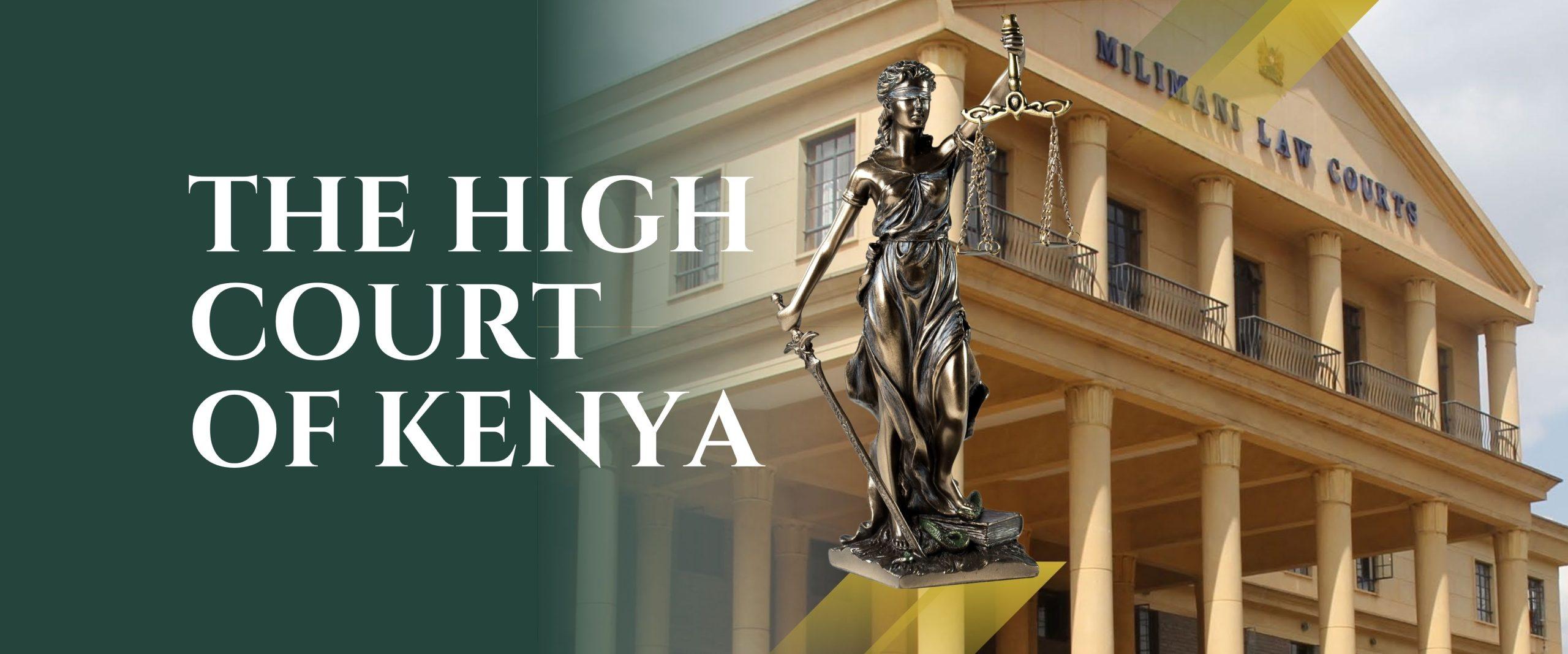
High Court Justice Chacha Mwita issued a stern directive to Inspector General of Police Douglas Kanja and Director of Criminal Investigations Amin Mohammed, ordering them to produce digital activist and blogger Ndiangui Kinyagia in court or appear personally on July 1 to explain why he has been detained for 10 days without a court appearance. The ruling, delivered at the Milimani Law Courts in Nairobi, has intensified public scrutiny of Kenya’s security agencies, which have faced accusations of abducting activists amid a wave of protests led by Generation Z. Kinyagia’s disappearance, linked to his role in organizing the June 25, 2025, commemorative protests, has sparked outrage and renewed demands for accountability in a country grappling with rising cases of enforced disappearances.
Ndiangui Kinyagia, a 31-year-old tech expert and blogger known for his vocal online presence under the pseudonym “Daguin Dd” on X, vanished on June 21 after a reported raid on his residence in Kinoo, along the Nairobi-Nakuru highway. Witnesses described a dramatic scene, with six to ten unmarked Subaru vehicles, driven by plain-clothed individuals believed to be DCI officers, surrounding his apartment. “They came in the afternoon, masked and armed, and took him away,” said a neighbor, who requested anonymity for fear of reprisal. “They left behind a handwritten inventory with the DCI logo, but no one has seen him since.” Kinyagia’s last communication was with his mother at around 1 p.m. that day, heightening fears that he is being held incommunicado.
The court’s intervention followed a habeas corpus application filed by the Law Society of Kenya (LSK), which demanded that Kinyagia be produced, dead or alive, and accused the police of violating his constitutional rights. “No one should be held beyond 24 hours without being presented in court,” said LSK President Faith Odhiambo, addressing journalists outside the Milimani Law Courts. “Kinyagia’s abduction is part of a disturbing pattern, and we will not stand by while Kenyans are silenced.” The LSK’s petition named Kanja, Mohammed, Interior Cabinet Secretary Kipchumba Murkomen, and the Attorney General, arguing that Kinyagia’s disappearance was retaliation for his activism, particularly his role in sharing a protest “timetable” on X that outlined plans for the June 25 demonstrations.
Justice Mwita’s order underscored the urgency of the case, emphasizing that the continued detention of Kinyagia without judicial oversight constitutes a grave violation of Article 49 of the Kenyan Constitution, which guarantees the rights of arrested persons. “The Inspector General and the DCI Director must produce Ndiangui Kinyagia in court, or they will face this court tomorrow to explain why they have not complied,” Mwita declared from the bench. “The rule of law must prevail, and no one is above it.” The judge’s directive comes amid growing judicial frustration with security officials, who have repeatedly failed to comply with similar court orders in recent months, raising concerns about impunity.
Kinyagia’s case is part of a broader wave of abductions that have alarmed Kenyans, particularly following the 2024 Finance Bill protests and the resurgence of Saba Saba demonstrations in 2025. The June 25 protests, which Kinyagia helped organize, commemorated the violent 2024 demonstrations that saw parliament stormed and at least 16 lives lost. His X posts, which detailed plans to march to State House and called for systemic reforms, drew significant attention, amassing thousands of shares and galvanizing young Kenyans. “Ndiangui was fearless,” said Mercy Wanjiku, a fellow activist who joined the June 25 protests. “He used his platform to speak truth to power, and now he’s paying the price.”
The public outcry over Kinyagia’s disappearance has been amplified by online campaigns, with the hashtag #FreeNdianguiKinyagia trending nationally on X. Posts on the platform reflect a mix of anger and desperation, with users demanding his immediate release. “If Ndiangui is guilty of anything, let him face a court, not vanish into thin air,” one user wrote. Another posted, “The police think they can silence Gen Z by abducting our voices. We won’t stop until Ndiangui is free.” The sentiment underscores the growing tension between Kenya’s youth and the government, with Gen Z activists accusing the state of targeting dissenters to suppress their movement.
The court order also follows a series of legal battles involving Kanja and Mohammed, who have faced multiple summons over abductions in recent months. In January 2025, the duo was ordered to appear before Justice Mwita to explain the disappearance of three men from Mlolongo, Machakos County, but they repeatedly snubbed the court, citing late summons or improper service. “This is not the first time the IG and DCI have defied court orders,” said lawyer Polycarp Okello, who represented Kinyagia’s family. “Their refusal to account for missing persons undermines the rule of law and erodes public trust.” The Mlolongo case, which involved Justus Mutumwa, Martin Mwau, and Karani Mwema, ended tragically when two of the men’s bodies were found at the city mortuary, further fueling public anger.
Interior Cabinet Secretary Kipchumba Murkomen has defended the police, arguing that summoning senior officials to court compromises national security. “The IG and DCI are focused on investigations, not court appearances,” Murkomen said through his lawyer, Danstan Omari, in a January hearing. “These matters should be handled by their deputies.” However, Justice Mwita dismissed such arguments, insisting that Kanja and Mohammed, as heads of their respective agencies, bear ultimate responsibility. “The court is not here to play games,” Mwita said. “If Kinyagia is not produced, they must answer personally.”
The case has drawn condemnation from human rights organizations, which see Kinyagia’s abduction as part of a broader crackdown on dissent. Amnesty Kenya has called for an independent probe into the rising cases of enforced disappearances, citing at least 12 documented cases since December 2024. “The pattern is clear: activists who challenge the government are being targeted,” said Ann Wanjiru, director of the Kenya Human Rights Network. “The state must stop this assault on free speech and produce Ndiangui immediately.” The Kenya National Commission on Human Rights has also urged the government to comply with the court’s orders, warning that failure to do so risks escalating public unrest.
Kinyagia’s family, devastated by his disappearance, has pleaded for answers. “He was just doing what he believed was right,” said his mother, Esther Wanjiru, outside the Milimani Law Courts. “All we want is to know he’s safe. If he’s done something wrong, let him face a judge, not disappear.” The family’s lawyer, Babu Owino, accused security agencies of orchestrating an abduction to silence Kinyagia’s activism. “The inventory left at his home proves the DCI was involved,” Owino said. “This is not a random act; it’s a calculated move to intimidate young Kenyans.”
The protests Kinyagia helped organize were part of a broader movement driven by Gen Z, which has revitalized the Saba Saba spirit to demand accountability, economic justice, and an end to police brutality. The June 25 demonstrations, marking the first anniversary of the 2024 protests, saw thousands take to the streets, with some calling for a “new republic.” The government’s response, including teargas and arrests, has only deepened public frustration, particularly among youth facing 19 percent unemployment and rising living costs. “Ndiangui’s abduction is a message to us all,” said Brian Otieno, a protester in Nairobi. “They want to scare us into silence, but we won’t back down.”
The international community has expressed concern over Kenya’s handling of activists, with several embassies issuing statements urging respect for human rights. “Kenya’s democratic credentials are at stake,” said a diplomat in Nairobi, speaking anonymously. “The government must uphold the rule of law and ensure the safety of its citizens.” The timing of the abductions, coinciding with Kenya’s efforts to position itself as a regional economic hub, including hosting the EBRD’s African headquarters, has raised questions about the country’s stability.
As the July 1 deadline looms, all eyes are on Kanja and Mohammed, whose compliance with the court’s order could set a precedent for addressing abductions. Failure to produce Kinyagia or provide a satisfactory explanation risks contempt of court charges, which could lead to imprisonment. “The judiciary is the last line of defense for Kenyans,” said Okello. “If the police defy this order, it will send a chilling message about the state of our democracy.” For now, Kinyagia’s fate remains uncertain, but his case has galvanized a movement determined to hold the government accountable, echoing the defiance of the original Saba Saba protests.
Former Kiambu Governor Ferdinand Waititu has secured a major bail reprieve from the High Court, with Justice Winfrida Okwany reducing his bail from Sh53.5 million to Sh20 million cash pending appeal in his ongoing corruption case.
President Ruto and Governor Sakaja signed a cooperation agreement allocating funds for 50,000 new streetlights, water plants saving 50 million litres daily, 27 km Nairobi River sewer and ward road upgrades, with Ruto calling it a partnership to make the city livable while opposition senators warn of devolution threats.
A staff member at Moi Teaching and Referral Hospital allegedly stole Sh10 million by falsifying patient bills as paid in the eCitizen system while diverting the money to her personal account, prompting an ongoing police and hospital investigation.