By Brenda Wereh01 Jul, 202530 mins read 2,554 views
0 comments 0 likes
Kenya’s High Court expressed outrage as Inspector General Douglas Kanja and DCI Director Mohammed Amin failed to produce missing blogger Ndiang’ui Kinyagia, abducted on June 21, prompting demands for accountability amid allegations of state-sponsored abductions.
https://shinebet.co.ke/
The Milimani High Court in Nairobi was gripped by tension as Inspector General of Police Douglas Kanja and Directorate of Criminal Investigations (DCI) Director Mohammed Amin failed to comply with a court order to produce Ndiang’ui Kinyagia, a 31-year-old IT expert and blogger missing since June 21. Justice Chacha Mwita, presiding over a habeas corpus petition filed by the Law Society of Kenya (LSK), had ordered the police chiefs to either present Kinyagia in court by 11:00 a.m. or provide a credible explanation for his whereabouts. Their absence, coupled with a request for additional time to “search” for the activist, sparked sharp criticism from legal advocates and heightened public fears of state-sponsored abductions targeting Kenya’s vocal youth.
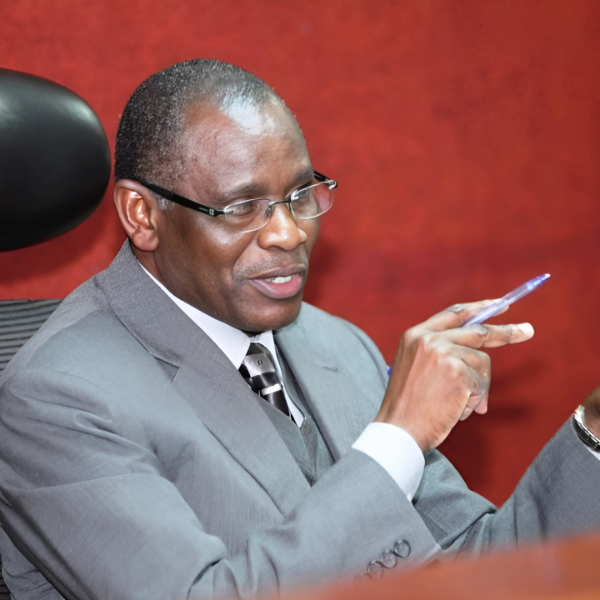
Justice Chacha Mwita
Kinyagia, known online as Daguin Dd, vanished from his Kinoo residence in Kiambu County following a raid by plain-clothed individuals believed to be DCI officers. Witnesses reported seeing six to ten unmarked Subaru vehicles surround his apartment complex at 1313 Apartments along the Nairobi-Nakuru highway. “They wore balaclavas, carried handguns, and bundled him into a car before speeding off,” said a neighbor who requested anonymity. The raid, which occurred around 2:00 p.m. on June 21, saw officers break into Kinyagia’s home, seizing laptops and mobile phones. His family reported the incident to Kinoo Police Station the following day, but no updates followed until the court’s intervention.
The activist’s disappearance is widely linked to his role in mobilizing the June 25, 2025, protests, which commemorated the deadly 2024 anti-Finance Bill demonstrations that claimed over 60 lives. On June 19, Kinyagia shared a viral post on X, detailing a protest itinerary that included prayers, a moment of silence for the fallen, and a symbolic march to State House to declare a “new republic.” The post, which reached over 1.6 million users, drew significant attention, with many speculating it placed him in the government’s crosshairs. “Ndiang’ui was speaking for us, the youth, who are tired of corruption and oppression,” said Brian Otieno, a 20-year-old student who joined the protests. “His abduction feels like a warning to us all.”
Justice Mwita’s ruling on June 30 underscored the gravity of the situation. “This is a matter of a Kenyan citizen whose life may be in danger,” he said, emphasizing the constitutional right to habeas corpus. “The Inspector General and DCI must produce Ndiang’ui Kinyagia or explain why he has been held incommunicado for ten days.” The court ordered that the application be served to Kanja, Amin, Interior Cabinet Secretary Kipchumba Murkomen, and the Attorney General by the close of business on June 30, with formal responses due within seven days. However, the failure of Kanja and Amin to appear on July 1 prompted accusations of contempt from the petitioner’s legal team, led by Senior Counsel Martha Karua.
Karua, representing the LSK, condemned the police chiefs’ absence as a deliberate affront to judicial authority. “The DCI director held a press conference yesterday, denying knowledge of Ndiang’ui’s whereabouts, yet he refuses to face this court,” she told Justice Mwita. “This is sub judice and unacceptable. It is their duty to investigate and protect Kenyans, not evade accountability.” Karua referenced past abductions, including those of Bob Jaggi and the Longton brothers, where police initially denied involvement only for victims to be found later, often in distressing circumstances. “The pattern is clear,” she added. “The state must stop these enforced disappearances.”
DCI Director Amin, in a press briefing on June 30, claimed Kinyagia was not in police custody but was a “person of interest” due to “inflammatory content” shared online. “We conducted a lawful search at his residence and recovered electronic gadgets that will aid our investigation,” Amin said, noting that Kinyagia was absent during the raid. He urged the blogger to surrender to the nearest police station, a statement that drew skepticism from activists. “If they don’t have him, why haven’t they investigated his abduction?” asked Faith Odhiambo, LSK President. “Ten days is too long for a citizen to vanish without a trace.”
The case has ignited outrage across Kenya, with the hashtag #FreeNdianguiKinyagia trending on X. Civil society groups, including Amnesty International Kenya, have demanded Kinyagia’s immediate release or presentation in court. “This bears the hallmarks of an enforced disappearance,” said Irungu Houghton, Executive Director of Amnesty Kenya. “The government must comply with the court and ensure Ndiang’ui’s safety.” Activist Boniface Mwangi went further, alleging that Kinyagia may be held by the National Intelligence Service (NIS) in a secret detention facility. “This is not just about one man,” Mwangi said. “It’s about the state silencing dissent through fear.”
Kinyagia’s family is grappling with anguish and uncertainty. His mother, Margaret Rukwaro, last communicated with him via WhatsApp on the morning of June 21. “He said he’d be offline for an hour, but then his phones went dead,” she recounted. “As a mother, I knew something was wrong.” His younger sister, Njeri, linked his disappearance to his online activism. “He shared a protest plan, and now he’s gone,” she said. “If that’s a crime, then why aren’t others who reposted it arrested?” The family’s distress has resonated with Kenyans, many of whom see Kinyagia’s case as emblematic of a broader crackdown on free expression.
The June 25 protests, which Kinyagia helped organize, saw widespread violence, with 485 arrests and 448 suspects charged for crimes ranging from arson to robbery with violence. Amin, during his June 30 briefing, described the demonstrations as “hijacked by a well-funded network of criminals” intent on causing anarchy. However, critics argue that the government is using such claims to justify targeting activists. “Ndiang’ui was exercising his constitutional right to free speech,” said Odhiambo. “Labeling him a criminal without evidence is an attempt to criminalize dissent.”
The court proceedings were briefly disrupted on July 1 when an unidentified man interrupted to denounce Kanja’s legal team for failing to produce Kinyagia. “This is an injustice!” he shouted before security intervened. The outburst reflected the public’s growing frustration with the police’s handling of abductions. Embakasi East MP Babu Owino, representing Kinyagia as an advocate, celebrated the court’s order as a victory for justice. “We will not rest until Ndiang’ui is free,” Owino said. “The IG and DCI must answer for this violation of his rights.”
The case has drawn parallels to other recent abductions, including the disappearance of three Mlolongo residents in December 2024. Kanja and Amin faced similar court summons in January 2025, where they denied holding the missing men, only for two to be found dead hours later. “The discovery of those bodies raises chilling questions about Ndiang’ui’s fate,” said David Koros, President of the Institute for Human Rights. “The police cannot keep claiming ignorance while citizens vanish.” Koros has called for the resignation of both Kanja and Amin, citing their failure to curb abductions.
Public sentiment, as reflected on X, is one of anger and fear. “If they can take Ndiang’ui, no one is safe,” one user posted. Another wrote, “The government is waging war on Gen Z for speaking out.” The protests and Kinyagia’s disappearance have fueled accusations of a repressive regime, with comparisons to authoritarian tactics in neighboring countries. “Even Uganda processes dissenters through courts,” said Koros. “Kenya’s abductions are a step backward.”
As the court awaits further submissions, the pressure on Kanja and Amin intensifies. Justice Mwita has warned that failure to comply could lead to contempt proceedings, a rare move signaling the judiciary’s frustration. The LSK has demanded that the state disclose Kinyagia’s whereabouts and cease holding him incommunicado. “This is a test of our democracy,” said Karua. “If the state can abduct citizens with impunity, the Constitution is meaningless.”
For now, Kinyagia’s fate remains unknown, and his family holds onto hope. “I just want to see my son again,” said Rukwaro, her voice breaking. The case has galvanized Kenya’s youth, who see Kinyagia as a symbol of their struggle against systemic injustices. As the July 1 hearing concluded, Justice Mwita reiterated the urgency of the matter. “The life of a Kenyan is at stake,” he said. “The state must act, and act now.” With the nation watching, the outcome of this case could shape public trust in Kenya’s institutions and the future of free expression.
Former Kiambu Governor Ferdinand Waititu has secured a major bail reprieve from the High Court, with Justice Winfrida Okwany reducing his bail from Sh53.5 million to Sh20 million cash pending appeal in his ongoing corruption case.
Kenya National Highways Authority names Eng. Luka Kipchumba Kimeli as Director General while Kenya Roads Board appoints Judith Otsyula to the same role in major leadership changes for Kenya's roads sector.
Kenya’s Committee on Communication, Information and Innovation has rejected calls for a complete ban on TikTok, instead proposing mandatory local storage of Kenyan user data and full compliance with national laws in a report adopted for debate in the National Assembly.