By Brenda Wereh25 Jun, 202535 mins read 2,934 views
0 comments 0 likes
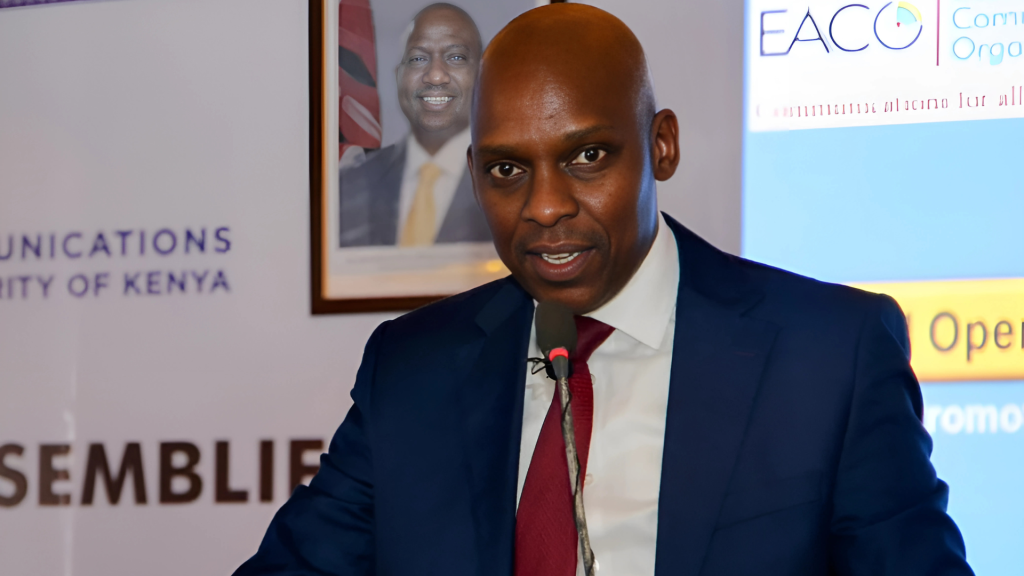
The Communications Authority of Kenya, under Director General David Mugonyi, ordered all TV and radio stations to suspend live coverage of nationwide protests, citing constitutional violations, with threats of license revocation for non-compliance.
Kenya’s media landscape faced a seismic shift as the government, through the Communications Authority of Kenya (CA), issued a sweeping directive ordering all television and radio stations to immediately cease live coverage of ongoing nationwide protests. The protests, led by Gen Z activists marking the first anniversary of the 2024 anti-Finance Bill uprising, have gripped cities like Nairobi, Kitengela, and Mombasa, with demands for justice, economic reform, and an end to police brutality. The CA’s directive, signed by Director General David Mugonyi, cited violations of the Constitution and the Kenya Information and Communications Act, 1998, warning that failure to comply would result in severe regulatory action, including the potential revocation of broadcasting licenses. The move sparked widespread condemnation from media stakeholders and activists, who decried it as an assault on press freedom and a bid to suppress public awareness of the protests.
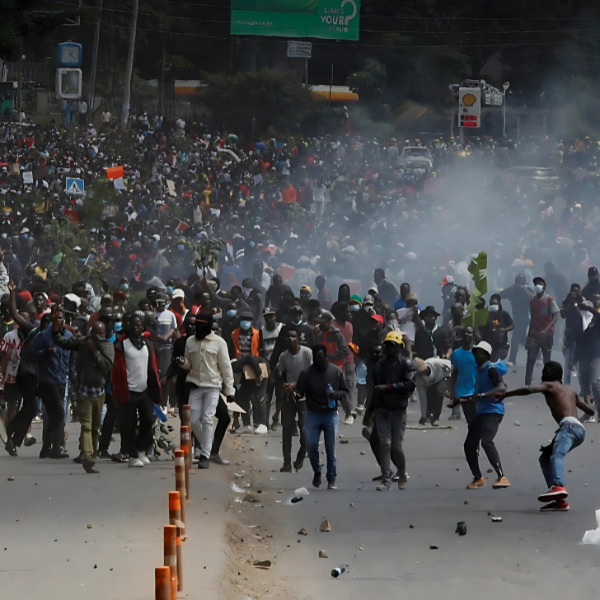
The directive, issued mid-morning on June 25, came as protests intensified across Kenya, with youths blocking major roads like Thika Road in Nairobi and engaging in acts of defiance, such as impromptu football games on deserted highways. The CA’s statement claimed that live coverage of the demonstrations contravened Articles 33(2) and 34(1) of the Constitution, which address freedom of expression and media independence, as well as Section 461 of the Kenya Information and Communications Act, 1998, which mandates responsible broadcasting. “This is to direct all television and radio stations to stop any live coverage of the demonstrations forthwith,” Mugonyi’s letter to broadcasters read. “Failure to abide by this directive will result in regulatory action as stipulated in the Kenya Information and Communications Act, 1998.”
The order sent shockwaves through Kenya’s vibrant media sector, known for its robust coverage of political and social events. Media houses, including major players like Citizen TV, NTV, and KTN, faced an immediate dilemma: comply with the directive and risk alienating audiences or defy it and face potential shutdowns. By noon, several stations had noticeably shifted to pre-recorded segments or studio discussions, avoiding live feeds from protest hotspots. “This is a direct attack on our ability to inform the public,” said a senior editor at a Nairobi-based TV station, speaking anonymously due to fear of repercussions. “We’re being forced to choose between our duty to report the truth and our survival as a business.”
The protests, part of the “Gen Z Memorial March,” were a tribute to the over 60 lives lost during the 2024 anti-Finance Bill demonstrations, which forced the government to withdraw a controversial tax bill after protesters stormed Parliament. The 2025 marches, coordinated through social media platforms like X under hashtags like #JusticeFor2024, saw thousands of youths demanding accountability for past police violence, economic equity, and systemic reforms. In Nairobi, scenes of youths playing football on Thika Road and clashing with police in Kitengela underscored the movement’s resilience. The CA’s directive, however, aimed to limit the visibility of these events, prompting accusations of censorship.
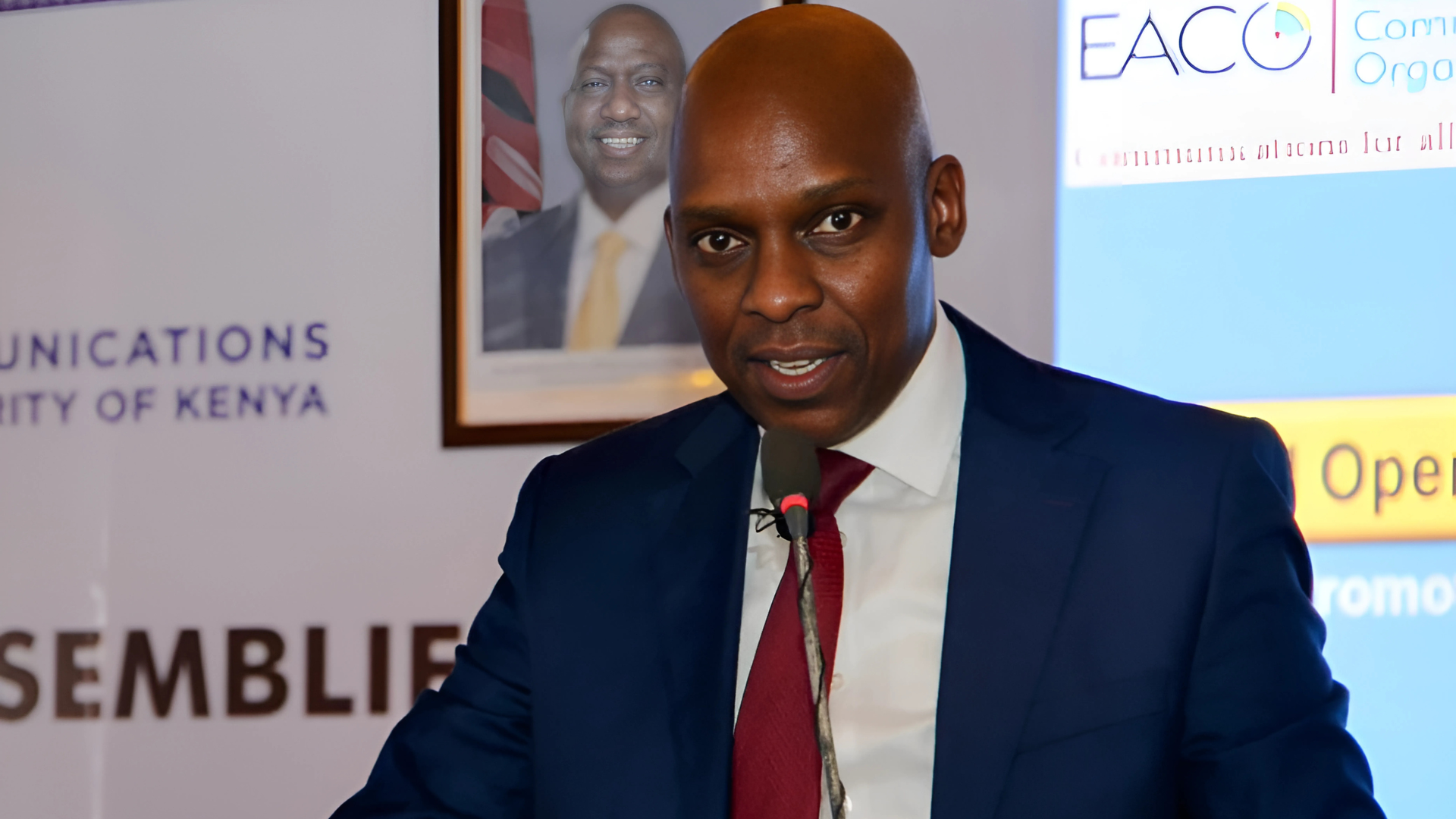
CA Director, David Mugonyi
Media stakeholders swiftly condemned the order. The Kenya Editors’ Guild issued a statement calling it “a grave violation of press freedom guaranteed under Article 34 of the Constitution.” The guild’s deputy director, Jane Mwangi, emphasized the media’s role in upholding democracy. “Kenyans have a right to know what’s happening in their country, especially during moments of public unrest,” she said. “This directive is an attempt to control the narrative and hide the government’s response to peaceful protests.” The Kenya Union of Journalists echoed these sentiments, urging media houses to resist the order and promising legal support for any stations facing sanctions.
The CA’s move was not without precedent. In 2024, under then-Director General Ezra Chiloba, the authority cautioned six TV stations—Citizen TV, NTV, K24, KBC, TV47, and Ebru TV—for their coverage of opposition-led protests, claiming it incited violence. That decision was later quashed by the High Court, which ruled that the CA’s actions infringed on media freedom. Activists pointed to this history as evidence of a pattern of government overreach. “This is not about public safety; it’s about silencing dissent,” said human rights lawyer Grace Njeri, based in Nairobi. “The government knows the power of live broadcasts in mobilizing and informing citizens, and they’re scared of that.”
The directive’s legal basis, rooted in Articles 33(2) and 34(1) of the Constitution and Section 461 of the 1998 Act, has been heavily contested. Article 33(2) limits freedom of expression to exclude propaganda, incitement, or hate speech, while Article 34(1) guarantees media independence. Section 461 requires broadcasters to uphold standards of accuracy, impartiality, and public decency. Legal experts argue that the CA’s interpretation stretches these provisions to justify censorship. “The Constitution protects the media’s right to report on matters of public interest,” said constitutional lawyer James Mwangi. “Banning live coverage of protests without clear evidence of incitement is unconstitutional and sets a dangerous precedent.”
The threat of license revocation, a powerful tool under Section 46J of the 1998 Act, loomed large over broadcasters. In January 2025, the CA revoked 75 broadcast licenses, citing non-compliance with regulatory standards, and in April, it targeted the Standard Group, alleging unpaid fees. These actions have heightened fears among media houses, many of which operate on tight budgets. “Revoking a license is like killing a media house,” said a radio station manager in Mombasa, who requested anonymity. “We rely on our license to operate, and the CA knows that. This threat is meant to force us into compliance.”
Public reaction was swift, with social media platforms like X becoming a battleground for protest organizers and citizens. Posts described the directive as “unconstitutional” and urged Kenyans to use their phones to livestream protests. “They can shut down TV, but they can’t shut down our cameras,” said Brian Otieno, a 26-year-old protester in Nairobi, holding up his smartphone. “We’re documenting everything and sharing it online. The world will see what’s happening.” By afternoon, hashtags like #SiriNiNumbers and #WereNotLeaving trended, with users sharing videos of police firing tear gas and youths chanting on Thika Road.
The directive’s timing, coinciding with President William Ruto’s hosting of an Aga Khan envoy at State House, highlighted the government’s dual focus on diplomacy and domestic control. Ruto, who faced his biggest crisis during the 2024 protests, has called for dialogue but maintained a firm stance against street demonstrations. “We are open to listening, but chaos cannot be tolerated,” he said on June 24 in Eldoret. Critics argue that the CA’s directive reflects a broader strategy to suppress dissent while projecting stability to international partners. “The government wants to control the narrative at home and abroad,” said Njeri. “They’re embarrassed by the protests and don’t want the world to see their response.”
The order also raised questions about the CA’s independence. Established under the Kenya Information and Communications Act, 1998, the CA is tasked with regulating the ICT sector, including broadcasting, telecommunications, and spectrum allocation. However, critics have long accused it of being influenced by political interests. David Mugonyi, appointed CA Director General in December 2024, has faced scrutiny for his ties to State House, where he previously served as communications chief. “The CA is acting as an arm of the executive,” said Mwangi. “An independent regulator wouldn’t issue such a blanket ban without judicial oversight.”
Media houses have explored legal recourse, with some considering petitions to the Communications and Multimedia Appeals Tribunal or the High Court. The Katiba Institute, which successfully challenged the CA’s 2023 censure of TV stations, signaled its intent to fight the directive. “We’re preparing to challenge this in court,” said a representative from the institute. “The CA cannot override the Constitution, and we’ll prove it.” However, legal battles are time-consuming, and the immediate pressure to comply has left broadcasters in a bind.
The directive’s impact extended beyond media to the public’s right to information. In rural areas, where TV and radio are primary news sources, the suspension of live coverage could limit awareness of the protests. “People in places like Nyeri or Kisumu rely on radio for updates,” said a community journalist in Nakuru. “This ban cuts them off from knowing what’s happening in their own country.” In urban centers, social media has filled the gap, but concerns about internet throttling, a tactic used during past protests, have surfaced.
As the day progressed, protests continued, with reports of tear gas in Nairobi’s Central Business District and arrests in Kitengela. The absence of live broadcasts amplified the role of citizen journalists, whose videos documented police actions and protester resilience. For Kenya’s media, the directive marked a critical test of their independence and commitment to public interest. “We’re at a turning point,” said the senior editor. “If we let this pass, what’s next? The government could ban coverage of anything they don’t like.”
The CA’s order, while disruptive, underscored the power of Kenya’s youth and their ability to adapt. As protesters like Otieno livestreamed from the ground, they bypassed traditional media, ensuring their message reached global audiences. The Gen Z movement, born from the 2024 uprising, showed no signs of slowing, with plans for further protests in the coming days. For now, Kenya’s media houses navigate a precarious path, caught between regulatory threats and their duty to a public demanding transparency and justice.
Former Kiambu Governor Ferdinand Waititu has secured a major bail reprieve from the High Court, with Justice Winfrida Okwany reducing his bail from Sh53.5 million to Sh20 million cash pending appeal in his ongoing corruption case.
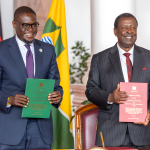
President Ruto and Governor Sakaja signed a cooperation agreement allocating funds for 50,000 new streetlights, water plants saving 50 million litres daily, 27 km Nairobi River sewer and ward road upgrades, with Ruto calling it a partnership to make the city livable while opposition senators warn of devolution threats.
A staff member at Moi Teaching and Referral Hospital allegedly stole Sh10 million by falsifying patient bills as paid in the eCitizen system while diverting the money to her personal account, prompting an ongoing police and hospital investigation.