Deputy President Rigathi Gachagua met Kenyans in Texas to discuss the diaspora’s role in shaping Kenya’s future through investment, unity, and national development.
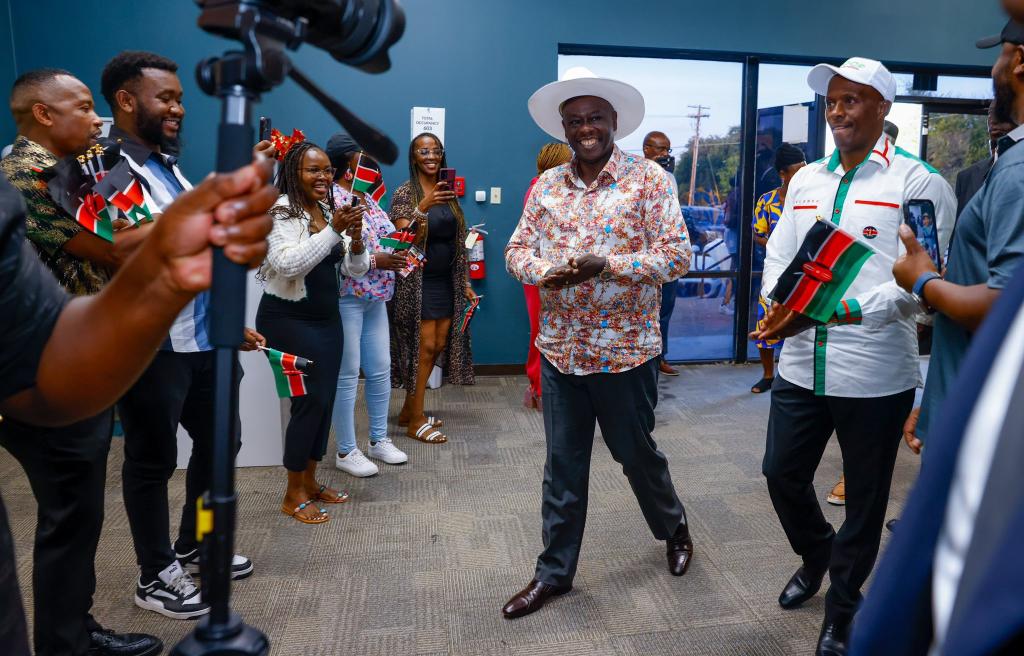
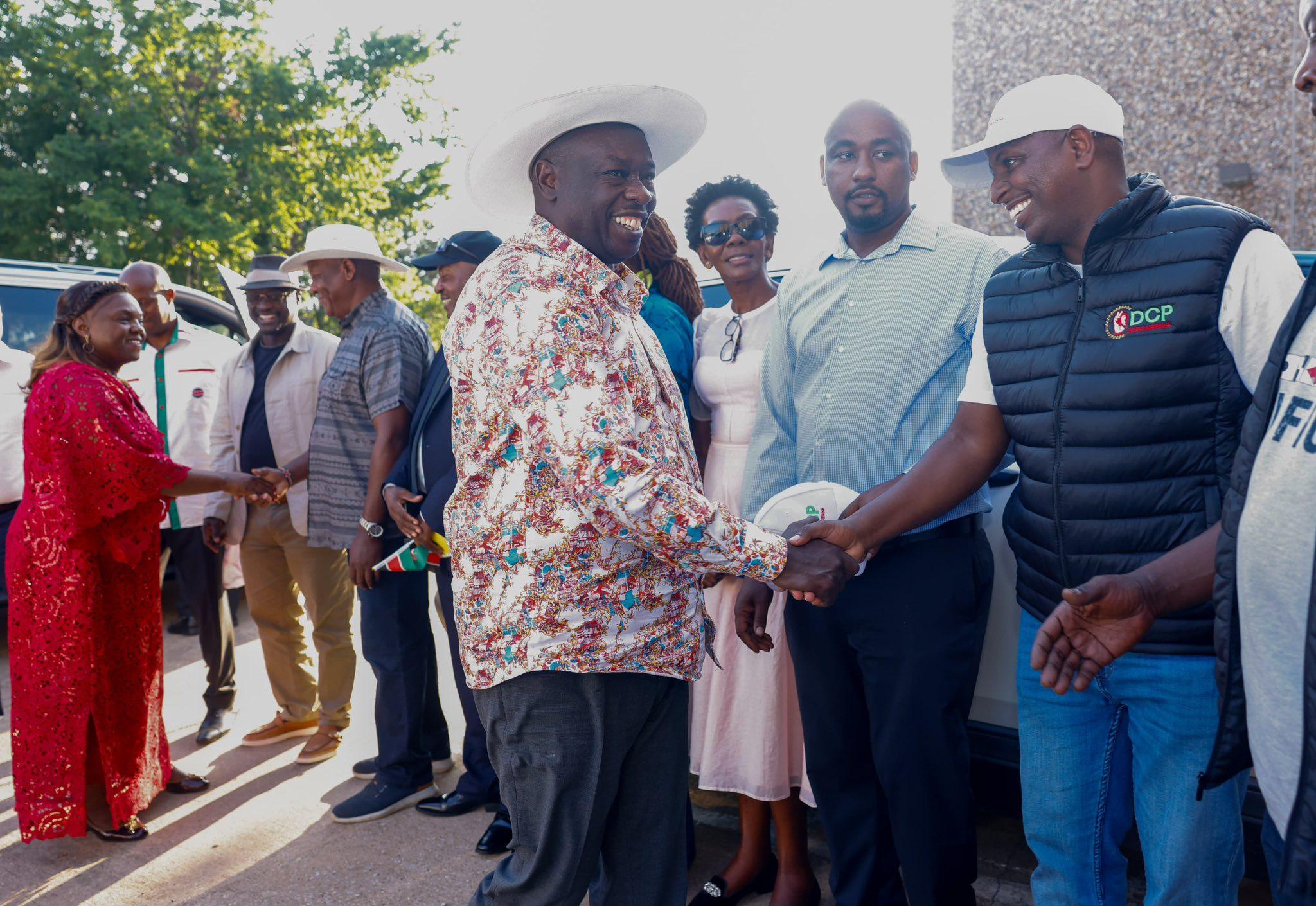
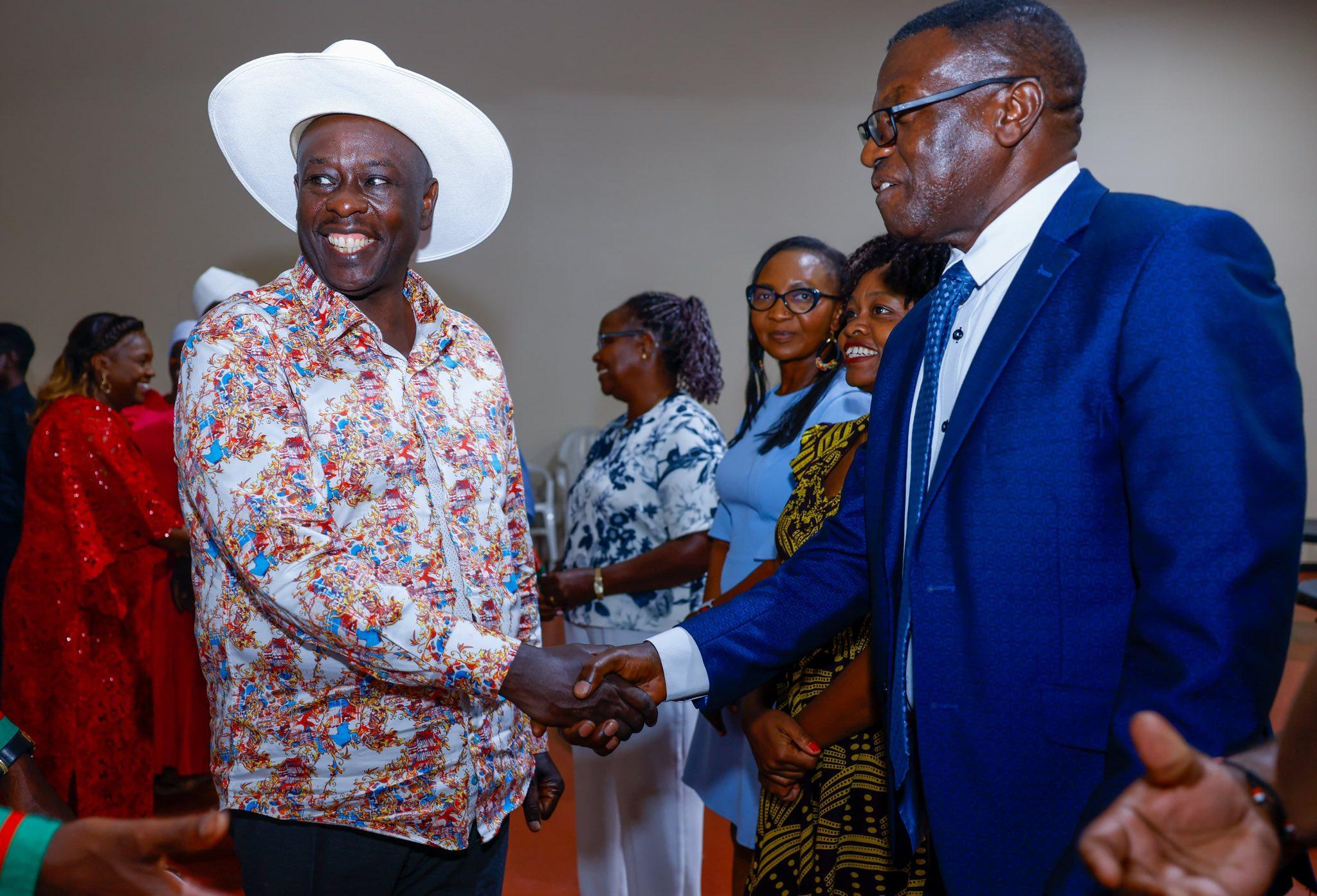
Rigathi Gachagua arrived in Dallas, Texas, to a warm and enthusiastic reception from the Kenyan diaspora community. Accompanied by his wife, Pastor Dorcas Gachagua, he landed at Dallas Fort Worth International Airport, where chants, cheers, and songs greeted the couple, reflecting the strong connection between Gachagua and Kenyans abroad.
This visit, part of a broader U.S. tour, underscores Gachagua’s ongoing efforts to engage the Kenyan diaspora in shaping the future of their homeland, particularly as the country approaches the 2027 general elections. As the leader of the Democracy for the Citizens Party (DCP), Gachagua’s trip to Texas highlights the critical role the diaspora plays in Kenya’s political, economic, and social landscape.
Gachagua’s arrival in Dallas was marked by a vibrant display of cultural pride and solidarity. The Kenyan community in Texas, known for its significant population and active participation in diaspora affairs, welcomed Gachagua with a replica of the “Karibu Wamunyoro” banner, a nod to his residence in Mathira Constituency. This gesture, as Gachagua noted on his official X account, made him feel at home thousands of miles away from Kenya. The banner, a symbol of familiarity and belonging, underscored the emotional connection between Gachagua and the diaspora, many of whom share roots in the Mount Kenya region.
In a statement shared in the early hours of August 2, 2025, Gachagua expressed his gratitude for the “overwhelming love” he received, emphasizing the joy of connecting with Kenyans in Texas. “In the company of my spouse, @Pastor_Dorcas, we touched down at Dallas Fort Worth International Airport, Dallas City, to the great joy and overwhelming love of Kenyans,” he wrote. He further noted that his visit aimed to engage Kenyans living and working in Texas on the future of their nation, signaling a deliberate focus on mobilizing diaspora support for his political and reform agenda.
The Dallas visit was not an isolated event but part of a carefully planned U.S. tour that included stops in Seattle, Boston, Baltimore, Washington D.C., Maryland, Virginia, Pennsylvania, and Delaware. Each stop was designed to strengthen ties with the diaspora, a group Gachagua views as pivotal to Kenya’s development and political transformation. His itinerary in Texas included town hall meetings in Dallas and Houston, focusing on diaspora participation in national development, civic awareness, and the rights of Kenyans abroad.
Gachagua’s engagements in Texas centered on the diaspora’s potential to drive Kenya’s economic and political progress. He emphasized the importance of leveraging the skills, resources, and networks of Kenyans abroad to address pressing challenges back home, such as youth unemployment, economic stagnation, and governance issues. During a town hall meeting in Dallas on August 3, 2025, Gachagua delivered a fiery and emotionally charged address, accusing President William Ruto’s administration of betrayal, authoritarianism, and economic sabotage. He positioned himself as a leader of a “people-powered movement” to fix Kenya, declaring, “We now have an opportunity to do the right thing and fix our country. In this country, we shall fix it because the Kenyan people are alert, they are determined, and we’ll fix this country together.”
One of Gachagua’s key proposals was the integration of qualified diaspora members into Kenya’s foreign service. He argued that Kenyans abroad, with their deep understanding of their host countries’ economic and social dynamics, are better positioned to serve as ambassadors or consular officers. “They understand those countries more than we do,” he said, advocating for stronger investment and bilateral partnerships facilitated by diaspora professionals. This approach, he suggested, would not only enhance Kenya’s international presence but also reduce costs by appointing individuals already residing abroad.
Gachagua also highlighted the diaspora’s financial influence, noting their significant contributions through remittances and fundraising for political campaigns. According to Prof. David Kimori of Mankato State University, “Diasporans are influential in Kenyan elections and in fundraising for politicians. They also have a big influence on their family members and communities that they support financially.” Gachagua’s focus on the diaspora, particularly those from the Mount Kenya region, reflects a strategic understanding of their electoral and financial clout.
Throughout his Texas engagements, Gachagua framed his message around unity, inclusive governance, and national liberation. He described Kenya as being at a crossroads, plagued by impunity, state capture, and leadership failures. Reflecting on his impeachment in October 2024, Gachagua claimed it was a blessing in disguise, as it freed him from a government he accused of compromising democratic values. “I was excluded from a National Security Council meeting because I opposed plans to use force against protesting youth,” he revealed, referencing the June 25, 2024, protest massacre. He positioned himself as a lone voice within the government advocating for accountability and reform.
Gachagua’s call for unity resonated with many in the diaspora, who expressed anxiety about the state of affairs in Kenya. He noted that Kenyans abroad are “restless and deeply concerned” about issues such as bribery, human rights abuses, and economic mismanagement, which affect them as much as those at home. “They are afraid, they are concerned, and they are worried about what is happening back home,” he said, emphasizing the shared responsibility to address these challenges.
To further his political agenda, Gachagua has been expanding the DCP’s footprint abroad, launching satellite offices in Massachusetts and Washington State during his tour. These offices aim to consolidate diaspora support and provide a platform for political mobilization ahead of the 2027 elections. His meeting with former Interior Cabinet Secretary Fred Matiang’i in Aberdeen, Maryland, on July 26, 2025, also sparked speculation about potential political alliances. Gachagua described the meeting as centered on “matters of national interest” and reaffirmed their commitment to Kenya’s future.
Despite the warm reception in Texas, Gachagua’s tour has not been without controversy. Critics, including diaspora youth and political opponents, have accused him of perpetuating divisive, tribal rhetoric that undermines national unity. During a town hall meeting in Baltimore, Valentine Wanjiru Githae of the 625 Movement challenged Gachagua to abandon his focus on the Mount Kenya region and position himself as a national leader. She criticized his Boston speech, where he praised the Kikuyu community for driving Kenya’s economy, arguing that such statements foster a sense of entitlement and diminish the contributions of other communities. “We cannot say that people from other tribes are not hardworking. We have that sense of entitlement as Kikuyus, and it has to stop,” she stated.
Mumias East MP Peter Salasya also slammed Gachagua, accusing him of undermining national unity with his regional focus. “H.E. Rigathi Gachagua, get this from me: the language that Ruto understands is this politics of tribal. We want one Kenya,” Salasya wrote on X, warning that divisive approaches would not garner support for Gachagua’s 2027 presidential bid.
Kapseret MP Oscar Sudi further criticized Gachagua’s fundraising appeals in the U.S., urging diaspora Kenyans, particularly from Mount Kenya, to prioritize their families’ economic growth over political contributions. “For the first time since you went to the US, at least you’ve spoken the truth — that your main reason for going there is to ask for money from hardworking Kenyans,” Sudi said, questioning the accountability of such funds.
Gachagua responded to these criticisms by acknowledging his past mistakes, particularly his role in supporting President Ruto’s rise to power. During his Dallas town hall, he admitted to persuading over four million Kenyans to vote for Ruto, a decision he now regrets. “The people who helped create this mess must take the lead in fixing it,” he said, quoting a saying from his community: “Making a mistake is not very bad. What is very bad is repeating it.” He insisted that his focus on reform and accountability stems from a sense of responsibility to rectify past errors.
Gachagua’s Texas engagements and broader U.S. tour are widely seen as groundwork for a potential 2027 presidential bid. His focus on the diaspora, particularly the Mount Kenya community, reflects a calculated strategy to secure a loyal voter and financial base. As Prof. David Kimori noted, “Gachagua’s visit is to activate diaspora support, especially for those with roots in Mt Kenya.” The diaspora’s influence, both through remittances and political fundraising, makes them a critical constituency for any serious contender.
However, Gachagua’s emphasis on Mount Kenya has raised concerns about his ability to appeal to a broader national audience. Critics argue that his rhetoric, while energizing his core base, risks alienating other communities and reinforcing perceptions of him as an ethnic kingpin. The generational divide within the diaspora, with younger Kenyans demanding inclusive leadership, further complicates his strategy.
Despite these challenges, Gachagua’s tour has succeeded in keeping him in the political spotlight. His bold rhetoric, combined with strategic engagements like the meeting with Matiang’i and the launch of DCP offices, signals a deliberate effort to reposition himself as a leading opposition figure. The “Wantam” chant, which he tested with diaspora crowds, has become a rallying cry, amplifying his image as a defiant “meme king” who resonates with supporters through social media and public appearances.
Rigathi Gachagua’s engagements in Texas highlight the growing importance of the Kenyan diaspora in shaping the country’s future. By advocating for their inclusion in diplomatic roles, addressing their concerns, and mobilizing their support, Gachagua is laying the foundation for a political comeback ahead of the 2027 elections. His message of unity, reform, and liberation resonates with many, but criticisms of his tribal rhetoric underscore the need for a more inclusive approach. As Kenya navigates economic and political challenges, the diaspora’s role as a bridge between local and global opportunities remains critical. Gachagua’s Texas visit, with its blend of cultural pride, political ambition, and calls for collective action, marks a pivotal moment in his quest to redefine Kenya’s political landscape.
Former Kiambu Governor Ferdinand Waititu has secured a major bail reprieve from the High Court, with Justice Winfrida Okwany reducing his bail from Sh53.5 million to Sh20 million cash pending appeal in his ongoing corruption case.
Kenya National Highways Authority names Eng. Luka Kipchumba Kimeli as Director General while Kenya Roads Board appoints Judith Otsyula to the same role in major leadership changes for Kenya's roads sector.
Kenya’s Committee on Communication, Information and Innovation has rejected calls for a complete ban on TikTok, instead proposing mandatory local storage of Kenyan user data and full compliance with national laws in a report adopted for debate in the National Assembly.