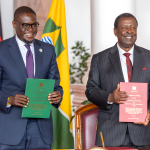
Embu County received a significant boost to its development agenda as President William Ruto announced a KSh 1 billion investment to connect more than 12,000 households to electricity, a move hailed as a transformative step for the region’s economic and social landscape. The announcement, made during a strategic meeting with grassroots leaders at State House, Nairobi, led by Embu Governor Cecily Mbarire, also included plans to construct three additional markets, bringing the total to 12 in the county. These initiatives, part of Ruto’s broader vision for equitable development, come at a critical time as Kenya grapples with economic challenges and political tensions, particularly in the Mount Kenya region, a key political stronghold. The electrification project, coupled with enhanced market infrastructure, is poised to improve livelihoods, spur local commerce, and strengthen Ruto’s influence in a region increasingly vital ahead of the 2027 general election.

The meeting at State House, attended by MPs, MCAs, and community leaders from Embu, underscored Ruto’s commitment to addressing the region’s pressing needs. “We are focused on transforming Kenya, and Embu is a priority,” Ruto said, addressing the delegation. “This KSh 1 billion investment will ensure over 12,000 households gain access to electricity, empowering families and businesses.” The electrification initiative, to be implemented in collaboration with the Kenya Power and Lighting Company and the Rural Electrification and Renewable Energy Corporation, targets underserved areas in constituencies like Manyatta, Runyenjes, Mbeere South, and Mbeere North. The project aims to bridge the energy access gap, with Embu’s current electrification rate at approximately 65 percent, significantly below urban centers like Nairobi.
For Embu residents, the promise of electricity is more than a utility—it’s a gateway to opportunity. “Access to power will change everything for us,” said Jane Wanjiku, a small-scale farmer in Runyenjes. “We can store produce longer, run small businesses, and give our children better study conditions.” The initiative aligns with Kenya’s Vision 2030 goal of universal electricity access, a target that has been hampered by funding constraints and logistical challenges in rural areas. With Kenya’s public debt at KSh 11.36 trillion, the allocation of KSh 1 billion to Embu has drawn both praise and scrutiny, with some questioning whether such funds could address more immediate needs like healthcare or education.
The addition of three new markets builds on existing infrastructure, including the recently constructed Kiritiri, Siakago, and Ishiara markets, which have boosted local trade. “These markets will create jobs and provide a platform for our farmers and traders,” said Governor Mbarire, who has championed devolution and grassroots development. “The president’s support shows his commitment to our people.” The markets, to be built in strategic locations across the county, will feature modern facilities like cold storage, sanitation, and digital payment systems, addressing long-standing complaints about poor market conditions. Local traders, particularly those dealing in miraa and muguka, expect increased earnings as the government also pledged to enhance the growing and selling of these cash crops, a vital economic driver in Embu.

The announcement comes amid a complex political backdrop in the Mount Kenya region, where Ruto faces challenges in maintaining his 2022 voter base. Tensions with former Deputy President Rigathi Gachagua, who has launched the Democracy for Citizens Party and vowed to challenge Ruto’s influence, have heightened the stakes. “This is about showing Embu that we’re listening,” said a State House insider, speaking anonymously. “The president knows Mount Kenya is critical for 2027, and these projects are a way to deliver tangible results.” The meeting with Embu leaders, including Deputy President Kithure Kindiki, was seen as a strategic move to counter Gachagua’s growing influence, with Ruto emphasizing unity and dismissing reported rifts within the United Democratic Alliance.
Public sentiment on X reflects a mix of optimism and skepticism. “KSh 1 billion for Embu’s power and markets is a big win,” posted a user from Manyatta. “Let’s hope it’s not just election talk.” Another wrote, “Ruto’s delivering for Embu, but what about the rest of Kenya? We need equitable development.” The hashtag #EmbuPowerBoost trended briefly, with users sharing images of poorly lit villages and expressing hope for change. However, some criticized the timing, pointing to recent controversies, including the KSh 1.2 billion State House church project, which Ruto has insisted is funded personally. “While I’m glad for Embu, why prioritize a church over hospitals?” questioned a Nairobi-based user, echoing broader concerns about resource allocation.
The electrification project is expected to create jobs, with local youth likely to be employed in installation and maintenance roles. “We’re training young people to work on these projects,” said a REREC official, noting that over 200 technicians from Embu have been enlisted. The initiative will also support small businesses, particularly in agro-processing, by enabling the use of electric machinery. “Farmers can now invest in irrigation pumps and milling machines,” said John Muriithi, a miraa trader in Mbeere South. “This is a game-changer for our economy.” The markets, meanwhile, are projected to increase county revenue by 15 percent, bolstering Embu’s ability to fund local services like healthcare and education.

Despite the optimism, challenges remain. Kenya’s energy sector has faced criticism for frequent outages and high tariffs, with consumers paying an average of KSh 26 per kilowatt-hour. “The government must ensure this power is affordable,” said Mary Njeru, a shop owner in Siakago. “Connection is one thing, but we need stable, cost-effective electricity.” Logistical hurdles, such as difficult terrain in parts of Mbeere, could also delay implementation. The Kenya National Highways Authority has committed to improving access roads to facilitate the project, but timelines remain uncertain. “We’re working round the clock to meet deadlines,” said the REREC official, acknowledging the pressure to deliver before the 2027 election cycle intensifies.
The investment also ties into Ruto’s broader economic agenda, which includes addressing falling milk prices in the Mount Kenya region, a concern raised during the State House meeting. “We’re ensuring farmers get at least KSh 50 per liter,” Ruto said, responding to complaints about prices dropping to as low as KSh 30 in some areas. This commitment, alongside the electrification and market projects, aims to address economic grievances in a region hit hard by inflation and a KSh 876.1 billion budget deficit. However, critics argue that such promises risk being overshadowed by systemic issues, including the recent termination of a KSh 260 billion Adani deal for Jomo Kenyatta International Airport, which has strained investor confidence.
Civil society groups have welcomed the Embu investment but called for transparency. “We need to see how this KSh 1 billion is spent,” said Peter Ndung’u, a governance advocate in Embu. “Public funds must be accounted for, especially given Kenya’s debt crisis.” The Ethics and Anti-Corruption Commission has pledged to monitor the project, citing past concerns about mismanagement in similar initiatives. Meanwhile, opposition leaders, including Eugene Wamalwa of the Democratic Action Party, have accused Ruto of using development projects to bolster his political image. “These are good projects, but they feel like vote-buying tactics,” Wamalwa said, referencing the timing ahead of 2027.
For Embu’s residents, the immediate focus is on the tangible benefits. “Electricity means my children can study at night,” said Agnes Muthoni, a mother of three in Runyenjes. “The markets will help us sell our produce directly to buyers.” The projects also align with Kenya’s renewable energy goals, with Embu’s proximity to the Seven Forks hydroelectric dams offering potential for sustainable power. “We’re tapping into our green energy resources,” said Mbarire, who has pushed for solar and wind projects to complement the electrification drive. The county’s agricultural sector, which contributes 70 percent of its economy, stands to gain significantly, with cold storage facilities expected to reduce post-harvest losses.
As Embu prepares for transformation, the nation watches closely. The success of these projects could set a precedent for similar initiatives elsewhere, while failure could fuel further discontent in a country already grappling with protests and economic strain. “This is our chance to show what Kenya can achieve,” said Ruto, addressing the Embu delegation. For now, the promise of power and prosperity has ignited hope in Embu, but its realization hinges on effective execution and the government’s ability to navigate a politically charged landscape.