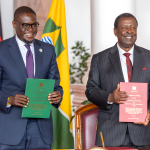
Interior Cabinet Secretary Kipchumba Murkomen presided over the launch of the revamped Fichua Kwa DCI Centre at the Directorate of Criminal Investigations (DCI) Headquarters on Kiambu Road, Nairobi. The event marked a significant milestone in Kenya’s ongoing efforts to modernize its police service and foster a people-centered approach to law enforcement.

The upgraded call center, supported by a partnership with the UK government, introduces advanced communication infrastructure, including a toll-free hotline and a secure WhatsApp channel, to enhance accessibility and transparency in crime reporting.
A New Era for Crime Reporting
The Fichua Kwa DCI Centre, originally established to allow anonymous crime reporting, has been a cornerstone of Kenya’s efforts to bridge the gap between the public and the police. The revamped platform, launched with modernized technology, aims to make crime reporting more accessible, efficient, and secure. Speaking at the event, CS Murkomen emphasized that the upgraded center is a critical step toward fostering transparency and empowering Kenyans to take ownership of their National Police Service. “Fichua Kwa DCI is one of the mechanisms of creating better transparency, but also ownership by the people of Kenya to take charge of their National Police Service,” Murkomen stated, as reported by @Eastleighvoice on X.
The upgraded center now features a toll-free hotline and a WhatsApp channel, allowing citizens to report crimes anonymously with greater ease. According to @KBCChannel1, the system’s enhancements are designed to meet the evolving needs of users, ensuring that information shared with the DCI is secure and actionable. The inclusion of WhatsApp as a reporting channel reflects a strategic move to leverage widely used technology, making it easier for Kenyans, particularly the youth, to engage with law enforcement.
The event was attended by senior officials, including Inspector General of Police Douglas Kanja and DCI Director Mohamed Amin, alongside representatives from the UK government, whose partnership facilitated the refurbishment of the center. Murkomen highlighted the collaboration as a testament to Kenya’s commitment to international cooperation in strengthening security infrastructure. “The launch today of the upgraded Fichua Kwa DCI Centre, a product of our security cooperation with the U.K., is an important step in our continuous improvement of the National Police Service,” he noted, as shared by @kipmurkomen on X.
People-Centered Policing: A Paradigm Shift
The relaunch of the Fichua Kwa DCI Centre aligns with the Kenya Kwanza administration’s broader agenda to transform the National Police Service from a force to a service, as mandated by the 2010 Constitution. Murkomen addressed longstanding perceptions of the DCI as a “faceless” institution, dismissing claims of impunity and rogue officers. “There’s a lot of innuendo and propaganda that this DCI is a hidden place, that rogue officers are here. As you can see, all these officers have been introduced openly; we know their names, we know what they do, and this is an institution of the people, not just for the government or elites,” he said, as reported by The Standard.

This emphasis on transparency and accountability is part of a series of reforms spearheaded by Murkomen since he assumed the role of Interior Cabinet Secretary. On July 18, 2025, he issued Policy Directive No. 1 of 2025 on the Use of Force & Firearms, which outlines guidelines for police conduct, emphasizing de-escalation, proportionality, and respect for human rights. The directive mandates the use of modern technology, such as body-worn cameras and CCTV systems, to enhance transparency in police operations. The Fichua Kwa DCI Centre’s upgrade complements these efforts by providing a platform for citizens to report crimes and police misconduct anonymously, fostering a culture of accountability.
Murkomen’s reforms also focus on continuous professional development for police officers. The directive requires rigorous screening processes to assess officers’ moral, psychological, and physical fitness, with periodic evaluations to ensure ongoing compliance with ethical standards. Training programs now emphasize de-escalation strategies and peaceful conflict resolution, aiming to reduce the use of force in interactions with the public. The Fichua Kwa DCI Centre serves as a critical link in this ecosystem, enabling citizens to provide feedback that can inform these training initiatives.
Addressing Public Trust and Criticism
The relaunch comes at a time when the National Police Service faces significant scrutiny over allegations of excessive force, particularly during protests. The June 25, 2025, anti-government demonstrations, which resulted in at least 10 deaths and over 400 injuries, sparked widespread criticism of police conduct. Murkomen’s earlier remarks, perceived by some as endorsing lethal force, led to a petition by civil society groups declaring him unfit to hold office. The petition, filed at the Nairobi High Court, accused him of inciting police to kill protesters and violating constitutional principles.
In response, Murkomen has sought to clarify his stance, emphasizing that his directives aim to ensure police operate within legal and ethical boundaries. The Fichua Kwa DCI Centre’s upgrade is a strategic move to rebuild public trust by providing a transparent channel for reporting crimes and police misconduct. “The ideal situation is to see all citizens work in close collaboration with the police,” Murkomen noted, as quoted by @KBCChannel1. By enabling anonymous reporting, the center aims to empower citizens to hold law enforcement accountable without fear of retribution.
Public sentiment on X reflects a mix of optimism and cautious support for the initiative. Posts from @TheStarKenya and @StandardKenya highlight the center’s role in fostering transparency and public ownership of the police service. However, some users remain skeptical, citing the need for broader systemic changes to address issues like police brutality and corruption. The success of the Fichua Kwa DCI Centre will depend on its ability to deliver tangible results, such as timely responses to reported crimes and transparent investigations into police misconduct.
Broader Context of Police Reforms
The Fichua Kwa DCI Centre’s relaunch is part of a comprehensive reform agenda under Murkomen’s leadership. Since taking office, he has introduced several initiatives to modernize the NPS and enhance service delivery. In January 2025, he launched the National Government Administration Police Unit (NGAPU), tasked with supporting high-risk operations and conflict management. In February, he toured the DCI’s state-of-the-art Forensic Laboratory, reaffirming the government’s commitment to leveraging technology to combat sophisticated crimes.
Murkomen has also addressed recruitment practices, announcing strict guidelines to ensure transparency and fairness in the upcoming police recruitment exercise. By centralizing medical examinations and deploying independent observers, the government aims to eliminate corruption and restore public trust in the process. These reforms complement the Fichua Kwa DCI Centre’s objectives by creating a more accountable and responsive police service.
The Interior CS has also prioritized addressing security challenges, such as banditry and stock theft, particularly in regions like Laikipia and the Kerio Valley. In a May 2025 statement, he cited a significant decrease in such incidents, attributing the progress to the dedication of police officers and NPR personnel. The Fichua Kwa DCI Centre’s enhanced capabilities are expected to further support these efforts by enabling communities to report crimes anonymously, thereby improving intelligence-gathering and response times.
Challenges and Opportunities
While the relaunch of the Fichua Kwa DCI Centre is a positive step, it faces several challenges. Ensuring the security of reported information is critical, as any breaches could deter citizens from using the platform. The DCI must also demonstrate its commitment to acting on reports promptly and transparently to maintain public confidence. Additionally, the center’s success will depend on public awareness and accessibility, particularly in rural areas where digital literacy and access to technology may be limited.
The partnership with the UK government presents an opportunity to leverage international expertise and resources to further enhance the center’s capabilities. Future upgrades could include AI-driven analytics to prioritize and categorize reports, as well as multilingual support to cater to Kenya’s diverse population. Expanding outreach through community engagement programs, such as the Jukwaa la Usalama forums, could also increase awareness and usage of the platform.
Looking Ahead: A Safer, More Transparent Kenya
The relaunch of the Fichua Kwa DCI Centre on July 22, 2025, marks a pivotal moment in Kenya’s journey toward people-centered policing. By providing a secure and accessible platform for crime reporting, the government aims to foster collaboration between citizens and law enforcement, ultimately strengthening public safety and trust. CS Murkomen’s leadership, despite facing criticism, reflects a commitment to transformative reforms that align with the constitutional vision of a police service that serves all Kenyans.
As the NPS continues to implement reforms, including enhanced training, technology adoption, and transparent recruitment, the Fichua Kwa DCI Centre will play a crucial role in bridging the gap between the police and the public. Its success will depend on sustained investment, public engagement, and a commitment to addressing systemic challenges within the police service. With these efforts, Kenya is poised to build a more accountable, transparent, and effective National Police Service, ensuring a safer future for all its citizens.