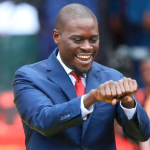
A Kenyan court has cleared the path for the trial of Naivasha MP Jayne Kihara over alleged misconduct. The ruling dismissed a petition to stop proceedings, allowing the case to proceed to full hearing.
Milimani Law Courts in Nairobi delivered a pivotal ruling, dismissing an application by Naivasha Member of Parliament Jayne Njeri Wanjiku Kihara to quash an incitement case against her. The decision, handed down by Magistrate Benmark Ekhubi, paves the way for Kihara to face trial on charges of offensive conduct conducive to a breach of the peace, stemming from remarks allegedly made during a public gathering on July 8, 2025. The case, which has sparked intense debate about freedom of speech and political intimidation in Kenya, underscores the fragile balance between holding public officials accountable and protecting democratic expression. This article explores the details of the case, its political context, and its implications for Kenya’s governance landscape, drawing on recent reports and public sentiment.
The charges against Kihara, brought under Section 94(1) of the Penal Code, Cap 63, Laws of Kenya, center on statements she allegedly made during the Saba Saba protests on July 8, 2025. According to the charge sheet, Kihara accused President William Ruto of orchestrating chaos in Naivasha, claiming that “goons” were transported in a National Youth Service (NYS) bus to Karagita and in trucks to Mai Mahiu. She further alleged that police failed to arrest these individuals, stating, “Police are not doing anything, they didn’t try to arrest the goons, we could see in the place goons walking with them.” Kihara also reportedly said, “I want to tell President Ruto, this is not a war you can win unless you want to destroy this country,” while expressing sympathy for those affected by the protests, including bereaved families and business owners whose properties were damaged.
The prosecution, led by State Counsel Victor Owiti, argues that these remarks were intended to provoke a breach of the peace, a misdemeanor punishable by a fine of up to KSh 5,000 or a prison term not exceeding six months. Kihara’s legal team, comprising Senior Counsel Kalonzo Musyoka, Ndegwa Njiru, and others, countered that the charges are vague, politically motivated, and based on an outdated law. They argued that the charge sheet fails to specify the public gathering’s details, the audience, or how the remarks directly threatened peace, rendering it defective under Sections 89(5) and 134 of the Criminal Procedure Code.
Kihara’s journey to the courtroom was marked by high drama. On July 17, 2025, she was arrested at her Maraigushu home in Naivasha by Directorate of Criminal Investigations (DCI) officers after allegedly ignoring a summons to appear at their headquarters. The arrest, which Kihara livestreamed on Facebook, drew significant public attention, with dozens of heavily armed officers reportedly surrounding her residence. She described the move as a “politically engineered drama” aimed at silencing her, a sentiment echoed by her supporters and opposition leaders like Wiper Party leader Kalonzo Musyoka.
The following day, July 18, Kihara was arraigned at the Milimani Law Courts, where her legal team objected to her taking a plea, arguing that the charges were legally invalid. Magistrate Ekhubi granted her a KSh 50,000 personal bond, scheduling a ruling on the plea’s validity for July 29. During this period, Kihara remained defiant, warning President Ruto about his association with National Assembly Majority Leader Kimani Ichung’wah, whom she accused of “wronging Kenyans” and insulting her. “With Ichung’wah as your friend, you don’t need another enemy,” she stated outside the court, emphasizing her resolve to continue advocating for her constituents.
On July 29, the court dismissed Kihara’s application to quash the case, ruling that the Director of Public Prosecutions (DPP) acted within the law and that there was sufficient basis for the trial to proceed. The decision was a blow to Kihara, who had hoped to have the charges dropped, citing a 2016 High Court ruling in Robert Alai v Attorney General that declared Section 132 of the Penal Code unconstitutional. Her lawyers argued that a similar logic should apply to Section 94(1), as it infringes on the constitutional right to freedom of expression under Article 33. However, Magistrate Ekhubi held that the charge sheet was properly framed, ordering Kihara to take a plea.
Kihara, a third-term MP and a vocal ally of former Deputy President Rigathi Gachagua, has emerged as a prominent critic of President Ruto’s Kenya Kwanza administration. Her remarks during the Saba Saba protests, which coincided with the one-year anniversary of the 2024 Gen Z-led anti-tax demonstrations, reflect growing public frustration with rising taxation, unemployment, and perceived government betrayal. Kihara’s public admission on July 25, 2025, that the Kenya Kwanza coalition “overpromised, if not overlied” during the 2022 election campaign further intensified her criticism. She recounted a conversation with Ruto, where he dismissively assured her that the government would “sort out” the youth, a promise she now views as unfulfilled.
This stance has placed Kihara in the crosshairs of the administration. Her arrest and prosecution are seen by many as part of a broader pattern of targeting Gachagua’s allies, several of whom have faced investigations or charges over their involvement in the Saba Saba and June 2025 protests. Kihara herself linked the DCI summons to her support for Gachagua, stating, “Nowadays, being a supporter of Rigathi Gachagua is a crime.” Opposition figures, including Kalonzo Musyoka, have condemned her arrest as an attempt to “silence leaders who speak their minds,” warning of a return to “darker days when dissent was criminalized.”
The case has ignited a fierce debate about freedom of speech in Kenya. Posts on X reflect a polarized public, with some users, like @KTNNewsKE and @NationAfrica, reporting the court’s ruling with a focus on its legal implications, while others, like @MutembeiTV, celebrated Kihara’s release on bond as a victory for Gachagua’s supporters. The hashtag #JayneKihara has trended, with supporters arguing that her prosecution is a politically motivated witch-hunt aimed at stifling dissent. Critics, however, contend that her remarks crossed a line, potentially inciting unrest during a volatile period marked by youth-led protests.
The case also raises questions about the relevance of colonial-era laws like Section 94(1) of the Penal Code, enacted in 1930. Kihara’s lawyers argued that such provisions are outdated and incompatible with the 2010 Constitution’s Bill of Rights, particularly Article 33, which guarantees freedom of expression. They pointed out that other politicians have made similar or more provocative statements without facing charges, suggesting selective prosecution. For instance, Kalonzo Musyoka noted that “other MPs have said worse things” without consequence, highlighting perceived discrimination.
Broader Implications: Governance and Accountability
The trial of Jayne Kihara is more than a legal battle; it is a litmus test for Kenya’s democratic institutions. The use of state machinery to arrest a sitting MP, especially in a dramatic nighttime operation, has raised concerns about the politicization of the criminal justice system. The deployment of heavily armed officers to apprehend Kihara for a misdemeanor charge was criticized as a “waste of public resources,” with her lawyers questioning why such force was necessary.
The case also intersects with other legal challenges Kihara faces. In June 2025, the High Court in Nakuru permitted auctioneers to forcibly enter her home to recover a KSh 11 million debt owed to former MP John Mututho, stemming from a 2008 election petition. This financial pressure, combined with the incitement case, paints a picture of a lawmaker under siege, fueling speculation that her legal troubles are orchestrated to weaken her politically.
Globally, similar cases highlight the tension between free speech and public order. In the United States, politicians have faced legal scrutiny for inflammatory rhetoric, such as during the January 6, 2021, Capitol riots, while in India, lawmakers have been charged under sedition laws for criticizing the government. These parallels underscore the universal challenge of balancing dissent with stability, particularly in polarized political climates.
For Kihara, the stakes are personal as well as political. Her arrest, which she livestreamed to her constituents, was a public spectacle that underscored her defiance. “I have reached the climax of my politics by sleeping in the cells,” she declared, signaling her readiness to face incarceration for her beliefs. Her supporters, including opposition leaders and Naivasha residents, have rallied behind her, viewing her as a champion of the marginalized.
For the public, the case amplifies concerns about governance and accountability. The Saba Saba protests, during which Kihara’s remarks were made, were driven by frustration over economic hardships and perceived government failures. Her allegations of state-sponsored chaos resonate with a populace weary of unfulfilled promises, as evidenced by her July 25 admission that the Kenya Kwanza coalition misled voters in 2022.
As Kihara prepares to take her plea, the trial will likely intensify debates about free speech, political persecution, and the role of the judiciary in safeguarding democracy. Her legal team has vowed to appeal the ruling, arguing that the charges violate constitutional protections. The outcome could set a precedent for how dissent is treated in Kenya, particularly for politicians critical of the government.
To address these tensions, several steps are needed. First, the government must ensure that prosecutions are transparent and free from political influence, addressing allegations of selective enforcement. Second, Parliament should review outdated laws like Section 94(1) to align them with the 2010 Constitution, as Kihara’s lawyers have urged. Finally, dialogue between the government and opposition could de-escalate political tensions, fostering a more inclusive governance model.
The trial of Jayne Kihara is a defining moment for Kenya’s democracy, testing the boundaries of free speech and the limits of state power. As a vocal critic of the Ruto administration, Kihara’s case encapsulates the broader struggle for accountability in a nation grappling with economic and social challenges. Whether the trial reinforces the rule of law or exposes cracks in Kenya’s democratic framework remains to be seen. For now, the nation watches as Kihara, undeterred, prepares to fight for her right to speak truth to power.
Former Kiambu Governor Ferdinand Waititu has secured a major bail reprieve from the High Court, with Justice Winfrida Okwany reducing his bail from Sh53.5 million to Sh20 million cash pending appeal in his ongoing corruption case.
Kenya National Highways Authority names Eng. Luka Kipchumba Kimeli as Director General while Kenya Roads Board appoints Judith Otsyula to the same role in major leadership changes for Kenya's roads sector.
Kenya’s Committee on Communication, Information and Innovation has rejected calls for a complete ban on TikTok, instead proposing mandatory local storage of Kenyan user data and full compliance with national laws in a report adopted for debate in the National Assembly.