By Brenda Wereh26 Jun, 202532 mins read 2,841 views
0 comments 0 likes
Traders across Kenya, including Kitengela’s Pizza Inn, reported massive losses from looting and vandalism during the chaotic Gen Z-led protests commemorating the 2024 Finance Bill uprising, highlighting the economic toll on small businesses.
Kenya’s streets erupted in a wave of protests as thousands of Gen Z youths marked the first anniversary of the 2024 anti-Finance Bill demonstrations, a movement that had forced the government to withdraw a controversial tax bill after deadly clashes and the storming of Parliament. While the protests were intended as a peaceful tribute to the over 60 lives lost last year, chaos unfolded in several urban centers, leaving traders counting losses from widespread looting and vandalism. In Kitengela, the Pizza Inn outlet along Namanga Road was among the businesses hit hard, alongside other establishments like Naivas Supermarket in Nyeri, Carrefour in Ruiru, and shops in Nairobi’s Central Business District. The economic fallout, coupled with heightened tensions between protesters and police, has reignited debates about the balance between dissent and the protection of livelihoods.
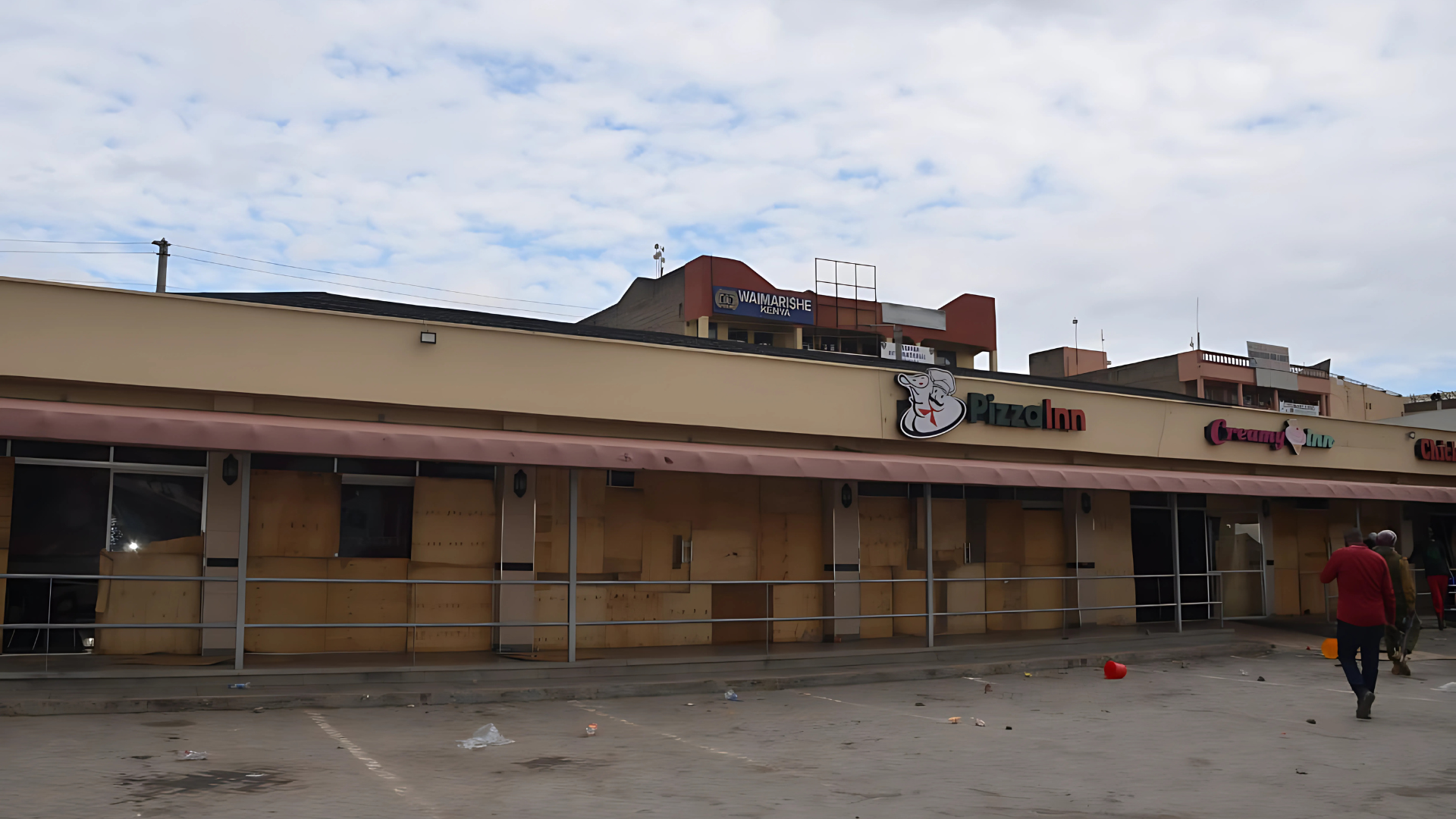
PIZZA INN Kitengela
The protests, dubbed the “Gen Z Memorial March,” saw youths gather in cities like Nairobi, Mombasa, Nakuru, Kisii, and Kitengela, waving flags, holding placards, and laying flowers to honor those killed in 2024. In Kitengela, a bustling town in Kajiado County, the demonstrations began peacefully, with protesters chanting slogans like “Justice for the Fallen” and marching through major roads. However, the mood shifted as small groups, described by authorities as “infiltrated criminals,” turned to looting. The Pizza Inn, a popular eatery frequented by families and students, was ransacked, with looters smashing glass windows, stealing equipment, and emptying cash registers. “I came to open the shop this morning and found nothing but broken glass,” said Peter Mwangi, the outlet’s manager. “Tables were overturned, the fridge was emptied, and even the pizza ovens were damaged. We’ve lost everything.”
Similar scenes unfolded across the country. In Nyeri, youths stormed the Naivas Supermarket, carting away goods worth millions of shillings after police reportedly withdrew from the area. In Nairobi’s Central Business District, shops along Mfangano Street, Khoja, and Moi Avenue were targeted, with boutiques, electronic stores, and wine shops looted or set ablaze. Carrefour in Ruiru and Nanas Mall in Thika were also hit, while in Ol Kalou, a police station was vandalized alongside other public institutions. The Independent Policing Oversight Authority reported eight deaths and 207 injuries across 24 counties, with some injuries attributed to gunshot wounds. The violence prompted Micro, Small and Medium Enterprises Development Principal Secretary Susan Mang’eni to condemn the looting, stating, “The destruction of sources of livelihood is akin to depriving a business owner of their life. A child tonight will miss their milk. Someone will struggle to pay a loan.”
The economic impact was immediate and severe. In Kitengela, traders estimated losses in the tens of millions of shillings. At Pizza Inn, Mwangi reported damages and stolen goods worth over Ksh2 million. “This was our main source of income,” he said, standing amid the wreckage. “We employ 15 people here, mostly young locals. Now what do we tell them?” Nearby, a hardware store owner, Jane Wanjiru, described how looters broke through her shop’s metal shutters, stealing tools and materials valued at Ksh500,000. “We closed early to avoid trouble, but they still got in,” she said. “I don’t know how to recover from this.” The Matatu Owners Association reported a 50 percent revenue drop on June 25, with losses of approximately Ksh150 million as operators avoided routes near protest hotspots like Kitengela and Nairobi’s CBD.
The protests’ roots lie in Kenya’s ongoing economic struggles, with a national debt exceeding $80 billion and youth unemployment hovering around 20 percent. The 2024 Finance Bill, which proposed taxes on essentials like bread and motor vehicles, sparked outrage among young Kenyans, who mobilized through social media platforms like X and TikTok. The 2025 anniversary protests, coordinated via hashtags like #JusticeFor2024, aimed to demand accountability for police brutality and systemic reforms. However, the chaos that ensued has left traders like those in Kitengela caught in the crossfire. “I support the youth’s cause,” said Wanjiru. “But why destroy our shops? We’re struggling just like them.”
In Nairobi, the economic toll was equally stark. Yvonne Otieno, a boutique owner at the Bus Station, sat outside her charred shop, her dream of a thriving fashion business reduced to ashes. “I took a Ksh1 million loan in March to restock,” she said, her voice breaking. “Now it’s all gone—clothes, shelves, everything.” Along Moi Avenue, a fire at the junction with Khoja required two police water cannons and a county fire engine to extinguish, but not before several shops were gutted. The Nairobi county government, which collects Ksh6 million daily from parking levies, saw no revenue as the CBD ground to a halt. “The fear from these protests makes people stay home,” said economics lecturer X. N. Iraki. “It’s not just the looting—prices for basic goods get hiked, and foreign investors get nervous.”
The government’s response to the protests has drawn criticism. Police deployed tear gas and water cannons in Kitengela and Nairobi, with reports of live ammunition use prompting IPOA to launch an investigation. A High Court ruling on June 25 suspended a Communications Authority directive banning live protest coverage, with Justice Chacha Mwita ordering the restoration of TV signals. The Katiba Institute challenged police barricades in Nairobi’s CBD, arguing they violated rights to assembly. President William Ruto, attending a burial in Kilifi on June 25, called for peace but avoided addressing the violence directly. “Leaders should embrace unity, not division,” he said, sidestepping questions about police tactics. Government spokesperson Isaac Mwaura had earlier claimed that June 25 would be a “normal working day,” a statement that rang hollow as businesses shuttered nationwide.
Traders’ frustrations were echoed by industry leaders. The Mitumba Consortium Association of Kenya, representing two million workers in the second-hand clothing sector, estimated daily tax contributions of Ksh33.3 million were lost due to closures. “We move millions of clothes daily,” said Emily Nyagaka, a trader at Gikomba Market. “A day lost is business lost for thousands of Kenyans.” In Nakuru, a Total Petrol Station on Kenyatta Avenue was looted, and transport along the Nakuru-Eldoret highway was disrupted. In Kisii, Shivling Supermarket was ransacked, while in Embu, the Kenya Revenue Authority offices and a Safaricom shop were targeted. “This isn’t protest—it’s burglary,” said a Kisii trader, echoing sentiments from Kitengela, where Pizza Inn staff watched helplessly as looters struck.
The protests’ social media dimension amplified their impact. Videos on X showed youths breaking into shops in Kitengela, with one clip capturing a group carrying away pizza boxes from the Pizza Inn. Hashtags like #GenZFightsOn trended alongside messages of solidarity, but also criticism of the looting. “We’re fighting for justice, not to steal,” posted a Nairobi-based activist, Hanifa. “This hurts our cause.” Others defended the protests, arguing that economic desperation fueled the chaos. “When people are jobless and hungry, this happens,” said a user identifying as a Kitengela resident. The polarized reactions highlight the tension between the Gen Z movement’s goals and the unintended consequences of unrest.
Civil society groups condemned the violence while defending the right to protest. The Kenya National Commission on Human Rights reported 400 injuries, urging restraint from police. “The right to assembly is constitutional,” said official Kamau Ngugi. “But looting undermines the message.” Amnesty International Kenya called for a judicial inquiry into the deaths, with executive director Irũngũ Houghton stating, “The government must address the root causes—poverty, corruption, unemployment—not just crack down on protesters.” The Law Society of Kenya demanded accountability for both looters and police using excessive force, citing the need for dialogue.
For traders like Mwangi at Pizza Inn, the path to recovery is uncertain. “We need help to rebuild,” he said, noting that insurance claims could take months. In Nyeri, Naivas managers estimated losses of Ksh10 million, while Carrefour in Ruiru reported similar figures. The ripple effects extend beyond immediate damages, with supply chains disrupted and consumer confidence shaken. “Customers won’t come if they fear violence,” said Wanjiru, the hardware store owner. “We’re all losing.” The protests, while rooted in legitimate grievances, have left small businesses bearing a disproportionate burden, raising questions about how to balance dissent with economic stability.
As Kenya reflects on June 25, the voices of traders like Otieno, Mwangi, and Wanjiru underscore the human cost of unrest. The Gen Z movement, with its tech-savvy, leaderless structure, has reshaped Kenya’s political landscape, but the chaos in Kitengela and beyond threatens to overshadow its message. “We want justice too,” said Mwangi, sweeping glass from his shop floor. “But this isn’t the way.” With protests showing no signs of abating, traders brace for an uncertain future, caught between a movement for change and the devastation left in its wake.
Former Kiambu Governor Ferdinand Waititu has secured a major bail reprieve from the High Court, with Justice Winfrida Okwany reducing his bail from Sh53.5 million to Sh20 million cash pending appeal in his ongoing corruption case.
President Ruto and Governor Sakaja signed a cooperation agreement allocating funds for 50,000 new streetlights, water plants saving 50 million litres daily, 27 km Nairobi River sewer and ward road upgrades, with Ruto calling it a partnership to make the city livable while opposition senators warn of devolution threats.
A staff member at Moi Teaching and Referral Hospital allegedly stole Sh10 million by falsifying patient bills as paid in the eCitizen system while diverting the money to her personal account, prompting an ongoing police and hospital investigation.